
PaintingProGuide is reader-supported. When you buy through links on this page we may earn an affiliate commission at no extra cost to you.
Quick answer: For most painters the best all-round natural bristle paint brush set is the POL BRUSH five-piece 100% natural bristle flat set (1 to 3 inch), which covers gesso, oil underpainting, stain and furniture work. If you need a brush for laying down varnish over a finished painting or a piece of furniture, the REDTREE badger-style 1 inch fine finish brush (also sold in a 3 inch width) is built for flowing finishes. For disposable gesso and glue jobs, the Bates 24-pack natural bristle chip brushes are hard to beat.
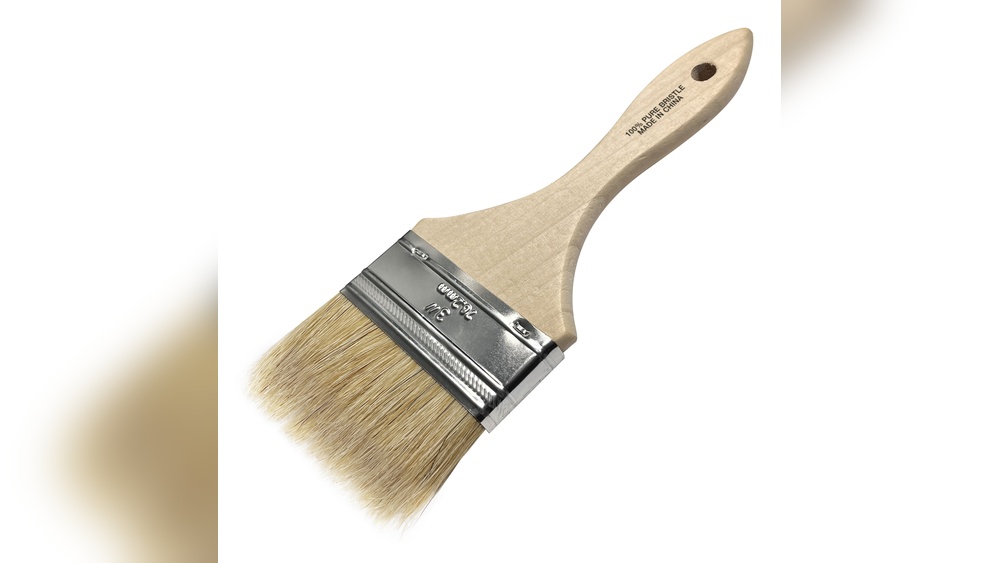
A natural bristle paint brush is made from animal hair, most often hog (also called China bristle), rather than nylon or polyester filaments. Each natural bristle has a split, or “flagged,” tip and a scaly surface that holds liquid between the fibers. That structure is why natural bristle brushes carry so much oil paint, varnish and stain and lay it down smoothly.
The same structure is also their weakness: natural hair soaks up water and goes limp, which is why natural bristle is the classic choice for oils, alkyds, shellac and solvent-based varnish, and a poor choice for water-heavy latex wall paint. For artists, the brushes below are most useful for priming canvas with gesso, toning a ground, blocking in large oil passages, varnishing finished work and furniture or craft finishing.
Our Top Picks at a Glance
- POL BRUSH 5-Piece Natural Bristle Flat Set — Best all-round natural bristle set
- REDTREE Badger-Style Fine Finish Brush (1 in / 3 in) — Best for varnish and flowing finishes
- Bates Natural Bristle Chip Brushes, 24-pack — Best disposable brushes for gesso and glue
- Magimate Natural and Synthetic Blend, 4-pack — Best for rough surfaces and mixed media
| Product | Best For | Key Spec | Key Strength | Price Tier |
|---|---|---|---|---|
| POL BRUSH 5-Piece | Gesso, oil grounds, stain | 1, 1.5, 2, 2.5, 3 in flats; 100% natural | European-made full size range | $ |
| REDTREE Fine Finish 1 in | Varnish and enamel | Badger-style China bristle, chisel edge | Ultra-fine finishing | $$ |
| Bates 24-pack Chip | Disposable priming and glue | 6 each of 0.5, 1, 1.5, 2 in | Very low cost per brush | $ |
| Magimate 4-pack | Rough textured surfaces | 1, 2, 3, 4 in; natural/synthetic blend | Stiffer blend for texture | $ |
How We Chose
We chose these brushes from the Amazon listing details and specifications checked in October 2026, judging how clearly each listing states its bristle content, how well its sizes and shape fit art and finishing tasks, and how widely each product has been reviewed by Amazon buyers. We have not used these specific brushes; the advice on natural bristle behavior reflects long-established painting practice.
- Bristle content: 100% natural or clearly stated blends; we left out sets made entirely of synthetic filament.
- Shape and edge: flat and chisel-edge brushes that suit priming and varnishing.
- Size range: widths from half an inch to four inches.
- Value: whether a brush is meant to be cleaned and kept or used and discarded.
Natural Bristle vs Synthetic: What Actually Differs
Natural bristle tapers and splits at the tip, so it can carry a large load and release it gradually, leaving fewer brush marks in oil and varnish. Synthetic filaments (nylon, polyester or blends) stay stiff in water, resist abrasion and clean easily, which makes them better for acrylic and latex. Neither is “better” overall; they suit different media.
| Factor | Natural Bristle | Synthetic |
|---|---|---|
| Best media | Oil, alkyd, oil-based varnish, shellac, stain | Acrylic, latex, water-based varnish |
| Paint load | High, thanks to flagged tips | Moderate to high depending on filament |
| Behavior in water | Absorbs water and softens | Holds shape |
| Finish | Smooth, self-leveling with oil and varnish | Can show more brush marks in oil |
| Cleanup | Solvent or brush soap | Soap and water |
Best Natural Bristle Paint Brushes Reviewed
1. POL BRUSH 5-Piece Natural Bristle Flat Set — Best for an all-round natural bristle set

POL BRUSH sells five flat brushes at 1, 1.5, 2, 2.5 and 3 inches, made in Europe with 100% natural bristle. The listing emphasizes paint absorption and release, which is the main reason to choose natural hair.
For artists, the 2.5 and 3 inch widths are ideal for brushing gesso onto large canvases or boards in even, crisscross coats, and for laying a thin, toned imprimatura before an oil painting. The 1 and 1.5 inch brushes handle edges, smaller panels and furniture details.
The listing says the brushes work with acrylic, latex and chalk paints as well as oil and stain. In practice, natural hair does its best work with oils and solvent-borne finishes; with water-based products it will soften as it absorbs water.
Best suited for: gessoing canvases, oil grounds and underpaintings, stain and furniture finishing.
Key features:
- Five flats: 1, 1.5, 2, 2.5, 3 inches
- 100% natural bristle
- Made in Europe
- Suited to oil, stain and chalk paint
Pros:
- Full range of widths in one set
- High paint load for smooth coats
- Natural bristle at a modest price tier
Cons and limitations:
- Not designed as fine-art detail brushes
- Natural hair softens with water-based paint
- May shed a few hairs at first
Buying consideration: Before first use, flick the bristles and rinse in solvent or soapy water to remove any loose hairs; it saves picking them out of a fresh gesso coat.
2. REDTREE Badger-Style Fine Finish Brush — Best for varnish and flowing finishes

REDTREE makes this handmade brush for flowing urethanes, varnishes and enamels to an ultra-fine finish. It uses natural badger-style China bristle with a hand-formed chisel edge and a pencil-style clear wood handle.
For painters, a soft, dense natural brush like this is what you want for applying solvent-based picture varnish evenly over a dried oil painting. The chisel edge lets you work into corners and along the edge without pooling. The 1 inch size suits small and medium paintings; for large canvases or tabletops, REDTREE also offers a 3 inch version at a higher price.
Dedicate it to varnish only. A finishing brush that has also been used for paint will eventually leave specks in a clear coat.
Best suited for: varnishing finished oil paintings, enamel and clear coats on furniture and frames.
Key features:
- Badger-style natural China bristle
- Hand-formed chisel edge
- Pencil-style clear wood handle
- Available in 1 inch and 3 inch
Pros:
- Built for smooth clear finishes
- Chisel edge gives control
- Handmade construction
Cons and limitations:
- Higher price than general-purpose brushes
- Narrow 1 inch size is slow on big surfaces
- Needs careful cleaning to stay soft
Buying consideration: Load the brush, tap off the excess and apply varnish in thin, single-direction strokes; do not go back over areas that have started to set.
3. Bates Natural Bristle Chip Brushes (24-pack) — Best for disposable gesso and glue jobs

Chip brushes are inexpensive natural bristle brushes meant for messy, short-life tasks. This Bates pack has six each of 0.5, 1, 1.5 and 2 inch brushes, with flagged bristles, natural wood handles and a hanging hole.
Artists use them for gesso, glue and acrylic medium on collage, rabbit-skin glue sizing on raw canvas, dusting pastel and charcoal away and creating dry-brush textures. When they are worn out, you throw them away without regret.
Best suited for: priming, sizing, collage glue, texture effects and classroom work.
Key features:
- 24 brushes: 6 each of 0.5, 1, 1.5 and 2 inch
- Flagged natural bristle
- Wood handles with hanging holes
- For paints, stains and varnishes
Pros:
- Lowest cost per brush
- Good spread of sizes
- Fine for one-time use
Cons and limitations:
- Will shed more than premium brushes
- Not for fine finishing or varnish
Buying consideration: Wrap the ferrule with tape before using chip brushes in gesso; it keeps dried primer from building up and makes them last a little longer.
4. Magimate Natural and Synthetic Blend Brushes (4-pack) — Best for rough surfaces and mixed media

Magimate blends natural bristle with stiffer synthetic fiber, which gives a brush that holds liquid like natural hair but stays firmer on rough or semi-rough surfaces. The pack includes 1, 2, 3 and 4 inch brushes with grooved, non-slip vinyl handles.
That combination makes them handy for texture-heavy mixed media, rough wood panels, painting reclaimed boards for signs and applying chalk paint to furniture. The 4 inch is the widest brush in this list.
Best suited for: rough wood, textured grounds and furniture with chalk or stain.
Key features:
- 1, 2, 3 and 4 inch
- Natural bristle blended with synthetic fiber
- Non-slip grooved vinyl handle
- Solvent resistant
Pros:
- Stiffer than pure natural hair
- Wide 4 inch size
- Comfortable grip
Cons and limitations:
- Blend, not pure natural bristle
- Not suited to smooth varnishing
Buying consideration: Choose this set if you work on rough surfaces; choose the POL set if you want pure natural hair for oils.
Buying Guide: How to Choose a Natural Bristle Paint Brush
Confirm the bristle content
Look for “100% natural,” “China bristle” or “hog bristle.” Many inexpensive sets are synthetic or blends; that is fine if you want it, but read carefully.
Match the brush to the medium
Choose natural bristle for oil paint, alkyds, oil-based varnish, shellac and stain. For acrylic and latex, choose synthetic, because water makes natural hair limp.
Pick the right shape
Flats lay broad, even coats. Chisel-edge finishing brushes control the edge of a varnish coat. Angled sash brushes cut in along edges and frame rebates.
Choose widths for the surface
Use 2 to 3 inch brushes for priming canvases larger than about 16 x 20. Use 1 to 1.5 inch for small panels, frames and details. A 4 inch brush speeds up big boards and murals.
Decide between keeper and disposable
Good natural bristle brushes last for years if cleaned properly. Chip brushes are designed to be used and replaced, so keep a stack for messy jobs and save better brushes for finishes.
Check the ferrule and handle
A firmly crimped metal ferrule holds the bristles. A comfortable handle matters more than you think when you are gessoing a stack of canvases.
Using a Natural Bristle Brush in the Studio
Priming a canvas or panel with gesso
- Thin the first coat of acrylic gesso slightly with water so it soaks into the weave.
- Use a 2 to 3 inch flat and brush in one direction across the whole surface.
- Let it dry, sand lightly with fine sandpaper if you want a smoother surface, then apply the second coat at right angles to the first.
- Two to four thin coats give a better surface than one heavy coat, which can crack.
Because gesso is water-based, rinse the brush promptly and do not let it sit in water for long; natural hair recovers if it dries properly, but extended soaking weakens it.
Toning an oil ground
Mix a little burnt sienna or raw umber with odorless mineral spirits into a thin wash. Scrub it across the primed canvas with a wide natural bristle flat, then wipe back with a rag for an even mid-tone. The bristles’ capacity to hold thin oil color makes this a quick, two-minute job.
Blocking in large passages
Broad flats are ideal for laying in skies, backgrounds and big shadow shapes in the early stages of an oil painting, before switching to smaller artist brushes for form and detail.
Varnishing a finished painting
- Make sure the oil painting is fully dry, often six months or more for thick paint, or follow the varnish maker’s guidance for retouch varnish.
- Work in a dust-free room, with the painting lying flat.
- Load a soft finishing brush, tap off the excess and apply in long, parallel strokes from one edge to the other.
- Do not go back over tacky areas. Let it dry flat, covered loosely to keep dust off.
Caring for Natural Bristle Brushes
Wipe out as much paint as possible, rinse in odorless mineral spirits (for oil and solvent varnish), then wash with a brush soap and lukewarm water. Reshape the bristles and hang or lay the brush flat to dry so water does not run into the ferrule. Never leave a natural bristle brush standing on its tip in solvent; it bends permanently. Store dry brushes wrapped in paper to keep the shape.
For smaller artist brushes in your kit, see our guides on what size brush to use for detail acrylic work and how to use a liner brush for detail work.
Common Mistakes to Avoid
- Using natural bristle brushes with latex wall paint and wondering why they go floppy.
- Using the same brush for paint and clear varnish, which leaves specks in the finish.
- Pressing hard to spread gesso; let the brush carry it in thin coats instead.
- Skipping the pre-use flick and rinse, then finding loose hairs in your first coat.
- Storing brushes upright while wet so water and solvent collect in the ferrule.
- Buying cheap blends when you specifically need pure natural bristle for oil-based finishes.
FAQs
What is a natural bristle paint brush used for?
Natural bristle brushes are best for oil paint, oil-based varnish, shellac, stain and alkyd enamel. Artists use them for gesso, oil grounds, large oil passages and varnishing.
Can I use a natural bristle brush with acrylic paint?
You can, especially for gesso and thick acrylic, but natural hair absorbs water and softens. Synthetic brushes generally perform better with water-based acrylic.
Why are natural bristle brushes better for oil paint?
The flagged, split tips and textured surface of natural hair hold more paint and release it smoothly, which helps oil paint and varnish level with fewer brush marks.
Do natural bristle brushes shed?
Inexpensive ones can shed a few hairs, particularly early on. Flick and rinse new brushes before use, and use better brushes for finishing work.
How do I clean a natural bristle brush?
Wipe off excess paint, rinse in odorless mineral spirits for oil-based products, then wash with brush soap and lukewarm water, reshape and dry flat.
Are natural bristle brushes good for oil painting on canvas?
Yes. Hog bristle is the traditional oil painting brush because it is stiff enough to move thick paint and holds plenty of color. The wide flats in this guide are best for grounds and large areas; artist-grade hog bristle filberts and rounds handle the painting itself.
What does China bristle mean?
China bristle is a traditional name for hog hair bristle, historically sourced from China. It is the most common natural bristle used in paint brushes.
Final Recommendation
For a single purchase that covers priming, oil grounds and general finishing, choose the POL BRUSH 5-piece natural bristle set. Add a REDTREE fine finish brush and reserve it for varnish if you want smooth clear coats on paintings or furniture; pick the 1 inch for small work and the 3 inch for large surfaces. Keep a Bates 24-pack of chip brushes for gesso, glue and texture jobs you would not risk on a good brush. If your surfaces are rough wood or heavy texture, the Magimate blend is the stiffer, more forgiving option.




