
PaintingProGuide is reader-supported. When you buy through links on this page we may earn an affiliate commission at no extra cost to you.
Quick answer: The main types of paint brushes for art are round, flat, bright, filbert, fan, angle, liner (rigger), mop and specialty shapes like dagger and deerfoot. To try them all in one purchase, the Fuumuui 26-piece professional set includes more than a dozen shapes in a canvas roll. For a budget sampler, the Halobios 20-piece set covers 8 head types, and for classrooms the Horizon Group 35-brush value pack adds foam and chubby brushes.
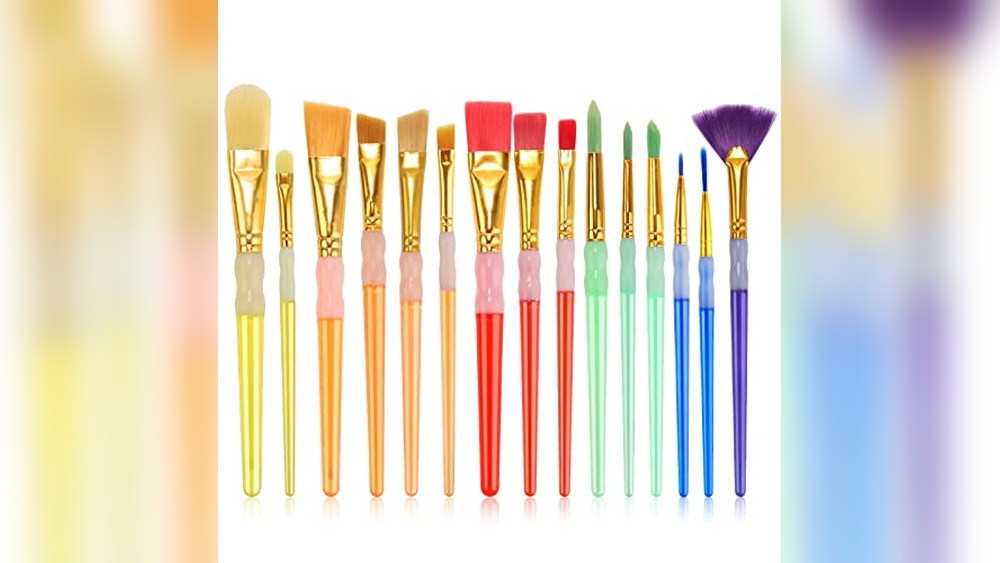
The types of paint brushes for art can look bewildering in a shop, but they come down to three variables: the shape of the head, the hair or filament it is made from, and the size. Shape decides the mark a brush makes; hair decides how it holds and releases paint; size decides how much area it covers. Once you know what each shape does, you can look at any set and see quickly whether it has what you need.
This guide explains every common brush shape with what it is best for, the difference between synthetic and natural hair, how brush sizes work, and which shapes suit acrylic, oil and watercolor. Then we review six sets that let you try many types at once, from a 26-piece professional roll to inexpensive multi-shape packs.
Brush Shapes and What They Do
| Shape | What It Looks Like | Best For |
|---|---|---|
| Round | Pointed tip, full belly | Lines, details, washes in larger sizes |
| Flat | Square end, long hairs | Broad strokes, sharp edges, blocking in |
| Bright | Square end, short hairs | Controlled, thick strokes; impasto |
| Filbert | Flat with rounded tip | Blending, soft edges, petals, portraits |
| Fan | Hairs spread in a fan | Foliage, grass, clouds, texture, gentle blending |
| Angle (angular flat) | Flat with slanted end | Edges, corners, curved strokes |
| Liner / rigger | Long, thin hairs | Fine lines, branches, rigging, signatures |
| Spotter / detail | Very short, fine round | Tiny details, dots, highlights |
| Mop | Large, soft, rounded | Watercolor washes, soft blending |
| Dagger / sword | Long angled tip | Leaves, ribbons, varied line weight |
| Deerfoot / stippler | Angled round with cut end | Stippling, foliage, fur texture |
| Cat’s tongue | Flat with pointed tip | Hybrid of flat and round strokes |
Synthetic or Natural Hair?
Synthetic brushes (nylon, polyester, taklon) are durable, affordable and easy to clean. They hold their shape in water-based paint and work well with acrylic, and good synthetics are used for watercolor and oil too. Natural hair includes hog bristle, stiff and springy, traditional for oil and impasto; sable, soft and holding a sharp point, prized for watercolor and fine oil work; and squirrel, very soft and absorbent, for watercolor washes. Most beginners and acrylic painters start with synthetic.
How Brush Sizes Work
Brush sizes are numbered, usually from 000 (tiny) up to 20 or more, but numbers are not standardized between brands. A size 6 round from one maker may be larger than another’s. Flats and wash brushes are often sized in inches instead, such as 1/2 inch or 1 inch. A practical rule: use the largest brush that will do the job, and switch to smaller ones only for detail.
Which Brush Types for Which Medium
- Acrylic: synthetic flats, brights, filberts and rounds; a fan for texture; a liner for detail.
- Oil: hog bristle or stiff synthetic flats, brights and filberts for body; soft synthetic or sable rounds for detail.
- Watercolor: soft rounds that hold a point, a mop for washes, a flat wash brush and a liner.
- Gouache: soft synthetic rounds and flats, similar to watercolor but used with less water.
Parts of a Paint Brush
Knowing the anatomy of a brush helps you read listings and care for brushes properly.
- Toe or tip: the very end of the hairs, where the finest marks are made.
- Belly: the middle of the hair bundle, which acts as a paint reservoir. A full belly on a round holds more paint for long strokes.
- Heel: the part of the hairs closest to the ferrule. Paint that dries here spreads the hairs and ruins the shape, so rinse it out thoroughly.
- Ferrule: the metal sleeve that holds the hairs. Seamless or double-crimped ferrules grip better and are less likely to loosen.
- Crimp: where the ferrule is pressed onto the handle. A weak crimp lets the head wobble or come off.
- Handle: long handles for easel work, short handles for close detail and watercolor.
Our Top Picks at a Glance
- Fuumuui 26pcs Professional Paint Brush Set — Best for trying every specialty shape
- Halobios 20PCS Painting Brushes — Best budget sampler of 8 head types
- Amazon Basics 24 Count Multi-Shaped Brushes — Best basic set with a storage container
- KEVIN&SASA CRAFTS 24 Pieces with Canvas Case — Best for mop and bright brushes
- Horizon Group USA 35 All Purpose Brushes — Best for kids, classrooms and crafts
- Phinus 20 Pcs Round Detail Brushes — Best set of round and pointed brushes
| Product | Best For | Key Spec | Key Strength | Price Tier |
|---|---|---|---|---|
| Fuumuui 26pcs | Specialty shapes | Wide flat, liner, bright, dagger, filbert, fan, comb, deerfoot, mop and more | Double-crimped copper ferrules | $$ |
| Halobios 20PCS | Budget variety | 8 head types incl. flat, round, filbert, angle, fan, liner, detail | Very low cost | $ |
| Amazon Basics 24 | Basic multi-shape set | 24 brushes, aluminum ferrules | Storage container included | $ |
| KEVIN&SASA 24 Pcs | Mop and bright brushes | Fan, bright, detail, round, mop, angle | Canvas case | $ |
| Horizon Group 35 | Kids and classrooms | Round, foam, angled, spotter, liner, shader, chubby | Triangular non-roll handles | $ |
| Phinus 20 Pcs | Rounds and detail | 10 sizes from 5/8 to 2/0, two packs | Double-crimped, nylon | $ |
How We Chose
These picks are based on the Amazon listing details and specifications checked in October 2026: the brush shapes each set includes, filament, ferrule and handle construction, size information and storage. We chose sets that let you try many brush types and considered how widely each is reviewed by Amazon buyers. We have not painted with these sets; construction claims are the manufacturers’.
- Shape coverage: number of distinct brush types, not just total brush count.
- Filament: synthetic nylon or polyester for versatility.
- Build: ferrule crimping and handle quality.
- Information: listings that name shapes and sizes clearly.
- Use case: professional exploration, budget, kids or detail work.
Best Paint Brush Sets for Trying Different Types Reviewed
1. Fuumuui 26pcs Professional Paint Brush Set — Best for Trying Every Specialty Shape

Most brush sets stop at rounds, flats, filberts and a fan. Fuumuui goes much further, listing large wide flat, pointed, liner, flat, bright, slant, dagger, filbert, fan, feather, coattails, comb, deerfoot, mop and scraper shapes. That makes it one of the easiest ways to discover what specialty brushes actually do, especially for landscape painters who use fans, deerfoot and comb brushes for foliage and grass.
The bristles are soft synthetic nylon designed for good paint load and shape retention, set in hand-crafted, double-crimped copper ferrules on birch handles. The set comes in a portable canvas roll.
Best suited for: landscape painters, intermediate artists and anyone curious about specialty brush types.
Key features:
- 26 brushes in more than a dozen shapes
- Synthetic nylon bristles
- Double-crimped copper ferrules
- Birch handles
- Canvas roll case
Pros:
- Widest variety of shapes
- Well-built ferrules, per listing
- Great for landscapes
Cons and limitations:
- Higher price tier than budget sets
- Some specialty shapes see little use for portraits or abstracts
Buying consideration: Try each specialty brush on a scrap canvas and label the marks; it becomes a quick reference card for your studio.
2. Halobios Paint Brushes Set, 20PCS — Best for Budget Sampler of 8 Head Types

For very little money, Halobios gives you 20 brushes across 8 head types: flat, round, filbert, angle, fan, liner and detail brushes among them. It is a low-risk way to find out which shapes you reach for.
The nylon bristles, sturdy ferrules and comfortable handles are described as suitable for acrylic, watercolor, oil and mixed media.
Best suited for: beginners, students and anyone building a first collection.
Key features:
- 20 brushes, 8 head types
- Nylon bristles
- For acrylic, watercolor, oil and mixed media
Pros:
- Very low cost
- Good shape variety
- Light and easy to handle
Cons and limitations:
- Sizes not detailed
- Budget build
Buying consideration: Note which shapes you use most after a month; upgrade those to better single brushes.
3. Amazon Basics Multi-Shaped Polyester Paint Brushes, 24 Count — Best for Basic Set with Storage

Amazon Basics’ set includes 24 brushes in a variety of shapes and sizes, with smooth polyester fiber sealed in aluminum ferrules. It comes with a carrying container that lets you store brushes tip-up, which protects their shape.
The listing gives clear care advice: clean with warm soapy water, reshape the tips, air-dry and store tip-up in the container. That routine applies to every brush set.
Best suited for: everyday acrylic and watercolor painting, and anyone who wants a tidy storage solution.
Key features:
- 24 brushes in multiple shapes and sizes
- Polyester fiber, aluminum ferrules
- Storage container
Pros:
- Container protects tips
- Inexpensive
- Clear care instructions
Cons and limitations:
- Shapes not individually listed
- Basic quality
Buying consideration: Store brushes upright in the container only once completely dry.
4. KEVIN&SASA CRAFTS Paint Brushes Set of 24 with Canvas Case — Best for Mop and Bright Brushes

If you want to try a mop brush, the soft, rounded brush used for watercolor washes, many budget sets skip it. This KEVIN&SASA set includes mops alongside fan, bright, detail, round and angle brushes, all in a canvas case.
The brushes have natural wood handles and nylon bristles. Brights, with their short square heads, are especially useful for controlled, thicker strokes in acrylic.
Best suited for: watercolor and acrylic painters who want mop and bright brushes in a budget set.
Key features:
- 24 brushes
- Fan, bright, detail, round, mop and angle
- Nylon bristles, wood handles
- Canvas case
Pros:
- Includes mop brushes
- Case included
- Good value
Cons and limitations:
- No filberts listed
- Sizes not detailed
Buying consideration: Use the mop with plenty of water for skies; it holds a lot of liquid and lays it down evenly.
5. Horizon Group USA 35 All Purpose Paint Brushes Value Pack — Best for Kids, Classrooms and Crafts

Kids’ and craft painting uses brush types adults rarely buy: foam brushes, chubby rounds and brushes with triangular handles that do not roll off the table. Horizon’s 35-piece pack includes these alongside nylon flats, rounds, angled brushes, spotters, liners and shaders.
The listing details 3 chubby round brushes, several foam brushes in 1-inch and 0.75-inch sizes, and nylon brushes from 0.5 to 1 inch, among others. It is sold as an all-purpose pack for watercolor, acrylic and washable paints.
Best suited for: classrooms, preschool art, family crafts and groups.
Key features:
- 35 brushes in many types
- Includes foam and chubby round brushes
- Triangular non-roll handles on some brushes
- For watercolor, acrylic and washable paints
Pros:
- Great for groups and kids
- Foam brushes for crafts
- Low cost per brush
Cons and limitations:
- Not aimed at fine art detail
- Mixed quality across brush types
Buying consideration: Give young children the chubby rounds and foam brushes; save the fine liners for older kids.
6. Phinus 20 Pcs Round Detail Paint Brushes — Best for Rounds and Detail Work

Round brushes are the most-used type for many painters, and having a full size range matters. This Phinus set includes 10 sizes of round-pointed brushes, 5/8, 8, 6, 4, 5, 3, 2, 2, 1 and 2/0, in two packs for 20 brushes total.
The brushes have synthetic nylon bristles, rust-resistant nickel ferrules, double crimping and wooden handles, 6.5 to 7.5 inches long. They suit detail work on portraits, wildlife, miniatures and rock painting.
Best suited for: detail painters and anyone who wants a full range of round sizes.
Key features:
- 20 round-pointed brushes in 10 sizes
- Synthetic nylon
- Nickel ferrules, double crimped
- Wooden handles
Pros:
- Clear size range
- Very low cost
- Two of each set
Cons and limitations:
- Mainly one shape
- No flats for backgrounds
Buying consideration: Pair it with one large flat for backgrounds and you have a capable minimal kit.
Buying Guide: How to Choose Paint Brush Types for Art
Start with four shapes
A flat, a round, a filbert and a fan will paint almost anything. Add a liner and an angle brush once you know you need them.
Match hair to medium
Synthetic for acrylic and general use; stiff bristle for thick oil; soft sable or squirrel for watercolor if your budget allows.
Look at shape count, not brush count
A 20-piece set with eight shapes is more useful than a 40-piece set of near-identical rounds.
Check the ferrule
Seamless or double-crimped ferrules hold hairs securely. Loose ferrules are a common failure on cheap brushes.
Handle length
Long handles suit easel painting at arm’s length; short handles suit watercolor and close detail work.
Storage
Cases, rolls and containers protect tips. Brushes stored loosely in a drawer lose their shape quickly.
Brush Care and Technique
Whatever types you buy, care decides how long they last. Our guide on how to keep paint brushes from shedding explains how to protect the ferrule, and how to dry paint brushes correctly keeps tips sharp. When you are ready to cover big areas quickly, see how to paint with large brushes.
Common Mistakes to Avoid
- Using a tiny brush for everything. Large brushes give looser, more confident paintings.
- Using watercolor brushes in heavy acrylic. Soft hairs splay and lose their point.
- Leaving brushes standing in water. Tips bend permanently.
- Letting paint dry near the ferrule. It spreads the hairs and ruins the shape.
- Assuming sizes match across brands. Compare actual widths.
- Buying specialty brushes first. Master the basics, then add specialties.
FAQs
What are the main types of paint brushes?
Round, flat, bright, filbert, fan, angle, liner (rigger), mop and specialty shapes such as dagger, deerfoot and cat’s tongue.
What brush shapes do beginners need?
A flat, a round, a filbert and a fan cover most needs. A liner is a useful fifth brush for fine lines.
What is a filbert brush used for?
A filbert is a flat brush with a rounded tip, used for blending, soft edges, petals, leaves and portrait work.
What is the difference between a flat and a bright brush?
Both have square ends. Flats have longer hairs for smooth, broad strokes; brights have shorter hairs for controlled, thicker strokes.
Are synthetic brushes as good as natural hair?
Good synthetics are excellent for acrylic and very capable for oil and watercolor. Natural hair still has advantages for some watercolor and oil techniques.
What is a liner brush?
A long, thin brush, also called a rigger, used for fine lines, branches, rigging on boats and signatures.
Final Recommendation
If you want to try every type, the Fuumuui 26-piece set includes specialty shapes most sets never offer. For a budget sampler, the Halobios 20-piece set covers 8 head types, and the Amazon Basics 24 adds a storage container that protects tips. Choose KEVIN&SASA if you want mop and bright brushes, Horizon Group for kids and classrooms, and the Phinus round set when detail work is your priority.




