Quick answer: Good answers to what to paint on a canvas include simple landscapes (sunsets, seascapes, fields), abstract color studies, single flowers, still lifes of everyday objects, pet portraits from photos, night skies, and patterned or textured abstracts. Choose a subject that matches your canvas size and your paint: small panels suit quick studies, while a large stretched canvas suits bold abstracts and landscapes. Pick one idea, plan three values (light, middle, dark), and finish it before starting the next.
A blank canvas stalls more paintings than bad technique does. The fix is not more inspiration but fewer choices: a short list of proven subjects, a sense of which ones fit which surface, and a simple plan for getting the first layer down.
Below you will find what to paint on a canvas, grouped by theme and difficulty, plus the practical side most idea lists skip: canvas types, priming, and which paints suit which surface. If you work in gouache or want a canvas that handles water-based paint well, see our guide to canvas surfaces that suit gouache before you buy.
How to Choose What to Paint
Before picking from the list, run through three quick questions. They narrow the field fast.
- How much time do you have? One to two hours points to a small canvas and a simple subject: a sunset, one flower, a geometric abstract. A weekend allows a detailed landscape or a portrait.
- What is your canvas size? Small surfaces (5 x 7 to 9 x 12 inches) favor a single focal point. Medium (11 x 14 to 16 x 20) handles a scene with foreground and background. Large (24 x 36 and up) rewards bold shapes and loose brushwork; fussy detail gets lost.
- What do you want to practice? Blending points to skies. Color mixing points to still life. Drawing accuracy points to portraits or architecture. Loosening up points to abstracts.
What to Paint on a Canvas: Easy Ideas
These subjects tolerate imperfect brushwork and come together in one sitting.
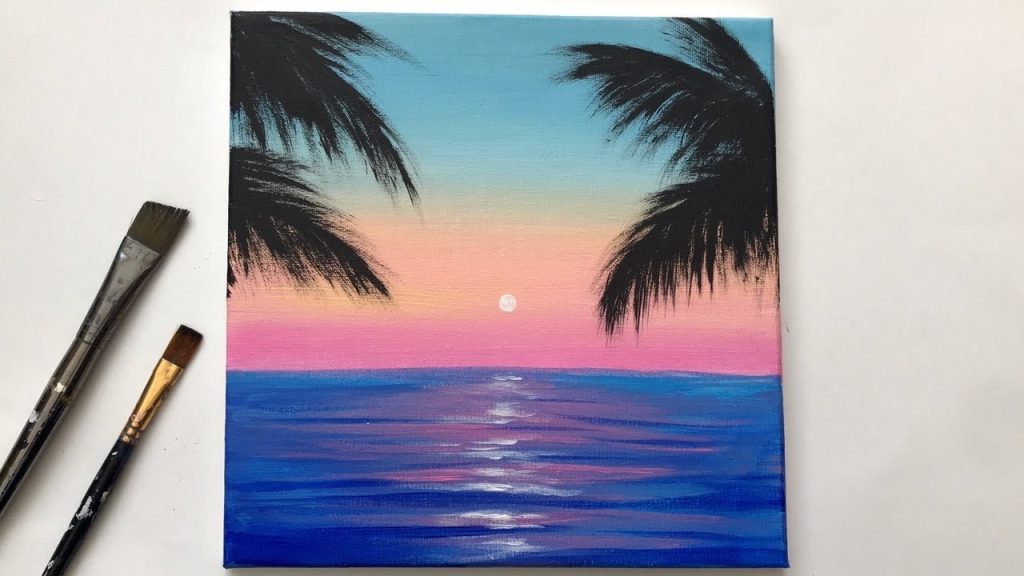
Sunsets and sunrises
Blend horizontal bands from yellow near the horizon through orange, pink and violet at the top. Add a dark silhouette such as a palm, hill or boat once the sky dries. Sky gradients teach wet blending better than almost any other subject.
Simple seascape
Three bands: sky, sea and sand. Use horizontal strokes for water, a slightly darker line at the horizon, and dry-brushed white for foam at the shoreline.
Lone tree in a field
A soft sky, a band of green or gold, and one tree painted with dabbing strokes. The lone subject gives the eye a clear focus and keeps the composition simple.
Single flower close-up
Fill most of the canvas with one bloom such as a poppy, tulip or daisy. Large shapes are easier to paint than small ones, and cropping close makes even a simple flower feel bold.
Geometric abstract
Mask off triangles or stripes with painter’s tape, fill each section with a color from a planned palette, and peel the tape when the paint is touch-dry. Clean edges look professional with almost no brush skill.
Moon and stars
A dark blue-to-black gradient, a pale moon, and spattered stars from a toothbrush. It works on any size and looks good in a bedroom or hallway.
Intermediate Canvas Painting Ideas
Mountain landscape with atmospheric depth
Paint the farthest mountains pale and bluish, the middle range a little darker and greener, and the nearest range darkest and warmest. This aerial perspective is the fastest way to make a canvas look deep.
Still life of three objects
A mug, a lemon and a cloth under a single lamp. Still life trains color mixing and observation of light, shadow and reflected color, and you control the setup completely.
Pet portrait from a photo
Choose a photo with strong side light. Block in big shapes of dark, mid and light fur, then add detail only around the eyes and nose. Gridding the photo and canvas helps with proportions; our guide on how to grid a canvas for painting walks through the method.
Rainy city street
Wet streets reflect lights as vertical streaks. Paint the buildings loosely, then pull bright colors straight down from light sources into the street area for instant atmosphere.
Textured abstract
Apply modeling paste or heavy body paint with a palette knife, let it dry, then glaze color over the ridges. The texture catches light and adds interest even with a limited palette.
Ideas for a Large Canvas
A large canvas changes the rules. Small brushes and tight detail look timid at 30 x 40 inches. Subjects that scale well:
- Color-field abstracts, with two or three big soft-edged blocks of color.
- Sweeping skies and seascapes where the horizon sits low and the sky fills two-thirds of the canvas.
- Oversized botanicals, such as a single monstera leaf or a cluster of magnolias.
- Bold figurative silhouettes against a flat or gradient background.
- Pour or fluid paintings, which cover big surfaces quickly.
Use the biggest brush that fits each area, and step back often. Viewing distance for large work is usually several feet, so judge it from there.
Seasonal and Home Decor Canvas Ideas
If the painting is meant for a specific wall or time of year, let that decide the subject and the palette.
- Spring: cherry blossom branches against pale blue, tulip rows, or a watering can with sprouting seedlings. Keep colors light and slightly cool.
- Summer: beach umbrellas, lemons on a blue tablecloth, sunflower fields. Saturated warm colors and strong shadows suggest bright sun.
- Autumn: a single maple leaf, pumpkins on a porch, misty woods in ochre and rust. Earth pigments mix these colors easily.
- Winter: snowy cabins with lit windows, birch trees, or a cardinal on a branch. Snow is rarely pure white; paint it with pale blues and violets in shadow.
- Kitchens: fruit bowls, coffee cups, herb pots, or bold color-blocked vegetables.
- Bedrooms and living rooms: soft abstracts in two or three colors pulled from the room’s fabrics, or calm seascapes with low horizons.
A practical trick for decor pieces: take a photo of the wall, pull two or three colors from cushions or rugs, and build the whole painting from those plus white. A limited palette nearly guarantees harmony with the room.
Types of Canvas and What Each Suits
The surface you pick shapes what you can paint comfortably. Here is how the common formats compare.
| Format | What it is | Best for | Watch out for |
|---|---|---|---|
| Stretched canvas | Fabric pulled over a wooden frame, usually pre-primed | Finished works, larger pieces, display without framing | Can dent if pressed; slight bounce under heavy pressure |
| Canvas panels | Canvas glued to a rigid board | Studies, plein air, detail work, knife painting | Cheap boards may warp if soaked |
| Canvas boards | Usually thinner, budget version of panels | Practice, color tests, classroom use | Thinner priming; less archival |
| Canvas roll | Uncut primed or raw canvas sold by the yard | Custom sizes, very large work, stretching your own | Needs stretching or mounting; raw canvas needs priming |
| Canvas pads | Sheets of primed canvas in a pad | Sketching, testing, beginner exercises | Flimsy; needs mounting for display |
How to use canvas panels and boards
Panels and boards are ready to paint straight from the package. Tape the edges if you want a clean border, and support the board on an easel or flat table so it does not flex. They are excellent for small studies because you can work quickly and store dozens in a thin box.
How to use stretched canvas
Check that it is taut by tapping the center; it should sound like a drum. If it sags, gently tap the corner keys (small wooden wedges) into the slots on the back. Paint the edges, too, if you plan to hang it without a frame, since gallery-wrapped sides are visible.
Canvas on a roll
Rolled canvas is the economical route to big or unusual sizes. You can staple it to a wall or board to paint, then stretch or mount it afterward. Some artists paint loose and stretch later, which also makes large works easier to transport.
How to Gesso a Canvas
Most store-bought canvases are already primed with acrylic gesso. Adding one or two more coats gives a smoother, more absorbent surface and is worth doing for cheaper canvases.
- Stir the gesso; do not shake it, since bubbles can dry into pinholes.
- Brush a thin coat with a wide flat brush, working in one direction.
- Let it dry, usually 30 to 60 minutes.
- Sand lightly with fine sandpaper if you want a smoother finish.
- Apply a second coat at a right angle to the first.
- Allow it to dry fully, ideally a few hours, before painting.
Raw canvas from a roll must be primed before painting with oils, because oil can rot unprotected fabric over time. Acrylic can technically go on raw canvas, but priming gives brighter, more even color.
Which Paints Work on Canvas?
Acrylic is the most forgiving: it dries fast, cleans up with water and suits every idea in this guide. Oil gives slower blending and richer depth, and it needs a primed surface. Gouache can work on canvas, especially acrylic gouache or traditional gouache on a canvas primed with an absorbent ground, though traditional gouache tends to stay re-wettable and benefits from varnishing.
Can you use watercolor on canvas?
Not on standard acrylic-primed canvas, which is too slick for watercolor to sink into; the paint beads and lifts. It can work on canvases or panels primed with a watercolor ground, which creates an absorbent, paper-like surface. Finished pieces need a protective varnish or framing under glass because watercolor stays water-soluble.
Step-by-Step: Your First Canvas Painting
Use this loose sequence for almost any idea above.
- Tone the canvas. Brush a thin wash of a mid color, such as burnt sienna or a muted blue, over the whole surface. A toned ground removes the intimidating white and helps judge values.
- Sketch big shapes. Use thinned paint or a light pencil. Ignore detail.
- Block in darks. Fill the darkest areas first with a large brush.
- Add middle values. Cover the remaining areas with mid tones.
- Place lights. Add the lightest areas last, saving pure white for the brightest few spots.
- Refine the focal point. Add detail and sharp edges only where you want the eye to land.
- Step back. View the canvas from across the room or in a phone photo; problems in value and balance become obvious.
- Varnish later. Acrylics can usually be varnished after a few days once fully dry; oils need much longer, often months.
Common Mistakes When Painting on Canvas
- Starting with detail. Painting eyelashes before the face shape leads to rework. Go big to small.
- Too little paint. Thin, dry paint drags and shows canvas weave. Load the brush.
- Ignoring the edges. On gallery-wrapped canvas, raw or stained sides look unfinished. Paint them a color or continue the image.
- Overworking. Constant blending turns colors muddy, especially with acrylics as they start to dry. Stop and let layers set.
- Same value everywhere. A painting with only mid tones looks flat. Make sure you have real darks and lights.
- Damaging the canvas. Leaning stretched canvas against sharp corners can tear it. If that happens, our guide on fixing a ripped canvas painting explains how to patch it.
Related Reading
FAQs
What is the easiest thing to paint on a canvas?
A sunset with a silhouette, a geometric tape abstract, or a moon over a dark sky. Each uses simple shapes and big areas of blended or flat color, so they look finished even with basic skills.
What is the best canvas for painting on as a beginner?
Pre-primed canvas panels or small stretched canvases in the 8 x 10 to 11 x 14 inch range are a good start. Panels are inexpensive and rigid, while stretched canvas is easier to hang once finished.
Do you need to gesso a canvas before painting?
Most store-bought canvases are already primed, so it is optional. An extra coat or two improves texture and absorbency. Raw canvas must be primed, especially before oil painting.
Can you use watercolor on canvas?
Only on canvas prepared with a watercolor ground. Standard acrylic-primed canvas repels watercolor. Seal finished pieces with a suitable varnish since watercolor re-wets.
What is the difference between canvas boards and canvas panels?
Both are canvas attached to a rigid backing. Panels are generally sturdier and better primed, while boards tend to be thinner, budget options intended for practice.
What size canvas should I start with?
Something between 8 x 10 and 12 x 16 inches. It is large enough to use real brushes and small enough to finish in a session or two.
Next Step
Pick one idea from this list that fits your time and your canvas size, and finish it before choosing another. Completed paintings teach more than half-started ones. If you plan to paint with gouache on canvas, our review of the best canvases for gouache painting will help you pick a surface that holds matte, water-based color well.