Quick answer: The best painting ideas with leaves and plants include leaf printing (painting a real leaf and pressing it onto paper), leaf stencils and negative-space silhouettes, painting directly on dried leaves, botanical studies of houseplants, monstera and fern canvases, layered jungle scenes, and autumn leaf mandalas. Fresh, flat leaves with prominent veins print best, and acrylic or block-printing ink gives the crispest detail.
Leaves and plants offer two kinds of painting projects. You can paint them as subjects, from loose watercolor ferns to detailed houseplant portraits. Or you can paint with them, using real leaves as stamps, stencils and even canvases. Both approaches connect your work to nature and produce results that look far more complex than the effort required.
This guide gives you eighteen ideas across both categories, with techniques for printing, stenciling and botanical painting, plus seasonal variations. If you enjoy nature themes through the year, our list of the best seasonal painting ideas includes more projects for spring blooms and autumn color.
Collecting and Preparing Leaves
- Choose fresh, flexible leaves. Dry, brittle leaves crack under pressure. Fresh or slightly pressed leaves print best.
- Look for strong veins. Maple, oak, sycamore, ginkgo, fern fronds and many herbs have pronounced veining that prints beautifully.
- Collect responsibly. Pick fallen leaves or ask permission, avoid protected areas, and never collect poisonous plants such as poison ivy.
- Flatten them. Press leaves between sheets of paper under heavy books for a few hours to a day to make them easier to print.
- Clean gently. Wipe off dirt with a damp cloth and pat dry.
Painting With Leaves: Printing and Stenciling
1. Classic leaf prints
Brush a thin, even coat of acrylic paint on the vein side of a leaf (the back usually has more pronounced veins). Place it paint-side down on paper, cover with scrap paper and press firmly with your hand or a roller. Lift carefully by the stem.
2. Multicolor leaf prints
Paint one leaf with two or three colors blended together, such as green to yellow or red to orange, for a single print that shows a color transition.
3. Leaf print wrapping paper
Print leaves in a repeating pattern on kraft paper using gold, white or green paint. It makes beautiful wrapping paper and gift tags.
4. Negative-space silhouettes
Place leaves on paper and dab or spray paint around them with a sponge or toothbrush splatter. Lift the leaves to reveal crisp white silhouettes.
5. Leaf stencil canvas
Arrange several leaves on a canvas in a pleasing composition and secure with small rolls of tape. Sponge paint around them in a gradient. Once dry, remove the leaves and paint fine veins in the silhouettes if desired.
6. Leaf rubbings plus watercolor
Place a leaf under thin paper and rub with a crayon or wax pastel. Then paint over it with watercolor; the waxy rubbing resists the paint and the veins appear.
7. Fabric leaf prints
Use fabric paint to print leaves onto tote bags, napkins or pillowcases. Heat-set according to the paint instructions.
Painting on Leaves
8. Painted dried leaves
Large, sturdy leaves that have been pressed and dried can be painted with acrylic or paint pens in patterns, mandalas or faces. Seal with a light coat of acrylic medium for durability, knowing that leaves remain fragile.
9. Autumn leaf garland
Paint pressed leaves in metallic gold or patterns, then string them into a garland for seasonal decor.
10. Autumn leaf mandala
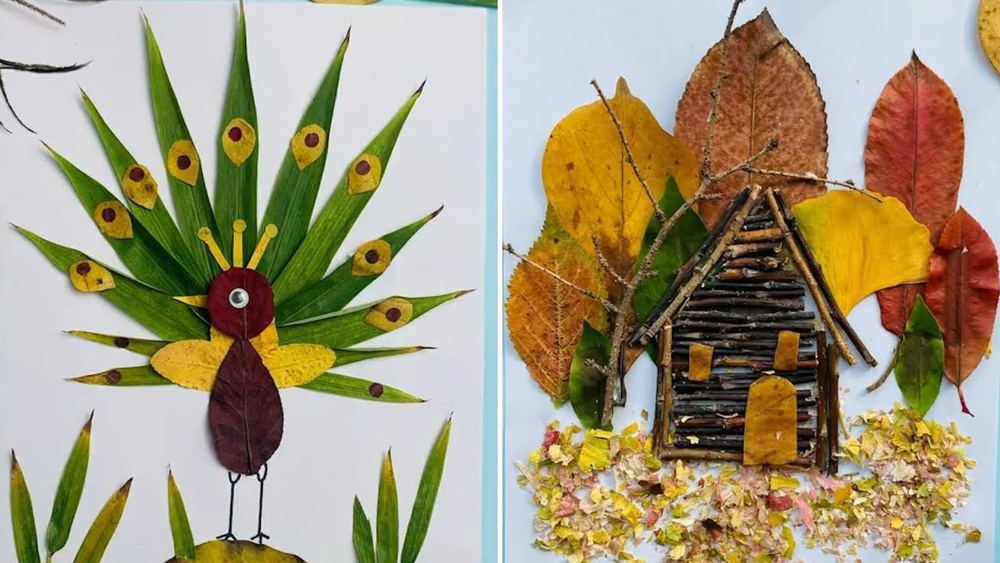
Arrange painted or natural leaves in a circular mandala on paper or a canvas and glue them down, adding painted dots and lines around them.
Painting Plants as Subjects
11. Monstera leaf canvas
Monstera leaves have bold, graphic shapes. Sketch one large leaf, paint it in two or three greens, and add a light vein line down the center. A blush or terracotta background makes it pop.
12. Fern fronds in watercolor
Paint a central stem with a fine brush, then press the brush belly down along each side to create small leaflets. Work from top to bottom with leaflets getting larger toward the base.
13. Houseplant portraits
Paint your own pothos, snake plant or fiddle leaf fig in its pot. Observe how leaves overlap and where light hits them.
14. Layered jungle scene
Build depth by painting dark, cool leaves in the background, mid-tone leaves in the middle and bright, warm leaves in front. A hidden animal such as a tiger or parrot adds interest.
15. Botanical line and wash
Draw a plant with a waterproof fine liner, then add loose watercolor washes that do not stay inside the lines. It is a quick, stylish approach.
16. Succulent arrangement
Succulents are built from simple, rounded leaf shapes arranged in rosettes. Paint each leaf with a light top and darker base for dimension.
17. Eucalyptus sprigs
Round eucalyptus leaves in muted blue-green are simple ovals. A sprig across a white card makes an elegant minimalist piece.
18. Pressed-plant collage with paint
Combine real pressed plants glued to paper with painted backgrounds and painted additional leaves. It mixes texture and illusion.
Step-by-Step: Perfect Leaf Printing
- Prepare the surface. Smooth paper such as cardstock or mixed-media paper works well. Lay scrap paper underneath.
- Choose the paint. Acrylic or block-printing ink. Pour a small amount onto a plate.
- Apply paint thinly. Brush or roll paint onto the vein side of the leaf, covering edges and stem evenly. Thick paint fills the veins and blurs detail.
- Place and press. Lay the leaf paint-side down, cover with a clean sheet of paper and press firmly from the center outward without shifting.
- Lift. Remove the cover sheet, then peel the leaf off by its stem.
- Repeat. Reapply paint for each print. Leaves can usually be reused several times.
- Add details. Once dry, add stems, shadows or painted backgrounds.
Which Leaves Work Best?
| Leaf | Printing quality | Notes |
|---|---|---|
| Maple | Excellent | Distinct shape and veins; classic autumn print |
| Oak | Very good | Lobed edges add interest |
| Ginkgo | Very good | Fan shape with fine radiating veins |
| Fern | Excellent | Delicate, detailed fronds; press flat first |
| Hydrangea | Good | Large leaves with strong veins |
| Herbs (mint, sage) | Good | Small, textured leaves for cards |
| Waxy leaves (holly, magnolia) | Fair | Paint can bead on the glossy surface; lightly scuff or use thicker paint |
Color Mixing for Realistic Greens
Tube greens often look artificial. Mixing your own gives a more natural range.
- Warm, sunny green: Yellow plus a little blue.
- Cool, shadowed green: Blue plus a little yellow and a touch of red or brown to dull it.
- Olive green: Yellow ochre plus black or blue.
- Blue-green (eucalyptus, succulents): Green plus white plus a little blue.
- Dark foliage green: Ultramarine plus burnt sienna plus yellow.
Vary greens within a single painting. Real plants contain many greens: warmer where light passes through, cooler and darker in shadow.
Seasonal Variations
- Spring: Fresh light greens, cherry blossom branches, tulip leaves.
- Summer: Lush monstera, palms and jungle scenes in saturated greens.
- Autumn: Leaf prints in red, orange and gold; leaf garlands and wreaths.
- Winter: Pine and holly sprigs, white leaf prints on dark paper, eucalyptus wreaths.
Projects for Kids and Groups
Leaf printing is one of the best nature-based art activities for children. Combine a short nature walk to collect leaves with a printing session afterward. Younger kids can do leaf rubbings and simple prints, while older kids and teens can try layered jungle scenes and botanical line-and-wash. Our list of easy painting ideas for teenagers has more projects with a similar balance of simple technique and impressive results.
For another printmaking-style texture technique that pairs well with leaf prints, try layering bubble wrap patterns in the background; our guide to bubble wrap painting explains how.
Step-by-Step: A Monstera Leaf Canvas
- Prepare the background. Paint a 12 by 16 inch canvas in a warm, soft color such as blush, terracotta or pale sand. Let it dry.
- Sketch the leaf. Draw a large heart-shaped outline that runs off one edge of the canvas. Add a central vein, then draw the deep splits from the edge toward the center, leaving solid sections between them. Add a few oval holes near the vein.
- Block in the base green. Mix a mid-green from blue and yellow with a touch of red to soften it. Fill the leaf shape, leaving splits and holes unpainted.
- Add shadow. Mix a darker green and paint along one side of the central vein and toward the edges of each section, blending into the base while wet.
- Add light. Mix a lighter, warmer green with yellow and white, and brush it on the opposite side of each section.
- Paint the veins. Use a small round brush and a pale yellow-green to paint the central vein and a few thin side veins that curve toward each section.
- Clean the edges. Touch up the background color around the leaf and inside the holes for crisp shapes.
Composing a Botanical Painting
Plant paintings succeed or fail on composition as much as on technique. A few principles help:
- Let leaves leave the frame. Cropping a leaf at the edge makes the composition feel larger and more natural.
- Vary sizes and directions. Leaves all pointing the same way at the same size look stiff. Mix large and small, front-facing and side-on.
- Use odd numbers. Three or five leaves or stems usually feel more balanced than two or four.
- Overlap shapes. Overlapping leaves create depth instantly. Paint the farthest leaves first, cooler and lighter, then the nearer ones warmer and with more contrast.
- Leave breathing room. Negative space around a single sprig often looks more elegant than a crowded page.
Materials Checklist
- Acrylic paint or block-printing ink for prints; watercolor or gouache for botanical studies
- Cardstock, mixed-media paper, watercolor paper (around 140 lb is a common weight) or canvas panels
- Soft brushes (flat for applying paint to leaves, rounds for details)
- A small foam roller or brayer for even printing
- Scrap paper for pressing and test prints
- Heavy books or a flower press for flattening leaves
- Paint pens and a waterproof fine liner for line-and-wash work
- Matte acrylic medium if sealing painted leaves
Common Mistakes
- Too much paint on the leaf: Veins fill in and detail disappears. Use a thin layer.
- Using brittle leaves: They crack. Use fresh or freshly pressed leaves.
- Printing the smooth side: The back of most leaves has more pronounced veins.
- Shifting during pressing: Causes double images. Press firmly without moving.
- One flat green: Mix several greens for realism and depth.
FAQs
What paint is best for leaf printing?
Acrylic paint and block-printing ink give the crispest results because they sit on the leaf surface and capture vein detail. Tempera works for kids’ projects but may be less detailed.
Which side of the leaf do you paint for printing?
Usually the back, or underside, because the veins are more raised there and print more clearly.
Can you paint on real leaves?
Yes. Press and dry sturdy leaves first, then paint with acrylic or paint pens. Seal lightly with acrylic medium, but remember they remain fragile and are best for short-term decor.
How do you paint a realistic monstera leaf?
Sketch the overall shape, paint it in a base green, add darker green near the center vein and edges, and paint the splits and holes carefully. A thin lighter line along the center vein adds realism.
What leaves are best for painting projects?
Maple, oak, ginkgo, fern and hydrangea leaves are excellent for printing because of their defined shapes and veins. Waxy leaves like magnolia work but need thicker paint.
How long do painted leaves last?
Painted and sealed dried leaves can last for a season or more if kept out of direct sun and humidity, but they will gradually become brittle. Leaf prints on paper last much longer.
Final Thoughts
Leaves and plants give you endless material, whether you are pressing a maple leaf into paint or carefully observing a houseplant. Start with simple leaf prints to understand shape and vein structure, then move on to painting plants as subjects. For nature-inspired projects that follow the calendar, our guide to seasonal painting projects worth trying offers ideas for spring growth, summer greenery, autumn leaves and winter evergreens.