
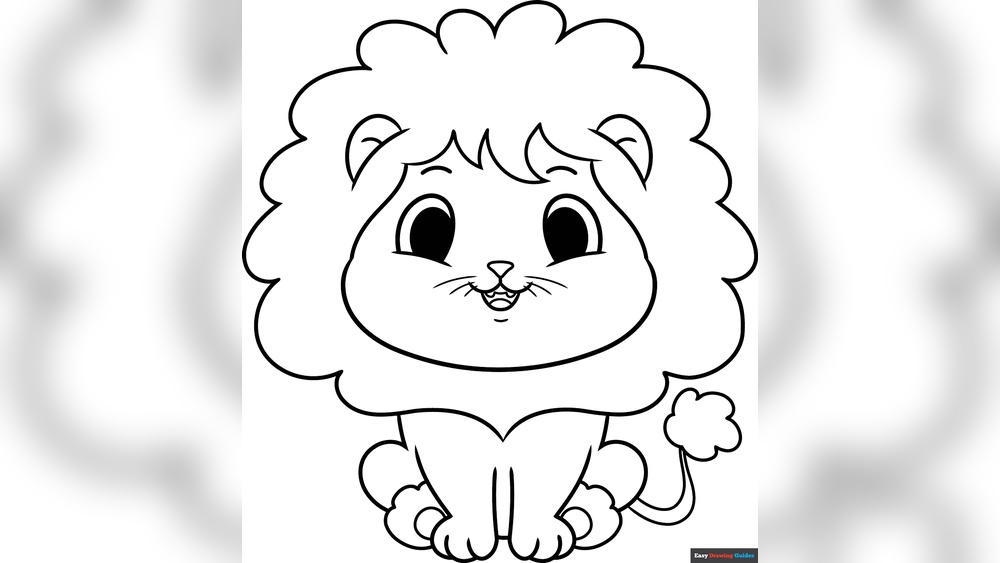
Quick answer: The easiest method for how to paint a lion for kids is to paint the mane first as a big circle of orange and brown strokes radiating outward, then paint a smaller yellow circle face in the middle once the mane is mostly dry. Add two round ears on top of the face, a muzzle made of two small white ovals, a dark triangle nose, a smile, and eyes with white highlights. Short, flicked brushstrokes around the mane edge make it look fluffy. Plan about 45 minutes with washable tempera or student acrylic.
The mane is what makes a lion feel exciting to paint, and it is also what makes the project easier than it looks. A lion’s face is just a circle. The mane around it can be messy, uneven and wild, and it still looks right. That freedom is exactly why lions are a favorite in kindergarten and elementary art rooms.
This step-by-step tutorial explains how to paint a lion for kids with an easy mane-first method, two alternative mane techniques for different ages, a full-body option, and ideas to turn the lion into a savanna scene.
Why Paint the Mane First?
Many tutorials start with the face, but painting the mane first solves two problems kids run into:
- Clean face edges. If the face is painted first, the mane strokes have to go around it carefully. Painting the mane as one big shape, then putting the face on top, gives a crisp edge with no fiddly work.
- Room for wild strokes. Kids can swirl and flick without worrying about hitting the face, because the face covers the middle later.
This “big background shape, smaller shape on top” layering is a skill kids use for many other animals. The collection of fun painting techniques for kids shows how the same idea applies to suns, flowers and planets.
Supplies
| Item | Recommendation |
|---|---|
| Surface | Heavy paper or a canvas panel, about 9×12 inches, square-ish layout works best |
| Paint colors | Yellow, orange, brown, white, black, plus a background color (light blue, green or sunset tones) |
| Brushes | A medium flat brush for the mane, a medium round for the face, a small round for details |
| Texture tools (optional) | A fork, a plastic comb, a dry sponge, cotton swabs |
| Basics | Pencil, water cup, paper towels, palette, smock |
How to Paint a Lion for Kids: Step-by-Step
Step 1: Sketch two circles
Trace a large plate or draw a big circle that fills most of the paper. This is the outer edge of the mane. Inside it, trace a small bowl or draw a circle about half the size. This is the face. Draw two small half circles on the top of the face circle for ears.
Step 2: Paint the background
Paint everything outside the big circle in your background color. A plain light blue sky works well. For a warmer look, paint the top half yellow and the bottom half orange to suggest a hot savanna sunset. Let it dry for a few minutes.
Step 3: Paint the mane
Load the flat brush with orange. Starting at the edge of the face circle, pull strokes outward toward the outer circle, like rays of the sun. Go all the way around. Then add brown strokes in between the orange ones, still pulling outward. It is fine, even good, if strokes overlap and colors mix a little on the paper.
At the outer edge, flick the brush outward so strokes end in thin, feathery tips. That ragged edge looks like fur.
Step 4: Let the mane dry partly
Wait 10 minutes. The mane does not need to be bone dry, but the area under the face should not be soaking wet.
Step 5: Paint the face
Fill the face circle and the two ears with yellow or light golden yellow. Paint right over any mane strokes that crossed into the face. Yellow is a weak covering color, so a second coat may be needed after the first dries.
Step 6: Inner ears
Once the face is dry, paint a smaller orange or brown half circle inside each ear.
Step 7: Muzzle and nose
In the lower center of the face, paint two small white ovals side by side, touching. These are the cheeks of the muzzle. Above where they meet, paint a dark brown or black upside-down triangle for the nose. It should overlap the top of the white ovals slightly.
Step 8: Mouth and whisker dots
From the bottom of the nose, paint a short line down between the white ovals, then a gentle curve under each oval for the mouth. Dab three tiny black dots on each white oval with a toothpick or the tip of a small brush. Lions have whisker spots rather than the long whiskers of a house cat, though kids may add thin whisker lines too.
Step 9: Eyes
Paint two dark circles or ovals above the muzzle. When dry, add a small white highlight dot in each. For a sleepy or gentle lion, paint closed eyes as two curved lines instead.
Step 10: Mane texture
Once everything is dry, go back with the small round brush and add a few curling strokes of darker brown and a few strokes of yellow over the mane. These extra layers add depth and make the mane look thick.
Three Mane Techniques for Different Ages
The brushstroke mane above suits most kids aged 5 and up. These alternatives match other skill levels.
Handprint mane (ages 2 to 5)
Paint the child’s palm and fingers orange or brown and press handprints in a ring around a circle, fingers pointing outward. Each print becomes a chunk of mane. Paint the face circle in the middle afterward. It is messy but delightful and makes a meaningful keepsake.
Fork or comb mane (ages 4 to 8)
Dip a fork or a wide-toothed plastic comb in orange paint and drag it outward from the face edge. Each drag leaves several parallel lines that look like strands of hair. Layer in brown and yellow for a rich, textured mane.
Paper strip or yarn mane (mixed media)
Paint the face only, then glue strips of orange and brown paper or short pieces of yarn around it. Kids can curl paper strips around a pencil for a 3D mane. It is a fun option for kids who prefer cutting and gluing.
| Technique | Mess level | Time | Look |
|---|---|---|---|
| Brushstroke mane | Medium | 45 min | Painterly, sunburst |
| Handprint mane | High | 30 min plus cleanup | Bold, chunky |
| Fork or comb mane | Medium | 35 min | Textured, stringy |
| Paper or yarn mane | Low | 50 min | 3D, crafty |
Easy Animal Painting for Kids: Full-Body Lion
Older kids may want the whole lion. Keep it simple with a sitting pose:
- Paint a large oval body standing upright in the lower middle of the paper.
- Paint the mane as a circle overlapping the top of the body.
- Paint the face circle in the middle of the mane.
- Add two front legs as long rectangles from the bottom of the body, with rounded paws.
- Paint a long thin tail curving around the side, ending in a brown tuft.
- Add the face details as above.
A lioness or cub is a good companion: the same shapes without the mane, with rounder ears and a slimmer face.
Cleanup tips for handprint manes
Handprints are the messiest part of this project, so set up before you start. Keep a bowl of warm soapy water and a towel right beside the paper, and paint the child’s hand with a brush rather than dipping it in a tray, which uses less paint and gives a cleaner print. Press each print firmly, lift straight up, then wash before switching colors. If you are using acrylic, wash hands within a few minutes, since it becomes harder to remove as it dries.
Lion Painting Tips by Age
Preschool (3 to 5)
Trace the two circles for them and go with the handprint or sponge mane. Let them paint the face freely, then help with the nose and muzzle once it dries. Big, simple features matter more than accuracy. Keep the palette to yellow, orange and brown so colors do not turn gray.
Early elementary (6 to 8)
Kids at this age can usually follow the full brushstroke method. The step that needs the most coaching is waiting before painting the face, so set a timer. Encourage them to choose a personality for their lion, roaring, sleepy or smiling, and let that decide the mouth and eye shapes.
Upper elementary (9 and up)
Introduce simple shading on the face. Mix a slightly darker gold by adding a touch of orange or brown to the yellow and paint it around the outer edge of the face, under the eyes and beside the nose. Keep the center of the face lighter. This makes the face look rounded rather than flat. They can also paint the mane with three or four distinct color layers, darkest near the face and lightest at the tips, for a sunlit effect.
Savanna Scene Ideas
- Sunset sky: Bands of yellow, orange, pink and purple blended together.
- Acacia tree: A thin brown trunk splitting into branches with a flat, wide green top, painted as a horizontal cloud shape.
- Tall grass: Quick upward flicks of yellow and tan along the bottom.
- Big sun: A huge circle behind the lion, making the lion look like the king of the scene.
- Silhouette version: Paint the whole lion and tree in black over a bright sunset for a dramatic look.
Common Mistakes and Fixes
- The face turned green or muddy. Yellow was painted over wet blue or brown. Let everything dry, then add two coats of yellow.
- The mane looks like a flat ring. Add a second layer of strokes in a different shade, and flick the outer edge so it is ragged rather than smooth.
- The lion looks like a sun. Ears and a muzzle are what make it an animal. Make the ears clear and the white muzzle ovals bold.
- The nose is too small. A lion’s nose is wide. Paint over and make it larger.
- The face is off-center. That is fine. A lion with its face tilted to one side looks curious. Add more mane on the empty side to balance.
Easy Paint Ideas for Kids Who Love Big Cats and Wild Animals
- Tiger: Same face method without the mane, orange face, black stripes.
- Cheetah: Yellow face with black spots dabbed with a swab and dark “tear lines” from eyes to mouth.
- Owl: Another circle-based animal with big eyes and feather strokes.
- Ladybug: A quick, low-mess break; see the ladybug painting steps for kids.
FAQs
How do you paint a lion for kids easy?
Paint a big circle mane with orange and brown strokes pulled outward, then a smaller yellow face circle on top. Add round ears, a white muzzle, a dark nose, a mouth and eyes. Flick extra strokes around the mane for fur.
What colors do I need to paint a lion?
Yellow, orange, brown, white and black, plus a background color. Mixing a little orange into yellow creates a warm golden face color.
How do you make a lion’s mane look fluffy?
Use short strokes pulled outward from the face, overlap two or three colors and flick the brush at the outer edge so strokes taper. A fork or comb dragged through the paint adds hair-like texture.
Is a lion a good easy animal painting for kids?
Yes. The face is a simple circle and the mane can be loose and messy, so kids get an impressive result without precise detail. Handprint manes make it possible even for toddlers.
What are easy things to paint for kids aged 5 to 7?
Lion and cat faces, fish, ladybugs, rainbows, suns and flowers are great choices. Each uses basic shapes and a clear order of steps.
How long does a lion painting take for kids?
About 45 minutes for the brushstroke method, including drying breaks. Handprint versions are faster to paint but need extra cleanup time.
Final Thoughts
A lion painting rewards kids for being bold. Big strokes, bright colors and a confident face turn a simple circle into the king of the jungle. The mane-first method also teaches a layering habit they will use again and again.
Ready for the next project? The complete painting for kids hub with creative techniques has more animals, textures and themed ideas to keep young artists inspired.


One Comment