PaintingProGuide is reader-supported. When you buy through links on this page we may earn an affiliate commission at no extra cost to you.
Foam brushes are the unsung workhorse of the craft table. They lay down acrylic, Mod Podge, stain and varnish without the streaks and stray bristles a cheap hair brush leaves behind, and they cost so little that nobody minds when a child ruins one. The best foam brush for painting crafts is one with dense, fine-celled foam that holds a good load without dripping, a beveled tip for edges, and a handle that does not let the head wobble loose.
Most foam brush listings look alike, so the real differences come down to size range, pack count and how the foam is described. This guide compares six packs using what the Amazon listings state, then explains which size suits which project.
Quick answer: For most crafters, the Yangzhoumingxuan 48-Piece Foam Brush Set in 10 sizes is the best foam brush for painting crafts, because it covers everything from 0.4-inch detail work to 1.9-inch coverage with high-density foam and beveled tips. If you only need the most-used 1-inch size, the U.S. Art Supply 50-Pack is a dependable bulk choice. For larger surfaces like signs and furniture panels, the Bates 2-inch 16-pack covers more area per stroke.
Our Top Picks at a Glance
- Yangzhoumingxuan Foam Paint Brushes, 48 Pcs, 10 Sizes — Best overall foam brush set for crafts
- U.S. Art Supply 1 inch Foam Brushes, 50-Pack — Best bulk 1-inch foam brushes
- Phinus 24 Pcs Foam Brushes (1, 2 and 3 in) — Best mixed wide sizes for bigger projects
- Bates Foam Paint Brushes, 2 Inch, 16 Pack — Best 2-inch brushes for signs and panels
- Yaxuan 1 inch Foam Brushes, 100 Pack — Best for classrooms and parties
- DMSVK 20 Pcs 1 inch Foam Brushes — Best small pack for occasional crafters
| Product | Best For | Key Spec | Key Strength | Price Tier |
|---|---|---|---|---|
| Yangzhoumingxuan 48 Pcs | All-round crafting | 10 sizes, 0.4–1.9 in; high-density PU foam | Widest size range | $ |
| U.S. Art Supply 50-Pack | Everyday 1-inch work | 50 x 1 in; beveled tips | Drip-reducing foam cells | $ |
| Phinus 24 Pcs | Larger surfaces | 1, 2 and 3 in; wood handles | Three useful widths | $ |
| Bates 2 in 16-Pack | Signs, boxes, panels | 16 x 2 in | Fewer strokes per coat | $ |
| Yaxuan 100-Pack | Groups, classrooms | 100 x 1 in; high-density foam | Highest count | $$ |
| DMSVK 20 Pcs | Occasional projects | 20 x 1 in; wood handles | Low cost | $ |
How We Chose
Our picks are based on the Amazon listing details and specifications checked in October 2026, how well each pack’s sizes and foam suit typical craft painting, and how widely each product is reviewed by Amazon buyers. We have not painted with these brushes ourselves; performance claims below are what each seller states.
- Foam density, since high-density foam spreads paint more evenly and drips less
- Beveled tips for edges, corners and tight spots
- Size range: a single 1-inch size versus a mixed set
- Wooden handles that the listing describes as sturdy
- Pack count and cost per brush
- Compatibility with acrylic, stain, varnish, glue and decoupage medium
Best Foam Brushes for Painting Crafts Reviewed
1. Yangzhoumingxuan Foam Paint Brushes (48 Pcs, 10 Sizes) — Best for all-round crafting

Most foam brush packs give you one size. This set gives you 48 brushes across 10 sizes, from 0.4 to 1.9 inches. That range matters for crafts: narrow brushes for the edges of a wooden letter or the rim of a pot, wide ones for the face of a box or a sign.
The listing describes high-density polyurethane foam with cells that absorb paint to minimize drips, beveled tips for tight areas, and natural, light-polished wooden handles. It names paints, varnishes, stains, polyurethanes, glues and chalk paint as compatible, and says the brushes can be washed with soap and water and reused.
Best suited for: Crafters who work on varied projects and want the right width on hand.
Key features:
- 48 brushes in 10 sizes
- 0.4 to 1.9 inch widths
- High-density PU foam
- Beveled tips
- Wooden handles; reusable with soap and water
Pros:
- Widest size range in this list
- Good for both detail and coverage
- Reusable
- Low price tier for the variety
Cons and limitations:
- Fewer brushes per size than single-size bulk packs
- Smallest sizes wear quickly on rough surfaces
- Largest size is under 2 inches
Buying consideration: Keep the narrowest sizes for edges and lettering backgrounds; they make the biggest difference to a neat finish.
2. U.S. Art Supply 1 inch Foam Brushes (50-Pack) — Best for everyday 1-inch work

The 1-inch foam brush is the size crafters reach for most, and U.S. Art Supply sells it in a 50-pack. The listing describes a blend of foam for good absorption and paint distribution, foam cells that reduce drips until the brush touches the surface, beveled tips for tight areas and feathering, and lightweight wood handles.
It lists all paints, varnishes, stains, polyurethanes and chalk paints as compatible. Fifty brushes means you can dedicate one to Mod Podge, one to varnish and several to colors without washing between steps.
Best suited for: Regular crafters, decoupage, and anyone who wants a deep stock of the most useful size.
Key features:
- 50 brushes, 1 inch
- Absorbent foam blend
- Beveled tips for feathering
- Lightweight wood handles
- For paints, varnish, stain, polyurethane, chalk paint
Pros:
- Well-known art supply brand
- Plenty of brushes for multi-step projects
- Drip-reducing foam per listing
- Low-to-mid price tier
Cons and limitations:
- Single size only
- Not ideal for large panels
- Foam heads can tear on rough wood
Buying consideration: Assign separate brushes to glue and varnish so residues never mix with your colors.
3. Phinus 24 Pcs Foam Paint Brushes (1, 2 and 3 Inch) — Best for larger craft surfaces

Phinus offers 24 foam brushes in 1, 2 and 3 inch widths with wood-colored handles. The listing details are brief, describing the brushes as flexible, lightweight and reusable, but the size mix is the reason to consider it.
A 3-inch foam brush is surprisingly useful for crafts: sealing a large canvas, basecoating a tray or applying a smooth coat of gesso to a wooden panel. Combined with 1- and 2-inch brushes, this set handles most mid-size projects.
Best suited for: Crafters working on trays, signs, furniture panels and large canvases.
Key features:
- 24 brushes
- 1, 2 and 3 inch widths
- Wood handles
- Flexible, lightweight, reusable per listing
Pros:
- Includes a 3-inch width
- Good mix for bigger projects
- Low price tier
- Reusable
Cons and limitations:
- Limited listing details on foam density
- No very narrow sizes
- Split across three sizes, so fewer of each
Buying consideration: Use the 3-inch brush for sealers and base coats, and keep the 1-inch for edges.
4. Bates Foam Paint Brushes, 2 Inch (16 Pack) — Best for signs, boxes and panels

Bates focuses on the 2-inch size, with 16 brushes per pack. The listing says they are designed to cover surfaces evenly with fewer strokes, and that the absorbent foam cells reduce dripping. The foam tips are securely glued to sturdy wooden handles, a point worth checking with any foam brush.
The listing names any type of paint or varnish and a wide range of surfaces including wood, stone, ceramic, metal, plastic and glass. For crafts, 2 inches is ideal for wooden signs, keepsake boxes and canvas backgrounds.
Best suited for: Wood signs, boxes and other medium-size surfaces that need a smooth coat.
Key features:
- 16 brushes, 2 inch
- Absorbent foam cells to reduce drips
- Foam securely glued to wood handles
- For paint, varnish, stain and glue
- Works on wood, metal, ceramic, glass and more
Pros:
- Covers more area per stroke than 1-inch brushes
- Secure head attachment per listing
- Low price tier
- Versatile surfaces
Cons and limitations:
- Too wide for detail work
- Single size
- Foam may wear on textured surfaces
Buying consideration: Combine with a pack of 1-inch brushes for edges and you have most craft jobs covered.
5. Yaxuan 1 inch Foam Paint Brushes (100 Pack) — Best for classrooms and parties
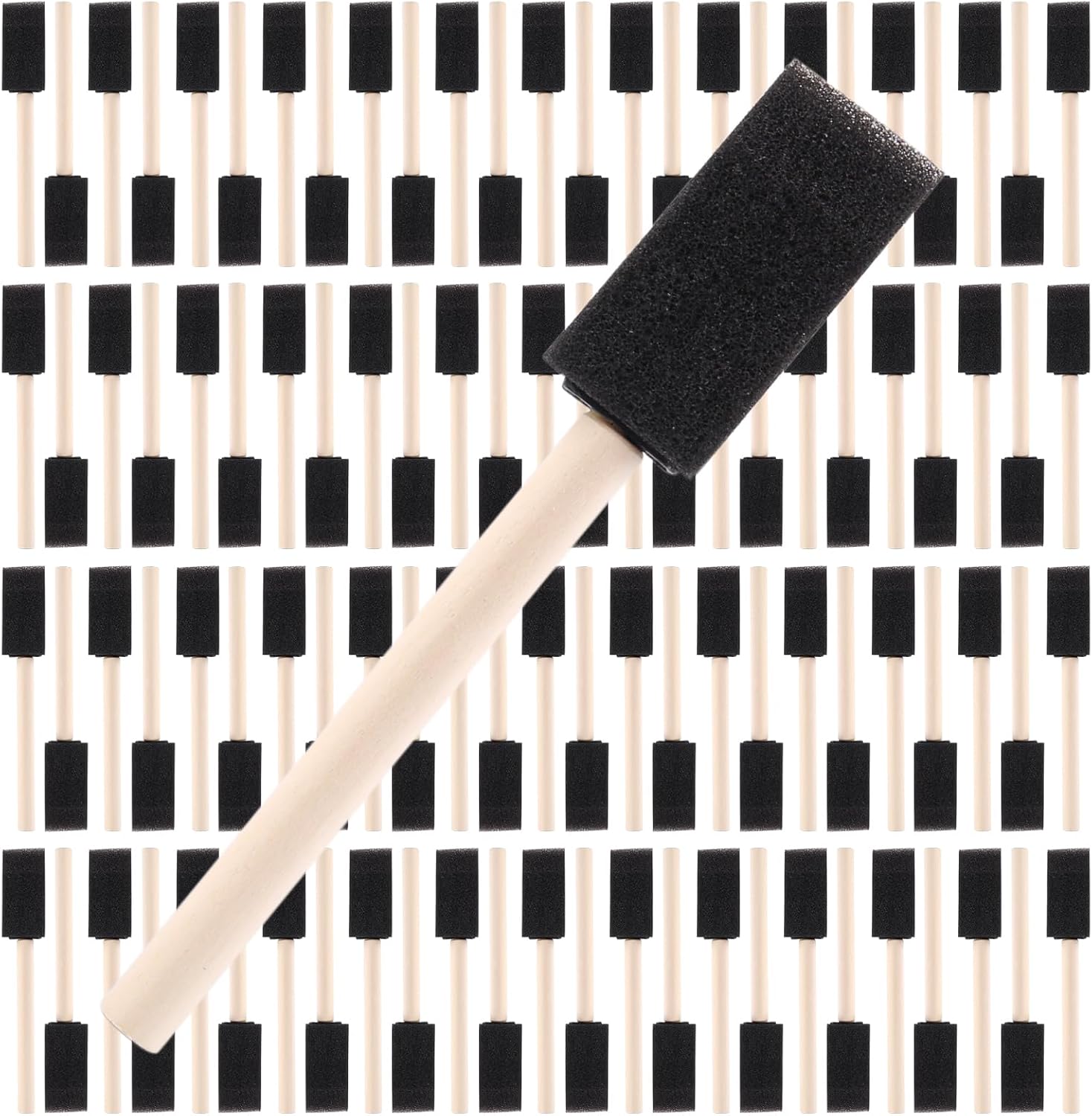
When you are running a class, a paint party or a scout troop project, you need a lot of identical brushes. Yaxuan’s pack has 100 1-inch foam brushes made with high-density foam and light-polished wooden handles, according to the listing.
The listing presents them as washable and reusable or disposable, which is exactly the flexibility you want with a big group. It names paints, varnishes, stains, polyurethanes and glues as compatible.
Best suited for: Teachers, party hosts, group craft sessions and frequent decoupage.
Key features:
- 100 brushes, 1 inch
- High-density foam
- Light-polished wood handles
- Washable, reusable or disposable
- For paint, varnish, stain, polyurethane, glue
Pros:
- Highest brush count
- Uniform size simplifies group setup
- Lowest cost per brush tier
- Can be treated as disposable
Cons and limitations:
- More than an individual crafter needs
- Single size only
- Mid-price tier for the box
Buying consideration: Hand out one brush per color per table to keep colors clean and cleanup fast.
6. DMSVK 20 Pcs 1 inch Foam Paint Brushes — Best for occasional crafters
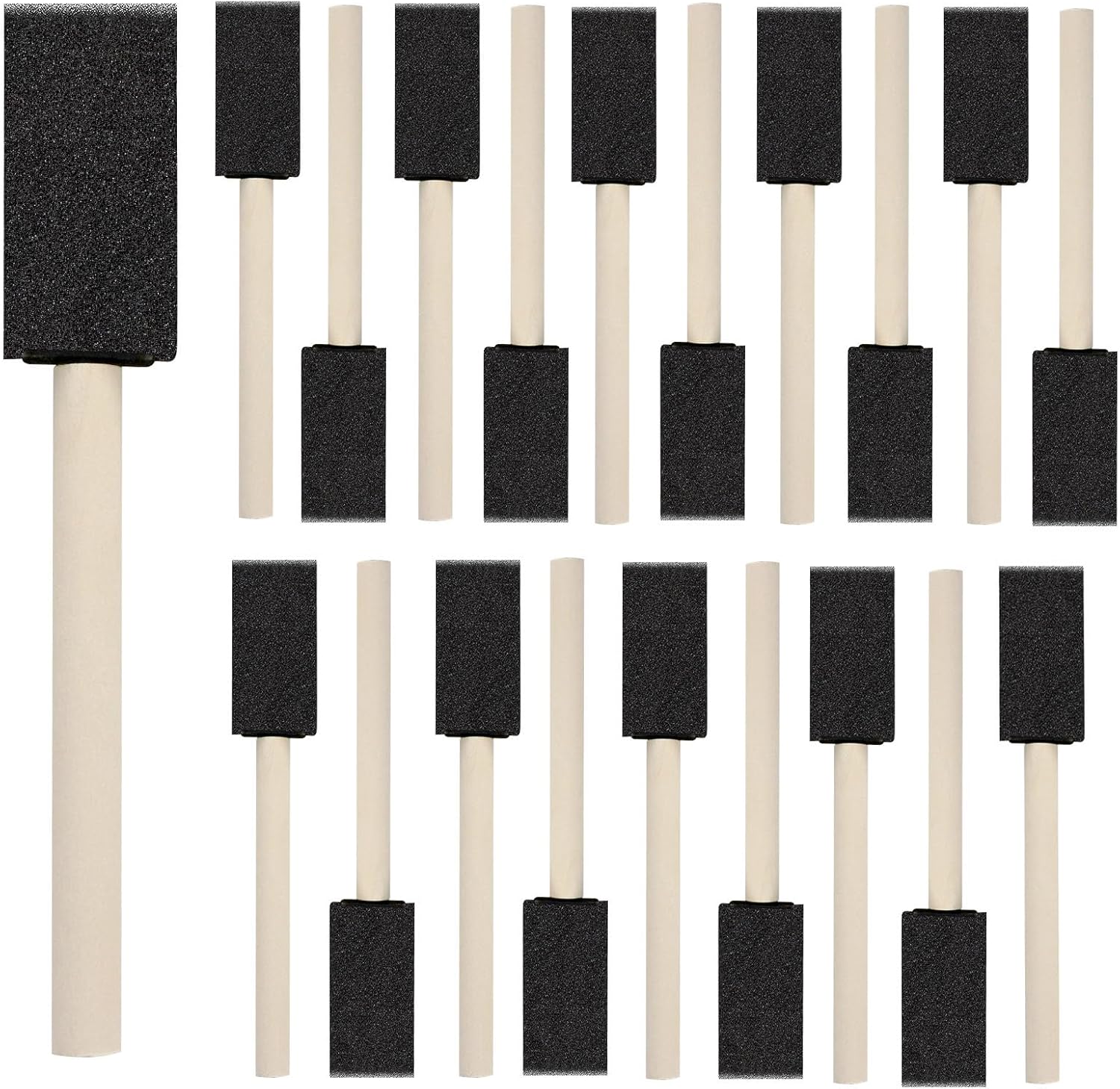
DMSVK’s 20-pack is a small, inexpensive option for someone who crafts now and then. The listing describes soft, elastic sponge heads for smooth, even application, lightweight wooden handles with a comfortable grip, and foam it says will not crack.
The brushes rinse clean with water or mild soap and can be reused, or simply thrown away after a messy job. It lists painting, crafts, staining, varnishing and touch-ups on wood, paper, canvas and more.
Best suited for: Occasional projects, touch-ups and stocking a home craft drawer.
Key features:
- 20 brushes, 1 inch
- Soft, elastic sponge heads
- Lightweight wooden handles
- Rinse with water or mild soap
- For paint, stain, varnish, touch-ups
Pros:
- Low price tier
- Enough for several projects
- Reusable or disposable
- Compact
Cons and limitations:
- Single size only
- Fewer brushes than bulk packs
- Less detail on foam density than premium sets
Buying consideration: Ideal as a starter pack; if you find yourself buying again, step up to a bulk or multi-size set.
Buying Guide: How to Choose a Foam Brush for Painting Crafts
A foam brush is simple, but choosing the right one for painting crafts still comes down to a few details.
Foam density
High-density foam with small cells holds paint evenly and releases it smoothly. Low-density foam can leave bubbles and drips. Look for listings that mention high-density or fine-celled foam, especially for varnish and Mod Podge.
Size
One-inch brushes suit most small crafts, edges and decoupage. Two-inch brushes cover boxes and signs efficiently. Three-inch brushes are best for sealing larger surfaces. Very narrow sizes help with trim and tight corners. A mixed set covers everything.
Tip shape
Beveled or wedge-shaped tips let you cut in along edges and get into corners. Use the long, flat side for coverage and the point for precision.
Handle and head attachment
A wobbly head ruins a smooth coat. Look for brushes described as having foam securely glued or fixed to sturdy wooden handles.
Paint and finish compatibility
Foam brushes work well with acrylic craft paint, chalk paint, stain, water-based varnish, glue and decoupage medium. Strong solvents can break down some foams, so check the label of your finish.
Pack size
Small packs suit occasional use. Bulk packs make sense for classes, parties and multi-step projects where you want a fresh brush for each product.
How to Get a Smooth Finish with a Foam Brush
- Dampen the foam first. For water-based paint and sealers, dip the brush in water and squeeze it almost dry. Slightly damp foam releases paint more evenly than dry foam.
- Load lightly. Dip only the lower third of the foam, then press it gently against the rim of the container. Too much paint is the main cause of drips and ridges.
- Use long, light strokes. Let the foam glide. Pressing hard squeezes paint out of the sides and leaves lines along the edges of each stroke.
- Work in one direction. On wood, follow the grain. On canvas or paper, choose one direction for each coat and stick to it.
- Do not overwork. Once a section is covered, move on. Going back over semi-dry paint or varnish lifts it and creates bubbles.
- Thin coats win. Two thin coats always look better than one heavy coat. Let each coat dry fully before the next.
- Clean promptly. Rinse the foam under running water, squeeze gently until the water runs clear, and stand the brush handle-down to dry.
For decoupage, apply a thin layer of medium to the surface, lay your paper down, smooth it from the center out, then seal with another thin coat on top. A clean, dedicated foam brush for each product, one for glue and one for varnish, prevents cloudy finishes.
Foam or Bristle?
Foam brushes are best for smooth, flat coats, sealers and decoupage. Bristle brushes are better for texture, blending and detailed painting. For a full comparison, read our guide on foam brush vs bristle brush, and see what a foam brush is used for for project ideas. When your craft needs fine details on top of a foam-brushed base, learn how to use a liner brush for detail work.
Common Mistakes to Avoid
- Pressing too hard, which squeezes paint out the sides and creates ridges
- Overloading the foam so it drips; dab off excess on the container rim
- Using foam brushes on very rough wood, which tears the foam
- Brushing back and forth too much over drying varnish, which causes bubbles
- Using the same brush for glue, color and varnish without cleaning
- Using foam brushes with strong solvents that can dissolve the foam
- Expecting foam to create texture or fine detail; switch to a bristle brush for that
FAQs
What are foam brushes best for in crafts?
They are best for smooth, even coats of paint, stain, varnish, glue and decoupage medium on flat surfaces like wood, paper, canvas and ceramic.
Can foam brushes be reused?
Yes. Most can be washed with soap and water and reused several times. Many crafters also treat them as disposable for messy jobs.
Do foam brushes leave streaks?
High-density foam brushes typically leave fewer streaks than cheap bristle brushes. Light pressure and not overworking the paint help keep coats smooth.
What size foam brush should I buy for crafts?
A 1-inch brush is the most versatile for small crafts. Add 2-inch brushes for boxes and signs and a narrow size for edges.
Can I use foam brushes with Mod Podge?
Yes. Foam brushes are popular for Mod Podge and other decoupage mediums because they apply smooth, even coats.
Are foam brushes good for acrylic paint?
Yes, for flat coverage and base coats. For blending, texture and detailed painting, bristle or synthetic artist brushes work better.
Final Recommendation
For most people, the Yangzhoumingxuan 48-Piece set is the best foam brush for painting crafts because its 10 sizes cover detail work and coverage in one pack. If you mostly use 1-inch brushes, the U.S. Art Supply 50-Pack is a reliable bulk option, and the Yaxuan 100-pack is the right choice for classes and parties.
For larger surfaces, the Phinus 1, 2 and 3 inch set and the Bates 2-inch pack cover ground quickly. Occasional crafters can start with the DMSVK 20-pack and upgrade later.