My Amsterdam fluid acrylic paint review: smooth flow, strong pigment, great value.
If you love pour art, fast layering, or clean line work, you know paint choice can make or break the piece. Lumpy coverage and weak tinting kill momentum. I wrote this Amsterdam fluid acrylic paint review to help you skip trial and error and get right to bold, bright color. I tested core colors, a large white, a true black, and a pearl effects set. I checked flow, coverage, mixing, and finish on canvas, paper, and wood. Here’s what stood out, where to be careful, and how to pick the right format for your style.

Amsterdam Standard Series Acrylic Paint…
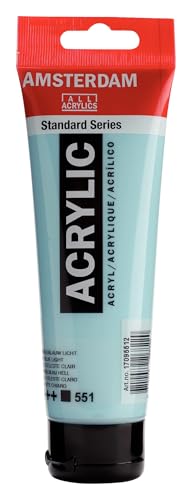
Professional Acrylic Paint: Amsterdam Standard Series Acrylic Paint in Sky Blue Light 551 features a medium viscosity formula for smooth application, visible brush strokes, and strong coverage Versatile Multi-Surface Paint:…
Amsterdam Standard Series Acrylic Paint…
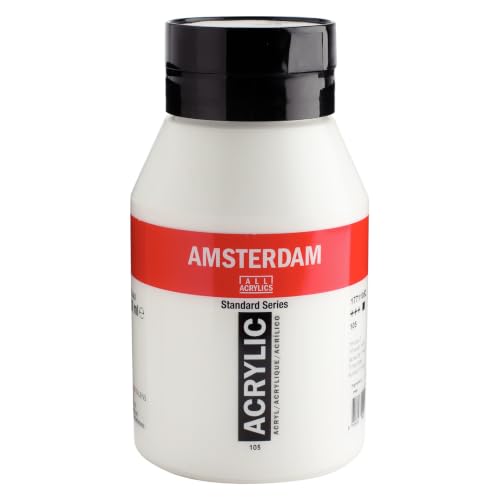
Acrylic Paint: Amsterdam Standard Series Acrylic Paint Jar in Titanium White delivers vibrant acrylic color with a durable paint film for expressive artistic results Art Supplies: This permanent acrylic paint…
Amsterdam Standard Series acrylics primary…
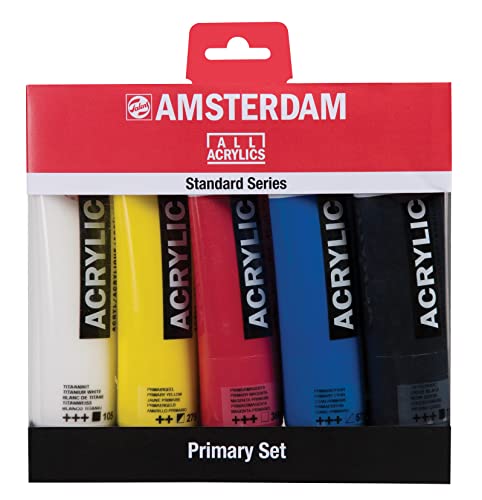
Amsterdam Standard Series acrylic paint primary set | 5 x 120 ml (17790905) An exceptionally durable paint film (the binding agent consists of 100% acrylic resin), for an everlasting result…
Check Price on Amazon →Amsterdam Acrylic Tube, Sky Blue Light 551, 4 oz

Sky Blue Light 551 is a crowd-pleaser because it reads crisp and modern without turning chalky. The Amsterdam Standard Series tube has a smooth, medium-flow body that thins fast with water or medium. Out of the tube, it lays down a satin finish with even coverage on primed canvas. The pigment strength is solid for a light blue, so it holds its own in tints and gradients.
When I push it toward “fluid,” a 1:1 mix with pouring medium gives a clean ribbon with minimal foam. It levels well, so lines look sleek in flat graphics and lettering. Dry time is quick, but not rushed, which helps when blending sky or sea themes. Once dry, the color shift is slight, staying bright and close to wet tone.
Pros:
- Bright, modern light blue that resists chalkiness
- Smooth body that thins to fluid without clumping
- Levels well for clean lines and gradients
- Consistent satin finish with mild color shift
- Reliable coverage for a light tint
- Plays nicely with glazing and pouring mediums
- Good lightfastness typical of the Standard Series
- Great starter shade for sea, sky, and pastel palettes
Cons:
- Opacity is moderate; two coats give best block coverage
- Can look cool or icy under warm indoor light
- Needs gesso for best adhesion on raw wood
My Recommendation
If you paint skies, beaches, soft abstracts, or clean design lines, this single color earns a spot in your core kit. It excels at fast blends and fluid ribbons when paired with the proper medium. In my Amsterdam fluid acrylic paint review notes, this tube stood out for consistent flow and a calm, modern hue that prints well in photos. It’s a simple way to add lift and space to a heavy palette.
Use it for underpaintings, highlights, and fresh contrast with warm reds or earthy browns. It keeps its voice in mixes without taking over. For pour artists, it creates strong negative space that still feels alive. For illustrators, it stays even under pen detail after full cure.
| Best for | Why |
|---|---|
| Skies and seascapes | Clean tints, smooth gradients, minimal color shift |
| Fluid lines and pours | Thins to fluid fast and levels well |
| Minimalist design work | Satin finish with crisp, modern brightness |
Amsterdam Acrylic Jar, Titanium White, 33.8 oz

The 33.8 oz Titanium White jar is the workhorse I reach for daily. It is thick enough to cover ground fast, yet it loosens with a splash of water or medium in seconds. I get stable opacity across canvas, paper, primed wood, and gesso boards. Once dry, the finish sits satin-matte, so colors layered over it stay true and easy to photograph.
In mixing tests, a small amount pushes colors brighter without killing saturation. For fluid work, this jar saves time. I portion what I need, add pouring medium, and get a silky flow that holds cells when I use silicone or torch techniques. In my Amsterdam fluid acrylic paint review tests, this white kept blends clean and resisted the chalky haze that cheaper whites can cause.
Pros:
- Huge 33.8 oz size for studios and frequent painters
- High opacity with smooth, satin-matte finish
- Thins fast to fluid with water or medium
- Clean tints without graying other colors
- Reliable base layer for bright top coats
- Good lightfastness and consistent batch quality
- Pairs well with pouring mediums and cell techniques
- Jar format is easy to dip, portion, and reseal
Cons:
- Large jar can dry around the rim if left open
- Not as ultra-opaque as heavy-body titanium whites
- Can cool warm mixes if you add too much
My Recommendation
If you paint every week, this is the best value pick in this Amsterdam fluid acrylic paint review. It is ideal for priming areas, tinting, and getting reliable negative space in pours. Beginners will love how forgiving it is in color mixing. Pros will love the speed and even finish across surfaces.
Keep a damp palette sponge or a spray bottle handy to extend open time for blends. Wipe the jar rim after each use to avoid crust. For large pours, pre-mix batches so your white stays consistent cup to cup. Availability tends to be steady, and the price per ounce is hard to beat.
| Best for | Why |
|---|---|
| High-use studios | Great price per ounce and reliable opacity |
| Pours and swipes | Thins to fluid fast and supports cell formation |
| Mixing and highlights | Keeps colors bright without dulling |
Amsterdam Acrylics Primary Set, 5 x 120 ml
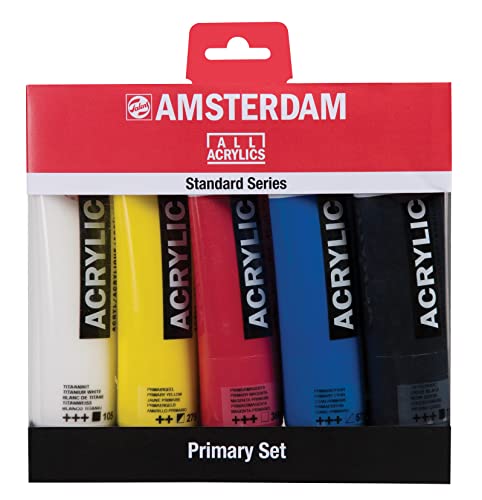
This 5-pack bundles the primaries most painters need to mix almost any color. The 120 ml tubes are generous, and the flow sits in that sweet spot: not runny, not paste. Blends are fast, and layers dry at a steady clip, so you can build depth without muddying. For new painters, it is a low-risk way to learn bias and mixing while keeping quality high.
For fluid art, add pouring medium and you’ll get bright, level rivers of color. I like this set for quick color studies, travel kits, and gift sets. The coverage is predictable across gessoed canvas and paper. In my Amsterdam fluid acrylic paint review tests, these primaries held their saturation in both thick strokes and thinned pours.
Pros:
- Core primaries reduce guesswork and cover most palettes
- 120 ml tubes offer strong value and less waste
- Mixes cleanly without rapid mud
- Levels well when thinned for fluid work
- Good lightfastness on standard Amsterdam pigments
- Even satin finish helps with consistent photos
- Great starter or gift kit for new artists
- Travel-friendly compared to jars or bottles
Cons:
- Set primaries may not match every painter’s bias
- No metallics or specialty effects included
- Opaque coverage varies by color; some need two coats
My Recommendation
If you want a clean, simple entry point, start here. This set covers most mixing tasks and gives even results as you thin for fluid techniques. In my Amsterdam fluid acrylic paint review, the primary set scored well for teaching color control and handling. It lets you master basics before you chase niche hues.
It is best for students, hobbyists, and anyone building a travel kit. The size is generous, so you can practice without rationing paint. Pair it with a good pouring medium if you plan fluid art. Stock varies, so grab it when the price dips.
| Best for | Why |
|---|---|
| Color mixing practice | Balanced primaries with predictable blending |
| Fluid beginners | Thins evenly and levels for clean ribbons |
| Travel or class kits | Compact tubes with strong value |
Amsterdam Acrylic Tube, Oxide Black 735, 4 oz

Oxide Black 735 is a must for contrast, line work, and punch. In tube form, it spreads in a silk-satin layer without streaks. It is strong, so you need less to push depth in mixes. For clean outlines, it holds a crisp edge, and for pours, it anchors compositions without bleeding too far.
When I thin it with pouring medium, it holds a ribbon and plays well with white and metallic accents. It can read a hair warm compared to carbon blacks, which helps avoid a lifeless gray when mixed. In my Amsterdam fluid acrylic paint review tests, this black controlled glare better than glossier rivals. That makes it easier to shoot on camera or scan for prints.
Pros:
- Strong tinting strength; a little goes a long way
- Satin finish reduces glare in photos
- Edges stay sharp for line work and lettering
- Levels predictably when thinned to fluid
- Pairs well with whites and metallics for high-contrast pours
- Consistent batch quality and lightfastness
- Reliable on canvas, paper, and primed wood
- Good value for daily use
Cons:
- Can read slightly warm versus a true carbon black
- Heavy hand will overpower delicate mixes fast
- Needs proper gesso on slick panels to avoid lift
My Recommendation
If you crave crisp lines, deep shadows, or bold pour contrast, this is the smart pick. It is the black I grab when I need control without shine. In my Amsterdam fluid acrylic paint review, Oxide Black earned a top spot for line stability and photo-friendly finish. It balances power with predictable flow, which is rare at this price.
Use it for lettering, silhouettes, or swipe anchors in fluid pieces. For mixes, add a little at a time to avoid crushing color. If you prefer a colder black, you can cool it with a touch of blue. Availability is steady, and it is easy to restock.
| Best for | Why |
|---|---|
| Line work and lettering | Sharp edges and satin control |
| High-contrast pours | Levels well and anchors color |
| Photo and print work | Reduced glare and solid black mass |
Amsterdam Pearl Acrylic Set, 6 x 0.6 oz

The Pearl set adds that soft shimmer that looks rich in light. The 0.6 oz tubes are small, but they are perfect for accents, glazing, and finishing touches. The mica-like sheen reads elegant instead of flashy when applied thin. On black grounds, the glow pops; on white, it looks subtle and silky.
For fluid pours, a 1:1 or 1:2 mix with medium keeps the shimmer even. Stir gently to avoid microbubbles, and pour slow to keep the sheen aligned. In my Amsterdam fluid acrylic paint review notes, these pearls kept their luster after drying and did not yellow. They also layer nicely over matte colors to add depth without heavy build.
Pros:
- Elegant pearl sheen for highlights and accents
- Works on dark and light grounds with distinct looks
- Thins to fluid while keeping shimmer
- Great for glazing and finishing touches
- Even, satin sheen without chunky glitter
- Good compatibility with standard Amsterdam colors
- Low waste format for detail work
- Ideal for holiday, fantasy, and nature themes
Cons:
- Small tubes; not ideal for large backgrounds
- Coverage is semi-opaque; base color will show
- Sheen can show brush direction if applied thick
My Recommendation
Pick this set if you love shimmer done right. The pearl finish looks premium, especially over rich blacks or deep jewel tones. In my Amsterdam fluid acrylic paint review, this was the set that turned simple studies into showpieces with a quick glaze or edge highlight. It is a compact way to add range to a standard kit.
Best for accents, typography glows, and layered effects. If you pour, pre-mix gently and pour slow for an even sheen. If you paint flat, use a soft flat brush or soft mop for final passes. Stock can swing near holidays, so plan ahead.
| Best for | Why |
|---|---|
| Accents and highlights | Soft pearl sheen that elevates details |
| Fluid shimmer pours | Holds luster when thinned with medium |
| Glazing over flats | Adds depth without heavy build |
FAQs Of Amsterdam fluid acrylic paint review
Are Amsterdam Standard Series paints true “fluid” acrylics out of the tube?
No. They are medium-viscosity acrylics. Add water or pouring medium to reach a fluid consistency for pours and line work.
Do these paints crack when used in fluid pours?
They should not crack if you mix with a quality pouring medium and keep layers thin. Dry on a level surface.
How is the lightfastness of Amsterdam Standard Series?
Most colors rate good to excellent lightfastness. Check each tube’s symbol for exact rating before long-term display.
Can I use these on wood, canvas, and paper?
Yes. Prime wood and canvas with gesso for best adhesion. Use heavier paper for wet techniques.
Do the colors darken when dry?
There is a mild shift toward darker, common with acrylics. Amsterdam’s satin finish keeps shifts modest and predictable.
Final Verdict: Which Should You Buy?
The Titanium White 33.8 oz jar is the best value for daily painting and fluid mixes. It anchors blends, pours, and highlights with a clean satin finish.
This Amsterdam fluid acrylic paint review shows consistent flow, strong pigment, and fair prices. Pick the white jar first, then add the Primary Set and your favorite accents.