
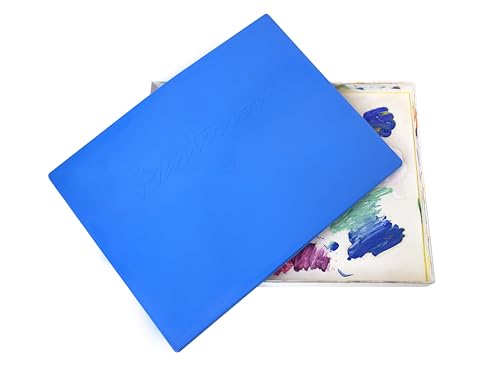
PaintingProGuide is reader-supported. When you buy through links on this page we may earn an affiliate commission at no extra cost to you.
Acrylic skins over in about fifteen minutes on an open palette and is unusable within an hour. An airtight palette for acrylic solves the problem the simple way: seal the lid, cut off the airflow, and the paint you squeezed out on Tuesday is still soft on Thursday. Some models add a damp sponge and membrane paper to keep paint wet for weeks; others are plain sealed boxes that rely on the lid alone.
Below are seven sealed palettes that work with acrylic, from a classic Masterson stay-wet tray to a 16-well travel box with a built-in water cup. We have grouped them by how they keep paint fresh and how much mixing room they give you, because a palette that is perfect for a studio easel is a poor choice for a backpack.
Quick answer: The Mijello Artelier Airtight Palette MAP-3025 is the best airtight palette for acrylic if you want a large sealed mixing surface without sponges or paper; dried paint peels off and the lid doubles as a second palette. For paint that stays wet for weeks, the Masterson Sta-Wet Handy Palette adds a sponge-and-paper system in a compact 8.5 x 7 inch box. Travelers who pre-mix colors should look at the DUGATO 16-Well Airtight Palette Box with its silicone seal and folding water cup.
Our Top Picks at a Glance
- Mijello Artelier Airtight Palette MAP-3025 — Best overall sealed mixing palette for acrylic
- Masterson Sta-Wet Handy Palette — Best for keeping acrylic wet for days or weeks
- Masterson Palette Seal 12 x 16 — Best studio-size storage for a full palette
- HueHaven Stay-Wet Palette with Anti-Leak Lid — Best gray mixing surface, no sponge needed
- DUGATO 16-Well Airtight Palette Box — Best for travel and pre-mixed colors
- Mr. Pen Airtight Palette, 18 Wells — Best budget well palette for fluid acrylic
- Supernine 12-Cell Airtight Paint Box — Best ultra-compact paint saver
| Product | Best For | Key Spec | Key Strength | Price Tier |
|---|---|---|---|---|
| Mijello MAP-3025 | Studio mixing, acrylic and oil | 13 x 9 x 1.2 in; peel-off surface | Lid is a second palette | $$ |
| Masterson Sta-Wet Handy | Paint fresh for weeks | 8.5 x 7 x 1 in; sponge + paper | Proven stay-wet system | $$ |
| Masterson Palette Seal | Full-size palette storage | 12 x 16 in tray and lid | Largest sealed area | $$ |
| HueHaven Stay-Wet Palette | Mixing on gray, travel | 11 x 6.5 x 1.25 in; 0.76 lb | Base and lid both mixing surfaces | $ |
| DUGATO 16-Well Box | Travel, pre-mixed colors | 5.3 x 4.4 x 0.95 in; 16 wells ~8 ml | Silicone seal, folding cup | $ |
| Mr. Pen 18-Well Palette | Fluid acrylic, students | 10.6 x 5.2 in; 18 wells, 2 mixing areas | Silicone seal, low cost | $ |
| Supernine 12-Cell Box | Pocket paint saver | 12 cells; 3.52 oz | Rubber airtight cover | $ |
How We Chose
These recommendations draw on the Amazon listing details and specifications checked in October 2026, how well each palette’s sealing method, size and surface suit acrylic painting, and how widely each product is reviewed by Amazon buyers. We have not used these palettes ourselves. Where a listing warns of a limitation, such as a hinge that is not watertight, we pass it on.
Our criteria:
- Sealing method: a true gasket or silicone seal, a snap-fit lid, or a sponge-and-membrane stay-wet system.
- Acrylic compatibility: listings that name acrylic, not only watercolor or gouache.
- Mixing area: open surface for blending versus wells for storing colors.
- Footprint: studio trays versus boxes that fit a bag.
- Cleanup: surfaces from which dried acrylic peels or soaks off easily.
- Consumables: whether the system needs replacement paper and sponges.
Best Airtight Palettes for Acrylic Reviewed
1. Mijello Acrylic Oil Color Palette Artelier Airtight MAP-3025 — Best for studio mixing of acrylic and oil

Mijello’s Artelier palette is a 330 x 230 x 30 mm (about 13 x 9 x 1.2 inch) sealed tray with a flat mixing surface and a lid that the listing says can be used as a second palette. It is made for acrylic, poster and oil colors, and the special airtight structure is described as keeping paints fresh for weeks.
The cleanup claim is the one acrylic painters will care about: dried color peels off the surface. That means no palette paper, no sponge, and no soaking. The trade-off is that without a moisture source, acrylic stays workable for a shorter time than in a true stay-wet system, so this is a palette for painters who return within a day or two rather than a month.
Best suited for: Acrylic and oil painters who want a large, reusable mixing surface and hate throwing away palette paper.
Key features:
- 330 x 230 x 30 mm sealed tray
- Flat mixing surface with peel-off cleanup
- Lid doubles as an extra palette
- Listed for acrylic, poster and oil colors
- Airtight structure for weeks of freshness
- White surface
Pros:
- No consumables
- Two mixing surfaces in one box
- Suits both acrylic and oil
Cons and limitations:
- No sponge, so acrylic dries faster than in a stay-wet system
- Fairly large for a bag
- White surface can skew color judgment for some painters
Buying consideration: Mist the paint lightly with water before closing the lid; a sealed box keeps humidity in, so a little moisture goes a long way.
2. Masterson Sta-Wet Handy Palette — Best for keeping acrylic wet for days or weeks

The Sta-Wet Handy Palette is the small version of the system acrylic painters have used for decades. A sponge sits in the 8.5 x 7 x 1 inch tray, a sheet of palette paper goes on top, and water wicks up through the paper to keep acrylic workable. Masterson says that with the lid closed, paint stays usable for days or even weeks.
Made in the USA and listed as ideal for small projects and classrooms, this is the palette for anyone who paints in short sessions and wants to pick up exactly where they left off. The cost is consumables: sponge and paper need replacing periodically.
Best suited for: Acrylic painters who work in frequent short sessions, miniature painters, and students who need paint to survive between classes.
Key features:
- 8.5 x 7 x 1 inch sealed tray
- Sponge plus palette paper stay-wet system
- Paint workable for days to weeks with the lid closed
- Made in USA
- Designed for water-based paint
Pros:
- Longest realistic working time for acrylic
- Compact and light
- Established, widely used system
Cons and limitations:
- Needs replacement paper and sponge
- Small mixing area for large paintings
- Water-based paint only
Buying consideration: Keep the sponge damp, not soaked; too much water thins the paint from underneath and can grow mildew.
3. Masterson Palette Seal 12 x 16 in — Best for full-size palette storage

The Palette Seal is the studio-size Masterson tray, 12 x 16 inches, sold as a tray and lid only. It is designed to store a full-size artist palette between sessions and is listed as compatible with both acrylic and oil workflows. Palette paper and sponge are sold separately for anyone who wants to turn it into a stay-wet system.
Masterson describes a snap-style seal: align the lid evenly and press around the edges until seated. For a painter with a large disposable-paper palette or a glass palette that fits inside, this is the simplest way to stop acrylic drying overnight without rebuilding the whole mixing setup.
Best suited for: Studio painters with a large working palette who want to seal it between sessions.
Key features:
- 12 x 16 inch tray and sealing lid
- Tray and lid only; paper and sponge sold separately
- Compatible with acrylic and oil
- Snap-seal lid design
- Suits classrooms and studios
Pros:
- Largest sealed area here
- Converts to a full stay-wet system
- Works for oil as well as acrylic
Cons and limitations:
- Nothing to mix on until you add paper or a palette
- Too big for travel
- Seal relies on firm, even pressure
Buying consideration: If you already own a Sta-Wet sponge and paper in this size, this tray is a straightforward replacement; if not, budget for them.
4. HueHaven Stay-Wet Palette with Airtight Anti-Leak Lid — Best for a gray mixing surface with no sponge

HueHaven takes a different route from Masterson: no sponge, no paper, just an anti-leak lid that the listing says blocks airflow to slow oil oxidation and traps moisture for acrylic, gouache and watercolor. Both the 11 x 6.5 x 1.25 inch base and the lid are mixing surfaces, and the whole thing weighs 0.76 lb.
The gray color is a real advantage for color mixing because it does not distort your reading of values the way white does. HueHaven also suggests setting the palette on an ice pack while painting to slow drying, and says dried paint softens with water or solvent and lifts off.
Best suited for: Acrylic and oil painters who judge color carefully and want a sealed palette they can carry.
Key features:
- 11 x 6.5 x 1.25 inch, 0.76 lb
- Anti-leak airtight lid
- Base and lid both usable for mixing
- Gray mixing surface
- No sponge or paper required
- Listed for acrylic, oil, gouache and watercolor
Pros:
- Neutral gray surface
- Light enough for a bag
- Works across mediums
Cons and limitations:
- No moisture reservoir, so shorter working time than a sponge system
- Smaller than the Mijello
- Cleanup requires soaking
Buying consideration: For long gaps between sessions, lay a damp paper towel in the lid before closing to add humidity without touching the paint.
5. DUGATO 16-Well Airtight Palette Box with Foldable Water Cup — Best for travel and pre-mixed colors

The DUGATO box is built for painters who mix colors at home and paint elsewhere. Sixteen deep wells hold roughly 8 ml each, a removable silicone seal locks in moisture, and the clear lid doubles as a mixing surface. At about 5.3 x 4.4 x 0.95 inches it fits a backpack pocket.
A collapsible silicone water cup with three brush rests folds flat and packs with it. DUGATO lists the palette for gouache, watercolor and acrylic and says the seal keeps paint workable for days. The care note matters: rinse the silicone seal in cool water, never hot, or it will deform.
Best suited for: Plein air and sketchbook painters using fluid or soft-body acrylic who want to carry pre-mixed colors.
Key features:
- 16 wells, about 8 ml each
- Removable silicone seal
- Clear lid works as a mixing palette
- Foldable silicone water cup with brush rests
- About 5.3 x 4.4 x 0.95 inches
- Listed for acrylic, gouache and watercolor
Pros:
- Genuinely pocketable
- Seal is removable for cleaning
- Water cup included
Cons and limitations:
- Small mixing area
- Wells suit fluid acrylic better than heavy body
- Seal needs cool-water care
Buying consideration: Heavy-body acrylic in deep wells skins on top while staying wet underneath; stir before use or stick to fluid acrylic in this box.
6. Mr. Pen Airtight Palette with Lid, 18 Wells & 2 Mixing Areas — Best for budget well storage for fluid acrylic

Mr. Pen’s palette gives you 18 wells and two large mixing areas in a 10.6 x 5.2 inch white plastic case with a silicone-sealed lid. The listing specifically says it works for acrylic as well as watercolor and other water-based pigments, and positions it for classrooms, travel and plein air.
One honest caveat comes straight from Mr. Pen: the hinge is not completely watertight, so you should not carry water in it. For acrylic, that means it keeps paint moist in the wells but should travel upright and empty of free liquid.
Best suited for: Students and hobbyists who use fluid acrylic or acrylic gouache and want many colors on hand cheaply.
Key features:
- 18 wells and 2 mixing areas
- 10.6 x 5.2 inch white plastic case
- Silicone seal on the lid
- Listed for watercolor, acrylic and water-based pigments
- Easy-clean sturdy plastic
Pros:
- Most wells for the money
- Two real mixing areas
- Light and classroom-friendly
Cons and limitations:
- Hinge is not fully watertight
- White surface
- Wells are shallow for heavy-body paint
Buying consideration: Use this for acrylic inks, fluid acrylics or acrylic gouache; tube acrylics are better stored in the deeper DUGATO wells or on a flat stay-wet surface.
7. Supernine 12-Cell Airtight Paint Palette Box — Best for an ultra-compact paint saver

The Supernine box is a 12-cell paint saver with a rubber airtight cover, weighing just 3.52 ounces. The listing pitches it at gouache, acrylic and watercolor painters who want to keep squeezed-out paint usable and carry it without spills.
It is more a storage box than a palette: the cells are for holding color, and mixing room is minimal. For an acrylic painter it makes sense as a place to park leftover mixes from a session so they are not wasted, or as a pocket kit for sketchbook work.
Best suited for: Painters who want to save leftover acrylic between sessions or carry a dozen colors in a pocket.
Key features:
- 12 cells
- Rubber airtight cover
- 3.52 ounces
- Listed for gouache, acrylic and watercolor
- Spill-resistant for transport
Pros:
- Smallest and lightest option here
- Low cost
- Stops leftover paint going to waste
Cons and limitations:
- Almost no mixing space
- Cell dimensions not published
- Rubber cover needs the same cool-water care as silicone
Buying consideration: Treat this as a companion to a larger palette, not a replacement for one.
Buying Guide: How to Choose an Airtight Palette for Acrylic
Sealed box versus stay-wet system
A sealed box (Mijello, HueHaven, Masterson Palette Seal without inserts) slows drying by cutting off air. A stay-wet system (Masterson Sta-Wet) adds a damp sponge and membrane paper so water feeds the paint continuously. For gaps of a day or two, a sealed box is enough; for a week or more, you want the sponge.
Wells versus a flat surface
Wells (DUGATO, Mr. Pen, Supernine) store individual colors and suit fluid acrylic, acrylic gouache and inks. A flat surface (Mijello, HueHaven, Masterson) is for mixing heavy-body paint with a knife or brush. Many painters end up with one of each.
Match the size to your painting
A 12 x 16 tray is right for canvases and a studio easel; a 5-inch box is right for a sketchbook. Buying a palette too small for the painting means mixing in cramped puddles that contaminate each other.
Surface color
Gray surfaces like HueHaven’s let you judge value and saturation more accurately than white, which makes every mix look darker than it will on a white canvas. If you paint on toned grounds, gray is a real advantage.
Seal material and care
Silicone and rubber seals (DUGATO, Mr. Pen, Supernine) give the most reliable airtight closure but deform in hot water. Snap-fit lids (Masterson) have no gasket to wear out but need even pressure to seat. Check the listing for care instructions before you put a palette in the dishwasher.
Cleanup method
Dried acrylic peels cleanly off some plastics (Mijello states this outright) and must be soaked off others (HueHaven). Stay-wet systems avoid the problem entirely by letting you discard the paper.
Consumables and running cost
Masterson paper and sponges are an ongoing expense; sealed boxes have none. If you paint daily, the convenience of a stay-wet system usually outweighs the cost; if you paint occasionally, a peel-clean box is cheaper over time.
Related Guides on Palettes and Paint Care
If you are new to the sponge-and-paper approach, start with what a wet palette is and how it works. When a session does get away from you, how to rehydrate dried acrylic on a palette explains what can and cannot be saved, and how to clean a painting palette covers both plastic and glass surfaces.
Common Mistakes to Avoid
- Over-wetting a stay-wet sponge. Excess water thins the paint from below and encourages mildew. Damp, not dripping.
- Storing heavy-body acrylic in shallow wells. It skins on top. Use a flat surface or deep wells and stir before use.
- Washing silicone seals in hot water. Both DUGATO and Mr. Pen warn against it; the seal warps and stops sealing.
- Carrying water in a palette with a hinged lid. Mr. Pen states its hinge is not watertight. Empty the mixing areas before transport.
- Buying by well count. More wells means less mixing room. Decide which you need first.
- Leaving the lid off between mixes. Even a sealed palette dries out if it sits open for an hour; close it whenever you step away.
FAQs
How long does acrylic stay wet in an airtight palette?
In a plain sealed box, usually a day or two depending on humidity and how thick the paint is. In a sponge-and-paper stay-wet system like the Masterson Sta-Wet, the listing claims days to weeks with the lid closed.
Do I need palette paper for an airtight acrylic palette?
Only with stay-wet systems such as the Masterson Sta-Wet. Sealed boxes like the Mijello and HueHaven are used bare, and dried paint is peeled or soaked off.
Can I use a watercolor airtight palette for acrylic?
Yes, if the listing says so. Mr. Pen, DUGATO and Supernine all list acrylic alongside watercolor and gouache. Shallow wells suit fluid acrylic better than heavy-body tube paint.
What size airtight palette do I need?
For studio canvases, a tray around 12 x 16 inches (Masterson Palette Seal) or 13 x 9 inches (Mijello) gives real mixing room. For travel and sketchbooks, a 5 to 11 inch box is enough.
Is a gray palette better than white for acrylic?
Gray helps you judge values and saturation accurately because white makes mixes look darker than they will on canvas. HueHaven is the gray option in this group.
How do I clean dried acrylic out of a sealed palette?
On peel-friendly plastic like the Mijello, let it dry fully and lift it off in a sheet. On other surfaces, add water and let it sit until the paint softens, as HueHaven recommends. Keep silicone seals away from hot water.
Final Recommendation
If you paint on canvas and want a sealed mixing surface with zero running cost, buy the Mijello Artelier MAP-3025. If your sessions are short and spread across the week, the Masterson Sta-Wet Handy Palette keeps acrylic wet longer than anything else here, and studio painters with a large palette should pair the Masterson Palette Seal with paper and sponge. The HueHaven is the pick for anyone who mixes on gray, while the DUGATO, Mr. Pen and Supernine boxes are for fluid acrylic, students and travel. No single palette suits every workflow, which is why many acrylic painters keep a flat stay-wet tray at the easel and a well box in the bag.




