PaintingProGuide is reader-supported. When you buy through links on this page we may earn an affiliate commission at no extra cost to you.
Pastel is pure pigment held together with very little binder, so it stays on a surface only if that surface has tooth, a slightly rough texture that grabs and holds particles. That is the whole question with pastels and canvas. Ordinary acrylic-primed canvas is designed for paint, and its gesso is often too smooth for soft pastel to build up in layers; the first few strokes look fine, then the surface fills and new pastel slides off. Oil pastels, which have a waxy binder, are more forgiving. The best canvas for pastels is therefore either a support that already has real tooth, such as medium-tooth linen panels, or an inexpensive rigid canvas panel that you prepare with a pastel ground. For many pastel artists, a good pastel paper is still the easiest starting point.
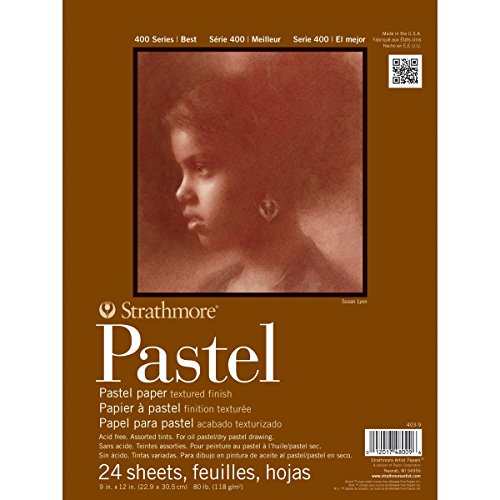
Quick answer: For pastel work on a canvas-type support, the Senso Clear Primed Linen Panels are the best ready-to-use option: medium-tooth natural linen on a 3 mm archival MDF backer, with pastels, graphite and charcoal specifically listed. If you prefer to prepare your own surface, the Simetufy 12-pack of MDF-core cotton panels gives you rigid boards to coat with pastel ground. For practice and color studies, a Strathmore 400 Series pastel pad in assorted colors is the traditional and inexpensive choice.
Our product data for this query was mostly standard canvas panels and stretched canvas, plus one linen panel and one pastel paper pad. Below we explain which work for pastels as they come, which need preparation, and how to prepare them.
Soft Pastels, Oil Pastels and Canvas
Soft pastels
Soft pastels need tooth. On smooth acrylic gesso, they skid and the surface fills after a layer or two. With a pastel ground or a toothy support, you can build many layers, blend and add crisp final strokes.
Oil pastels
Oil pastels stick through their waxy binder rather than tooth alone, so they work reasonably well on primed canvas and canvas boards. Many artists still like a little texture for layering.
Pastel pencils
Harder and more precise, pastel pencils are often used for detail over soft pastel and need a similar toothy surface.
Pastel ground
Pastel grounds are acrylic-based coatings containing fine grit, often pumice or marble dust, that create a sanded, paper-like tooth on any rigid surface. Brushed onto a canvas panel, they turn it into a pastel surface.
Why rigid supports help
Pastel dust falls off flexible surfaces when they are bumped. Rigid panels, especially MDF, are more stable and easier to frame under glass.
Framing
Soft pastel work is usually framed under glass with a spacer so the glass does not touch the surface. Fixatives can help but can darken colors.
Our Top Picks at a Glance
- Senso Clear Primed Linen Panels, 8×10, 3 Pack — Best ready-to-use canvas for pastels
- Strathmore 400 Series Pastel Pad, 9×12 — Best traditional pastel surface
- Simetufy 12 Pack 8×10 Canvas Boards, MDF — Best panels to prepare with pastel ground
- YONEVALON 48 Pack 8×10 Canvas Boards — Best bulk boards for oil pastel
- KEFF 24-Pack Multi-Size Canvas Boards — Best size variety for oil pastel
- GOTIDEAL 14-Piece Stretched Canvas Set — Best stretched option for oil pastel
- ESRICH 5 Pack 8×10 Canvas Boards — Best budget trial boards
| Product | Best For | Key Spec | Key Strength | Price Tier |
|---|---|---|---|---|
| Senso Linen Panels | Soft pastel, mixed media | 3 x 8×10, medium-tooth linen, clear primed, 3 mm MDF | Pastels listed | $$ |
| Strathmore 400 Pastel Pad | Practice, studies | 24 sheets 9×12, 80 lb, textured laid, assorted colors | Made for pastel | $ |
| Simetufy 12 Pack | Prepare with ground | 12 x 8×10, cotton, MDF core | Rigid base | $ |
| YONEVALON 48 Pack | Oil pastel in bulk | 48 x 8×10, 3 mm, 10 oz triple primed | Large count | $$ |
| KEFF 24-Pack | Multiple sizes | 6 each 5×7, 8×10, 9×12, 11×14, triple primed | Four sizes | $$ |
| GOTIDEAL 14-Piece Stretched | Oil pastel display pieces | Stretched cotton, 4×4 to 11×14, medium grain | Wall-ready | $$ |
| ESRICH 5 Pack | Trial | 5 x 8×10, cotton, board core | Lowest cost | $ |
How We Chose
We chose these surfaces using the Amazon listing details and specifications checked in October 2026, judging how well each product’s texture, priming and rigidity suit soft and oil pastels, and how widely each product is reviewed by Amazon buyers. We have not worked in pastel on these surfaces. We are clear about which canvases need a pastel ground first.
- Tooth: stated texture or suitability for pastels.
- Rigidity: MDF and board panels over flexible surfaces.
- Priming type: clear or acrylic gesso and how it affects pastel adhesion.
- Ease of preparation with pastel ground.
- Format and quantity for studies and finished pieces.
Best Canvas for Pastels Reviewed
1. Senso Clear Primed Linen Panels, 8×10, 3 Pack — Best for soft pastel and mixed media

Senso’s panels are natural linen with a medium-tooth weave, clear acrylic primed and bonded with acid-free glue to a 3 mm archival MDF board. The listing explicitly names pastels, graphite, charcoal, acrylic, oil, egg tempera and technical pens, and says each panel is especially stiff for heavy layers and collage.
Medium-tooth linen under a clear primer keeps more surface texture than a thick white gesso, which is why it can hold pastel better than standard canvas. The warm natural linen color also makes a good mid-tone ground for pastel, the way toned pastel papers do.
The rigid MDF backer keeps the surface stable for framing. Senso offers the panels in many sizes, from 3×3 up to 16×20.
Best suited for: Pastel artists who want a canvas-like support with tooth, and mixed-media artists combining pastel with paint.
Key features:
- 3 panels at 8×10
- Medium-tooth natural linen
- Clear acrylic priming
- 3 mm archival MDF
- Pastels listed
Pros:
- Usable for pastel as is
- Toned linen ground
- Rigid for framing
- Wide size range
Cons and limitations:
- Higher price per panel
- Heavy soft-pastel layering may still benefit from a pastel ground
Buying consideration: Test a few layers of your softest pastels in a corner; if the surface fills quickly, brush on a thin pastel ground.
2. Strathmore 400 Series Pastel Pad, 9×12 — Best for practice and studies

Strathmore’s 400 Series pad contains 24 sheets of 80 lb paper in assorted colors, with a textured laid surface. The listing says the subtle texture is ideal for oil pastel and also suitable for soft or hard pastel.
It is not canvas, but it is the most reliable and least expensive surface for learning pastel. Colored sheets give you a mid-tone to work against, and the laid texture holds pastel well for several layers.
Many pastel artists do studies on paper and move to panels for finished pieces.
Best suited for: Beginners, color studies and plein air pastel sketches.
Key features:
- 24 sheets, 9×12
- 80 lb paper
- Textured laid finish
- Assorted colors
- Tape-bound pad
Pros:
- Made for pastel
- Very low cost per sheet
- Toned papers
Cons and limitations:
- Not canvas
- Paper needs careful framing
Buying consideration: Tape a sheet to a rigid board before working, so it does not flex and shed pastel.
3. Simetufy 12 Pack 8×10 Canvas Boards, MDF — Best for preparing with pastel ground

Simetufy’s panels are 100 percent cotton, acid-free and primed with acrylic over an MDF core that the listing says will not bend, curl or warp.
As they come, these acrylic-primed panels are best for oil pastel. For soft pastel, brush on one or two coats of pastel ground; the rigid MDF core is an ideal base because it will not flex and crack the ground.
Twelve panels let you prepare a batch and try different ground colors or textures.
Best suited for: Artists who want to make their own pastel panels.
Key features:
- 12 panels at 8×10
- 100% cotton
- Acrylic primed
- MDF core
Pros:
- Rigid for ground
- Low cost per panel
- Good for oil pastel as is
Cons and limitations:
- Needs ground for heavy soft pastel
Buying consideration: Tint the pastel ground with a little acrylic paint for a toned surface.
4. YONEVALON 48 Pack 8×10 Canvas Boards — Best for oil pastel in bulk

YONEVALON’s bulk pack contains 48 canvas panels at 8×10, each 3 mm thick and triple pre-primed with 10 oz of acid-free acrylic gesso. The cotton has a surface texture the listing says holds paint well.
With heavy priming, these suit oil pastel and mixed media. For soft pastel, you would need to add a ground.
Best suited for: Oil pastel artists and classrooms.
Key features:
- 48 panels
- 8×10, 3 mm thick
- 10 oz triple primed
- 100% cotton
Pros:
- Very large count
- Low cost per panel
Cons and limitations:
- Smooth for soft pastel without ground
- Core not specified
Buying consideration: Use these for oil pastel practice and keep the linen panels for finished soft pastel work.
5. KEFF 24-Pack Multi-Size Canvas Boards — Best for size variety for oil pastel

KEFF’s 24-pack includes six each of 5×7, 8×10, 9×12 and 11×14 canvas boards in 100 percent cotton with triple priming.
Several sizes are useful when you want to try oil pastel compositions at different scales, or to prepare a range of sizes with pastel ground for soft pastel.
Best suited for: Oil pastel artists who want multiple sizes.
Key features:
- 24 boards in 4 sizes
- 100% cotton
- Triple primed
Pros:
- Four sizes
- Good value
Cons and limitations:
- Needs ground for soft pastel
- Core not stated
Buying consideration: Prepare a few boards in each size with ground and keep the rest for oil pastel.
6. GOTIDEAL 14-Piece Stretched Canvas Set — Best for oil pastel display pieces

GOTIDEAL’s set includes stretched cotton canvases from 4×4 to 11×14 with a medium grain and acid-free gesso on a wood frame.
Stretched canvas is flexible, so it is better suited to oil pastel than soft pastel. It is a good way to make wall-ready oil pastel pieces that can be varnished with a suitable fixative.
Best suited for: Oil pastel artists who want stretched, hangable work.
Key features:
- 14 stretched canvases
- 4×4 to 11×14
- Medium grain cotton
- Wood frame
Pros:
- Wall-ready
- Several sizes
- Medium grain gives some tooth
Cons and limitations:
- Flexible surface sheds soft pastel
Buying consideration: Seal oil pastel with a fixative made for oil pastels.
7. ESRICH 5 Pack 8×10 Canvas Boards — Best for a budget trial

ESRICH’s five-pack uses pure cotton with a non-toxic, acid-free primer on a sturdy board core.
A small pack is a cheap way to try pastel ground for the first time before preparing a larger batch.
Best suited for: Artists testing pastel ground.
Key features:
- 5 boards at 8×10
- Pure cotton
- Acid-free primer
Pros:
- Very low cost
Cons and limitations:
- Smooth without ground
Buying consideration: Try different numbers of ground coats on each board to find the tooth you prefer.
How to Prepare Canvas for Soft Pastels
- Choose a rigid canvas panel; MDF-core panels are ideal.
- Lightly sand the surface to help the ground adhere.
- Stir the pastel ground well; the grit settles.
- Brush on a thin, even coat with a wide flat brush, working in one direction.
- Let it dry, then apply a second coat at right angles for even tooth.
- Tint the ground with acrylic paint if you want a toned surface.
- Let it cure fully before working in pastel.
For a full walkthrough of the technique, read our guide to using soft pastels on canvas.
Working Techniques on Pastel Canvas
Start with an underpainting
Many pastel artists block in large shapes with a thin wash of watercolor, acrylic or a pastel dissolved with water or alcohol over the ground. That fills the tooth with color and saves pastel for later layers.
Work from hard to soft
Begin with harder pastels or pastel pencils, which use less tooth, and save the softest pastels for the final layers and highlights. This keeps the surface from filling too early.
Layer lightly
Use light pressure and build color gradually. Heavy pressure early on crushes pastel into the tooth and leaves nowhere for later layers to go.
Oil pastel blending
Oil pastels can be blended with fingers, blending tools or a little solvent on a brush. Primed canvas tolerates this better than paper.
Buying Guide: How to Choose a Canvas for Pastels
Soft or oil pastel
Soft pastels need tooth; oil pastels work on most primed canvas. If you use both, a prepared panel with a moderate ground handles each reasonably well.
Ready-to-use or prepared
Medium-tooth linen panels can be used directly. Standard canvas panels need a pastel ground for soft pastel, which adds an extra step but lets you control the texture and color of the surface.
Rigidity
Rigid panels hold pastel better and frame more easily than stretched canvas, which flexes and shakes loose pigment.
Ground color
Toned surfaces help with values; clear-primed linen and colored papers provide this.
Size
Start small; pastel layering takes time, and 8×10 or 9×12 surfaces let you finish pieces and learn faster.
Framing plan
Soft pastel needs glass and a spacer. Plan sizes that fit standard frames.
Related Canvas Guides
Need to work on a grid for accurate drawing? See how to grid a canvas. Other canvas guides include fixing a ripped canvas and painting a multi-canvas wall art set.
Common Mistakes to Avoid
- Using smooth acrylic-primed canvas for heavy soft pastel and finding it fills quickly.
- Working soft pastel on flexible stretched canvas that sheds when bumped.
- Applying pastel ground too thickly, which can crack.
- Over-fixing soft pastel and darkening the colors.
- Framing pastel without a spacer, so the glass smudges it.
FAQs
Can you use soft pastels on canvas?
Yes, on a toothy surface such as medium-tooth linen or a canvas panel coated with pastel ground.
Can you use oil pastels on canvas?
Yes. Oil pastels work well on primed canvas and canvas boards.
What is pastel ground?
An acrylic-based coating with fine grit that gives any rigid surface a sanded, pastel-friendly tooth.
Is paper or canvas better for pastels?
Pastel paper is easier and cheaper for learning; prepared panels are durable for finished work.
Do pastels on canvas need fixative?
Fixative can help, but it may darken colors. Many artists use it sparingly between layers.
How do I frame a pastel on canvas?
Frame under glass with a spacer so the glass does not touch the surface.
Final Recommendation
For soft pastel on a canvas-type support, Senso’s medium-tooth linen panels are the best ready-to-use option. For learning and studies, the Strathmore 400 pastel pad is the traditional choice. If you want to make your own pastel panels, prepare the Simetufy MDF boards with pastel ground. For oil pastels, the YONEVALON, KEFF and GOTIDEAL canvases work well as they come, and the ESRICH five-pack is an inexpensive way to experiment with grounds.