PaintingProGuide is reader-supported. When you buy through links on this page we may earn an affiliate commission at no extra cost to you.
Painters argue about brushes and paint brands, but the mixing palette quietly shapes every color you put down. Its surface decides how paint spreads, how easy it is to see the true color of a mix and how much time you spend scraping at the end of the day.
Mixing palettes for painters fall into two families. Flat palettes, clear acrylic, wood, glass or porcelain slabs, suit oil and heavy-body acrylic, where you push paint around with a knife. Welled palettes suit watercolor, gouache and fluid acrylic, where paint has to be contained.
Within those families, the details matter: a thumb hole for easel work, a non-porous surface that dried paint peels from, the color of the palette and its size relative to your canvas.
A cheap palette that suits your medium will outperform an expensive one that does not.
We compared six palettes available on Amazon and organized them by medium, so you can go straight to the type that suits how you paint.
Quick answer: Oil and acrylic painters who mix with a knife should start with the U.S. Art Supply Clear Oval Acrylic Palette 2-Pack: non-porous, with a curved thumb hole, and dried acrylic and oil can be peeled off. For a traditional oil painter’s palette, the Tamaki Wooden Paint Palette is shaped for left- or right-hand use. Watercolor and gouache painters should choose the DUGATO 20-Well Plastic Palette 2-Pack.
Palette Surfaces Compared
Clear acrylic sheet is light, cheap and non-porous. Put white or gray paper under it to match your canvas tone. Dried acrylic often peels off in sheets.
Wood is the classic oil painter’s palette. Once sealed with linseed oil or a finish, it gives a warm mid-tone surface that many oil painters like for judging values. Wood is not ideal for acrylic, which grips the grain.
Plastic welled trays hold fluid paint in separate wells and wash clean easily. They are standard for watercolor and gouache and handy for thinned acrylic.
Glass and porcelain are the easiest surfaces to clean and do not stain, but they are heavy and breakable. None of the palettes here are glass, but the same principles apply.
Holding vs. Table Palettes
Thumb-hole palettes are designed to be held while you stand at an easel, bringing the mixing surface close to the canvas so you can compare colors side by side. Table palettes sit flat beside you and can be larger.
If you work seated at a desk, a large table palette is more comfortable. If you paint standing, try a thumb-hole palette roughly 12 inches long; much larger and it gets tiring to hold.
Our Top Picks at a Glance
- U.S. Art Supply Clear Oval Acrylic Palette (2-Pack) — Best for oil and acrylic mixing
- Tamaki Wooden Paint Palette — Best traditional palette for oil painters
- DUGATO 20-Well Plastic Paint Palette (2-Pack) — Best for watercolor and gouache painters
- Sweaty Pony 20-Well Square Palette — Best single large welled palette
- Tamaki Clear Acrylic Palette (2-Pack) — Best budget hand-held flat palettes
- Mr. Pen Round Paint Tray Palettes (4-Pack) — Best small welled trays for side mixes
| Product | Best For | Key Spec | Key Strength | Price Tier |
|---|---|---|---|---|
| U.S. Art Supply Clear Oval Acrylic Palette (2-Pack) | oil and acrylic mixing | Two oval palettes about 9 x 13.8 in, thumb hole | Non-porous, peel-clean surface | $ |
| Tamaki Wooden Paint Palette | traditional palette for oil painters | 13.7 x 9.3 in wood, thumb hole, left or right hand | Classic shape and warm surface | $ |
| DUGATO 20-Well Plastic Paint Palette (2-Pack) | watercolor and gouache painters | Two 10 x 13 in trays, 20 wells each | Ample wells and a spare tray | $ |
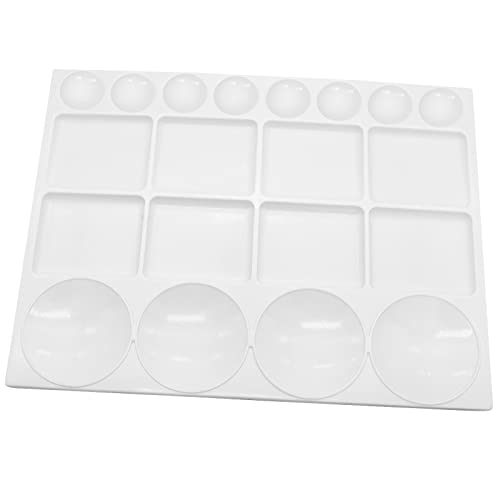
| Sweaty Pony 20-Well Square Palette | single large welled palette | 13 x 10 in, 8 square + 4 large + 8 small wells | Mixed well shapes | $ |
| Tamaki Clear Acrylic Palette (2-Pack) | budget hand-held flat palettes | Rectangle + oval, each 11.8 x 7.9 in, thumb hole | Two shapes, clear sheet | $ |
| Mr. Pen Round Paint Tray Palettes (4-Pack) | small welled trays for side mixes | 6.7 in, 10 wells + center, 0.4 in deep | Cheap extra mixing space | $ |
How We Chose
We did not paint with these palettes. Picks are based on the Amazon listing details and specifications checked in October 2026, how well each palette’s surface, size and wells suit mixing in oil, acrylic, watercolor and gouache, and how widely each product is reviewed by Amazon buyers.
- Surface type matched to medium
- Non-porous or easy-clean surface
- Thumb hole and shape for hand-held use
- Size relative to typical canvases
- Well count and variety for fluid media
- Value
Best Mixing Palettes for Painters Reviewed
1. U.S. Art Supply Clear Oval Acrylic Palette (2-Pack) — Best for oil and acrylic mixing

These two oval palettes are clear acrylic plastic with a polished, curved thumb hole and smooth edges for comfortable holding. The listing describes a non-stick, non-porous surface that does not absorb oils, and says dried acrylic and oil paint can be peeled off.
That peel-off cleanup is the real advantage for acrylic painters, who otherwise spend time soaking and scraping. Oil painters benefit too: no oil soaks into the surface, so colors on the palette look like they will on canvas.
The listing also names watercolor and gouache, but the flat surface suits thicker paints best.
Best suited for: Acrylic and oil painters who mix with knives and work at an easel.
Key features:
- Two clear oval palettes, about 9 x 13.8 inches
- Curved thumb hole
- Non-porous, non-stick surface
- Dried paint peels off per listing
Pros:
- Easy cleanup
- Clear surface takes any background tone
- Two palettes for warm and cool mixes
Cons / limitations:
- No wells for fluid paint
- Can scratch with metal knives
- Light plastic flexes
Buying consideration: Use a gray card under the palette when painting on a toned ground.
2. Tamaki Wooden Paint Palette — Best traditional palette for oil painters

Tamaki’s wooden palette measures about 13.7 x 9.3 inches and is traditionally shaped for right- or left-hand use. The listing describes a smooth surface and edge that is safe and easy to clean.
Wooden palettes are the oil painter’s classic tool. Many artists oil a new wooden palette with linseed oil and let it cure, which seals the grain and makes cleanup easier over time. A wooden palette’s warm mid-tone also helps with value judgments compared with stark white.
Best suited for: Oil painters and those who prefer a traditional, hand-held palette.
Key features:
- Wooden palette about 13.7 x 9.3 inches
- Thumb hole
- Shaped for either hand
- Smooth finished surface
Pros:
- Classic oil painting surface
- Comfortable for left- or right-handed painters
- Very low cost
Cons / limitations:
- Not ideal for acrylic, which grips wood
- Needs seasoning or sealing
- Can warp if left wet
Buying consideration: Season it with a few thin coats of linseed oil before first use and wipe it clean after each session.
3. DUGATO 20-Well Plastic Paint Palette (2-Pack) — Best for watercolor and gouache painters

Two large trays, each with 20 wells, give watercolor and gouache painters room to lay out a full set and mix washes. The listing calls the white plastic smooth and non-stick, light enough to hold and easy to clean.
Having two trays lets you keep one for dried watercolor and one for fresh mixes, or one for warm and one for cool colors.
Best suited for: Watercolor, gouache and fluid acrylic painters.
Key features:
- Two 10 x 13 inch trays
- 20 wells each
- White non-toxic plastic
- Lightweight
Pros:
- Lots of wells
- Two trays for flexibility
- White surface for accurate color
Cons / limitations:
- Not for thick paint
- Strong pigments can stain
- Takes table space
Buying consideration: Fill the outer wells with tube color and keep inner wells for mixing so pure colors stay clean.
4. Sweaty Pony 20-Well Square Palette — Best single large welled palette

This single 13 x 10 inch palette has 20 wells in three shapes: eight squares, four large circles and eight small circles. That mix is useful for painters who want small wells for color storage and big wells for washes.
It weighs about 0.35 pounds and can be held or placed flat.
Best suited for: Painters who want one large welled palette with different well sizes.
Key features:
- 13 x 10 inches
- 20 wells in three shapes
- About 0.35 lb
- Washable white plastic
Pros:
- Varied wells
- Light
- Low cost
Cons / limitations:
- Single tray
- Shallow for very wet washes
- Not for knife mixing
Buying consideration: Use the large round wells for big washes such as skies.
5. Tamaki Clear Acrylic Palette (2-Pack) — Best budget hand-held flat palettes

A budget pair of clear acrylic palettes, one rectangular and one oval, each 11.8 x 7.9 inches with a thumb hole. Peel off the protective film on both sides before use.
They are slightly smaller than the U.S. Art Supply ovals, which makes them easier to hold for long periods.
Best suited for: Students and acrylic painters on a budget.
Key features:
- Two palettes: rectangle and oval
- 11.8 x 7.9 inches
- Thumb holes
- Transparent acrylic
Pros:
- Very cheap pair
- Light to hold
- Clear surface
Cons / limitations:
- Smaller mixing area
- Scratches over time
- No wells
Buying consideration: Good starter flat palette; upgrade to glass if you want the easiest cleaning.
6. Mr. Pen Round Paint Tray Palettes (4-Pack) — Best small welled trays for side mixes

Round 10-well trays are handy beside a main palette for side mixes, glazes or a limited palette study. The Mr. Pen trays are 6.7 inches across with wells 0.4 inches deep and a central reservoir.
Four per pack means you can give each mix its own tray during a long painting.
Best suited for: Painters who want extra small trays for glazes, studies or students.
Key features:
- Four round trays
- 10 wells plus central reservoir
- 0.4 inch deep wells
- Light plastic
Pros:
- Very cheap
- Deep wells
- Stackable
Cons / limitations:
- Small mixing areas
- Thin plastic
- Not a main palette for large work
Buying consideration: Useful for premixing glaze colors so your main palette stays clear.
Setting Out a Palette Like a Painter
Place colors around the edge in a consistent order every time, for example white, then yellows, reds, earths, blues and greens, ending with black or a dark mix. Your hand learns where each color lives.
Leave the center open for mixing. On flat palettes, mix with a knife in clean areas and drag mixtures into a value string, from dark to light, before you start a passage.
Keep mixes clean by wiping the knife between colors and by not letting large mixtures sprawl into each other.
For watercolor, keep pure tube colors in wells along one side and use larger wells for mixing. Refresh dried colors with a spritz of water before painting.
Cleaning Mixing Palettes by Material
Clear acrylic: let acrylic dry and peel it, or wipe wet paint off with a damp cloth. For oil, scrape with a plastic knife and wipe with a little oil or mild solvent.
Wood: scrape oil paint off, wipe with a rag and a little oil, and leave a thin film to protect the wood.
Plastic welled trays: rinse watercolor and gouache under the tap; soak dried acrylic in warm soapy water.
Buying Guide: How to Choose a Mixing Palette
Start with your medium
Oil: wood, glass or clear acrylic. Acrylic: clear acrylic, glass, palette paper or a wet palette. Watercolor and gouache: welled plastic or porcelain.
Many painters own one flat and one welled palette.
Surface color
White matches white canvas and paper. A mid-tone such as wood or gray suits toned grounds. Clear palettes let you choose.
Match the palette tone to your ground for accurate value judgments.
Size
Bigger canvases need bigger mixes. A palette about 12 x 16 inches suits most easel work; a hand-held palette around 12 inches long is comfortable to hold.
Too small a palette forces mixes into each other.
Thumb hole and shape
Ovals and traditional shapes balance in the hand. Check that the thumb hole is smooth and suits your hand.
Left-handed painters should choose a symmetrical or reversible shape.
Cleanup
Non-porous surfaces clean fastest. Peelable surfaces save time for acrylic painters.
Avoid porous surfaces for acrylic.
Durability
Wood lasts decades with care. Acrylic sheet scratches but is cheap to replace. Plastic trays stain but remain usable.
Glass and porcelain last forever unless dropped.
Palette Care and Moisture
Acrylic painters can keep mixes usable much longer with a wet palette, and our tips on keeping a palette from drying out apply to any surface.
At the end of a session, follow our guide to cleaning a painting palette for each material.
Common Mistakes to Avoid
- Using a wooden palette for acrylic
- Mixing watercolor on a flat sheet where washes run together
- Choosing a palette too small for your canvas
- Judging mixes on a palette darker or lighter than your ground
- Scraping clear acrylic with sharp metal and scratching it
- Leaving oil paint to harden on wood
FAQs
What is the best palette for oil painting?
A sealed wooden palette, a glass palette or a non-porous clear acrylic palette. All let you mix with a knife and clean up easily.
What palette is best for acrylic paint?
A non-porous surface such as clear acrylic, glass or palette paper. A wet palette keeps acrylic workable for longer.
Should a palette be white or gray?
White suits white canvases; gray or wood suits toned grounds. Clear palettes let you place either underneath.
Do I need to season a wooden palette?
Yes for oil painting. Rubbing in thin coats of linseed oil and letting them cure seals the wood and makes cleaning easier.
How big should my mixing palette be?
For easel painting, around 12 x 16 inches for a table palette or about 12 inches long for a hand-held one.
Can I use the same palette for watercolor and acrylic?
You can with welled plastic, but clean it thoroughly. Many painters keep separate palettes to avoid acrylic residue in watercolor wells.
Final Recommendation
For acrylic and oil painters who mix with a knife, the U.S. Art Supply clear oval 2-pack is the best mixing palette here, thanks to its peel-clean, non-porous surface. Traditional oil painters will enjoy the Tamaki wooden palette once it is seasoned.
Watercolor and gouache painters should choose the DUGATO 20-well 2-pack, or the Sweaty Pony single tray for mixed well shapes. Tamaki’s clear pair is the budget flat option, and Mr. Pen round trays are handy for side mixes and glazes.
If you paint in more than one medium, budget for two palettes rather than one compromise. A flat palette and a welled tray together cost less than a single premium palette, and each will do its job far better.