PaintingProGuide is reader-supported. When you buy through links on this page we may earn an affiliate commission at no extra cost to you.
The best oil painting books for artists do one of three things well: they teach you to see color and light, they teach a specific subject such as portraits or landscape, or they serve as a practical reference you reach for mid-painting. Very few books do all three, which is why most painters end up with a small shelf rather than one bible.
This guide sorts seven oil painting books by what they teach and who they suit, from a spiral-bound color mixing reference you can prop next to the palette to subject-focused guides on portraits, landscape and atmosphere. If you are deciding which one to buy first, the reading path near the end shows a sensible order.
Quick answer: Start with Color and Light: A Guide for the Realist Painter by James Gurney if you want one book that improves every kind of painting you do. For a hands-on mixing reference, 1,500 Color Mixing Recipes by William F. Powell is the most practical studio companion. Landscape painters should look at Fill Your Oil Paintings with Light & Color by Kevin Macpherson, and portrait painters at Painting Luminous Portraits for Artists by Steve Forster.
Our Top Picks at a Glance
- Color and Light by James Gurney — Best overall for understanding light
- The Oil Painter’s Color Handbook by Todd M. Casey — Best in-depth guide to pigments and palettes
- 1,500 Color Mixing Recipes by William F. Powell — Best studio mixing reference
- Fill Your Oil Paintings with Light & Color by Kevin Macpherson — Best for landscape and plein air painters
- Painting Luminous Portraits for Artists by Steve Forster — Best for portrait painters
- The Elements of Landscape Oil Painting by Suzanne Brooker — Best for rendering sky, trees and water
- Painting into the Light by Jenny Aitken — Best for atmospheric, light-filled scenes
| Book | Best For | Format | Key Strength | Price Tier |
|---|---|---|---|---|
| Color and Light (Gurney) | Realist painters of any subject | Paperback | Explains how light and color behave | $$ |
| Oil Painter’s Color Handbook (Casey) | Painters building a deliberate palette | Hardcover | Pigments, palettes, mixing and harmony | $$$ |
| 1,500 Color Mixing Recipes (Powell) | Quick answers at the easel | Spiral-bound | Lies flat; covers oil, acrylic and watercolor | $$ |
| Fill Your Oil Paintings with Light & Color (Macpherson) | Landscape and plein air | Paperback | Light and color in outdoor oils | $ |
| Painting Luminous Portraits (Forster) | Portrait painters | Paperback | Features, fleshtones, light and form | $$ |
| Elements of Landscape Oil Painting (Brooker) | Landscape technique | Hardcover | Sky, terrain, trees and water | $$ |
| Painting into the Light (Aitken) | Atmosphere and mood | Paperback | Atmospheric effects in oil | $$ |
How We Chose
These picks are based on the Amazon listing details checked in October 2026, including title, author, format and stated subject, how well each book’s focus fits the needs of oil painters, and how widely each title is reviewed by Amazon buyers. We have not reproduced or summarized chapters, and we only describe what each book covers where the title, listing or the author’s well-established reputation makes it clear.
- Clear focus: each book teaches a definable skill, from color theory to a subject.
- Relevance to oil: written for oil painters or directly applicable to oil.
- Practical format: spiral binding or hardcover where it helps the book live in the studio.
- Range of levels: something for beginners, intermediate painters and serious realists.
- Little overlap: books that complement each other rather than repeat.
Best Oil Painting Books for Artists Reviewed
1. Color and Light: A Guide for the Realist Painter by James Gurney — Best Overall for Understanding Light

James Gurney, the illustrator and author best known for Dinotopia, wrote Color and Light as a guide to how light and color actually behave in the world and how a realist painter can translate that onto a surface. It is not an oil-only book, and it is not a step-by-step project book. Its value is that it explains why things look the way they do, which you then apply in oil.
Because it deals with principles rather than recipes, it stays useful for years. Painters often come back to it when a painting looks wrong and they cannot say why: shadows too warm, skin too uniform, distance too sharp.
Best suited for: Realist painters of any subject who want to understand light, from ambitious beginners to experienced artists.
Key features:
- Author: James Gurney
- Paperback, part of the James Gurney Art series (Volume 2)
- Focus on how light and color behave for realist painters
Pros:
- Applies to every subject and medium
- Builds lasting understanding, not just tricks
- Pairs well with any subject-specific book
Cons:
- Not a step-by-step oil technique course
- Few oil-specific material details
- Beginners may want a hands-on book alongside it
Buying consideration: Read it alongside a practical book; trying the ideas in small oil studies makes them stick far better than reading alone.
2. The Oil Painter’s Color Handbook by Todd M. Casey — Best In-Depth Guide to Pigments and Palettes

Todd M. Casey’s hardcover is, by its subtitle, a contemporary guide to color mixing, pigments, palettes and harmony, written specifically for oil painters. That oil focus is what sets it apart from general color books: it addresses the actual pigments in your tubes and how to organize them into working palettes.
It is the most expensive book here, and the one most likely to reward careful study. If Gurney explains how color behaves in light, Casey’s handbook is closer to a manual for choosing and controlling the paint itself.
Best suited for: Intermediate painters who want to build a deliberate, consistent palette and understand pigment behavior in oil.
Key features:
- Author: Todd M. Casey
- Hardcover
- Covers color mixing, pigments, palettes and harmony for oil
Pros:
- Oil-specific throughout
- Durable hardcover for studio use
- Helps you buy paint more wisely
Cons:
- Highest price tier in this guide
- Denser than a beginner project book
- Less about composition or subject matter
Buying consideration: If you have just finished a beginner kit and are about to buy artist-grade tubes, this is the book to read first.
3. 1,500 Color Mixing Recipes by William F. Powell — Best Studio Mixing Reference

William F. Powell’s book is a reference rather than a read. As the title says, it offers 1,500 color mixing recipes for oil, acrylic and watercolor aimed at landscapes, portraits, still lifes and more. The spiral binding is the practical win: it lies flat beside your palette, so you can look up a mixture without the book snapping shut with wet paint on your fingers.
Recipe books are best treated as a starting point. Your paints will not match the book’s exactly, and the light you paint under changes how a mixture reads. But for beginners stuck on how to mix a particular green or skin shadow, a quick reference saves a lot of muddy experiments.
Best suited for: Beginners and hobby painters who want quick mixing answers at the easel, including those who paint in more than one medium.
Key features:
- Author: William F. Powell
- Spiral-bound, lies flat
- 1,500 recipes for oil, acrylic and watercolor
Pros:
- Practical, open-at-the-easel format
- Covers several subjects
- Useful across mediums
Cons:
- Recipes depend on specific pigments
- Does not teach why mixtures work
- Not oil-specific
Buying consideration: Compare the book’s base colors with your own tubes; substitute the nearest pigment and adjust by eye.
4. Fill Your Oil Paintings with Light & Color by Kevin Macpherson — Best for Landscape and Plein Air Painters

Kevin Macpherson is a well-known American plein air painter, and this paperback is widely regarded as a classic for painters working outdoors in oil. The title sums up its aim: getting light and color into oil paintings, particularly landscapes painted from life.
For painters who already know how to handle oil but find their landscapes dull or overworked, a plein air approach can be transformative, because it forces you to simplify and to judge color relationships quickly.
Best suited for: Landscape painters, plein air painters and anyone who wants livelier, more direct oil paintings.
Key features:
- Author: Kevin Macpherson
- Paperback
- Focus on light and color in oil painting
Pros:
- Oil-specific and practical
- Encourages a direct, confident approach
- Inexpensive
Cons:
- Landscape-centered
- Less about studio technique such as glazing
- Older title, so material advice may feel dated
Buying consideration: Pair it with a lightweight pochade or plein air easel and small panels so you can actually practice what it teaches.
5. Painting Luminous Portraits for Artists by Steve Forster — Best for Portrait Painters

Steve Forster’s guide, with a foreword by Stephen Bauman, is described as an essential guide to painting facial features, fleshtones, light and form. Those four topics cover the problems almost every portrait painter faces: drawing believable features, mixing skin that does not look chalky or muddy, and modeling form with light.
It is the most subject-specific book on this list. If portraits are your main interest, it gives you more direct help than a general color book will.
Best suited for: Beginner and intermediate portrait painters working in oil.
Key features:
- Author: Steve Forster, foreword by Stephen Bauman
- Covers facial features, fleshtones, light and form
Pros:
- Directly targets portrait problems
- Combines drawing and color concerns
- Useful companion to a portrait palette
Cons:
- Narrow subject focus
- Less useful for landscape or still life
- Not a general oil technique book
Buying consideration: Use it with a limited earth palette; most fleshtone advice assumes ochres, siennas, umbers and a cool blue.
6. The Elements of Landscape Oil Painting by Suzanne Brooker — Best for Rendering Sky, Trees and Water

Suzanne Brooker’s hardcover breaks landscape down into its parts. Its subtitle promises techniques for rendering sky, terrain, trees and water, which makes it a structured, element-by-element companion for painters who want to understand how to handle each part of a scene.
Where Macpherson emphasizes light and directness outdoors, Brooker’s approach suits painters who like a more methodical studio process and want to build skill one element at a time.
Best suited for: Landscape painters who prefer structured, element-by-element instruction, including studio painters working from references.
Key features:
- Author: Suzanne Brooker
- Hardcover
- Techniques for sky, terrain, trees and water
Pros:
- Clear organization by landscape element
- Durable hardcover
- Complements a plein air book well
Cons:
- Landscape only
- Less about color theory in general
- Methodical approach may not suit loose painters
Buying consideration: Practice one element per session, such as a sky study, rather than attempting a whole landscape from each chapter.
7. Painting into the Light by Jenny Aitken — Best for Atmospheric, Light-Filled Scenes
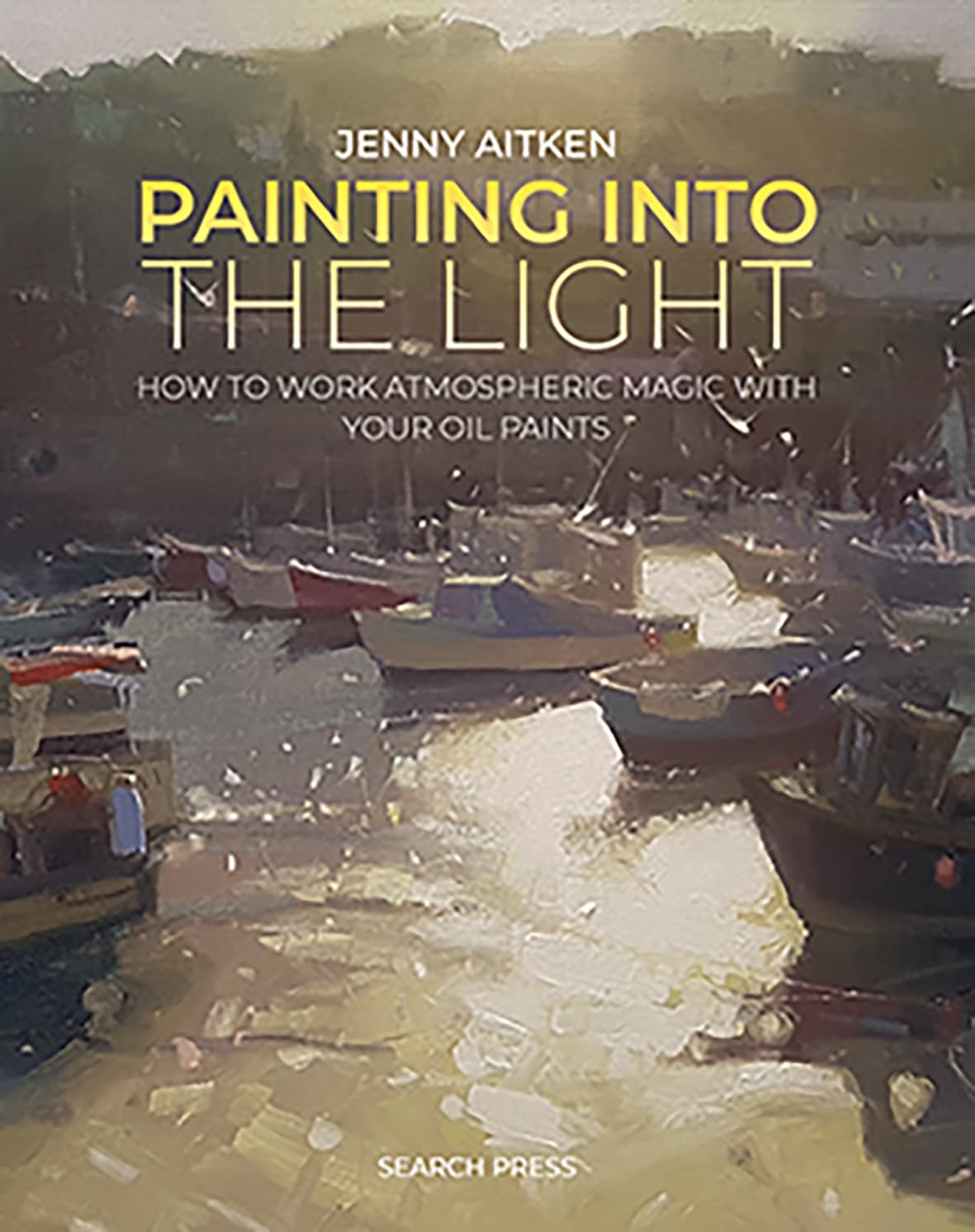
Jenny Aitken’s paperback focuses on what its subtitle calls working atmospheric magic with oil paints. Painting into the light, with the sun ahead of you, creates glowing edges, silhouettes and hazy distance, effects that are difficult to capture without a clear plan for values and edges.
It is a good second or third book for painters who already have the basics and want to explore mood and atmosphere rather than straightforward description.
Best suited for: Intermediate painters interested in mood, backlighting and atmospheric landscapes and scenes.
Key features:
- Author: Jenny Aitken
- Paperback
- Focus on atmospheric effects in oil
Pros:
- Targets a specific, appealing effect
- Oil-specific
- Inspiring for painters in a rut
Cons:
- Not a foundation book
- Narrower scope
- Best appreciated after you know the basics
Buying consideration: Read it after Gurney; understanding how light scatters makes atmospheric techniques easier to apply.
A Suggested Reading Path
If you are building a small library, the order matters. Here is a sequence that moves from foundations to specialization:
- Starting out: Powell’s 1,500 Color Mixing Recipes for quick wins at the easel, plus one subject book that matches what you paint most.
- After a few months: Gurney’s Color and Light to understand why your mixtures work or fail.
- Upgrading paints: Casey’s Oil Painter’s Color Handbook before you buy artist-grade tubes.
- Specializing: Forster for portraits, Macpherson or Brooker for landscape, and Aitken for atmosphere.
Buying Guide: How to Choose an Oil Painting Book
Principles or projects
Principle books explain light, color and form and stay useful for years. Project books walk you through specific paintings and are better for quick progress. Most painters benefit from one of each.
Match the book to your subject
Portrait, landscape and still life require different knowledge. A subject-specific book helps more than a general one once you know what you love to paint.
Oil-specific or multi-medium
Color theory applies across mediums, but practical advice on fat over lean, mediums, drying and glazing is specific to oil.
Format for studio use
Spiral binding lies flat; hardcovers survive studio life better. Paperbacks are cheaper and fine for reading away from the easel.
Your current level
A dense handbook can overwhelm a beginner, and a basic project book can bore an experienced painter. Be honest about where you are.
Do not collect, practice
A book only helps if you paint from it. Pick one, work through it with small studies, then buy the next.
Practice What You Read
Books make the most sense when you test them on real subjects. Try the ideas on atmosphere from Aitken or Gurney with our guide on how to paint fog in oil painting, or put landscape lessons into practice with these tips for painting grass in oil.
Common Mistakes to Avoid
- Buying several books at once and finishing none of them.
- Reading about color without painting small studies to test each idea.
- Following a mixing recipe exactly with different pigments and expecting the same result.
- Choosing an advanced handbook before you are comfortable with basic oil handling.
- Ignoring drawing and value; most color problems are actually value problems.
- Treating any single author’s method as the only correct way to paint.
FAQs
What is the best oil painting book for beginners?
For practical help at the easel, a mixing reference like Powell’s 1,500 Color Mixing Recipes is approachable. Pair it with a subject book that matches what you want to paint.
Is Color and Light by James Gurney good for oil painters?
Yes. It is not oil-specific, but it explains light and color principles that apply directly to oil painting.
Which oil painting book is best for landscapes?
Kevin Macpherson’s Fill Your Oil Paintings with Light & Color suits direct, plein air painting, while Suzanne Brooker’s Elements of Landscape Oil Painting is more structured, element by element.
Are color mixing recipe books accurate?
They are a starting point. Results depend on the exact pigments and light you use, so adjust by eye.
Should I buy a book or take an online course?
Both work. Books are cheaper and good for principles; video courses show brush handling in motion. Many painters use both.
Do I need a portrait-specific book to paint portraits?
Not strictly, but a focused guide like Steve Forster’s addresses features and fleshtones in more depth than general books.
Final Recommendation
If you only buy one book, make it James Gurney’s Color and Light, because it improves every painting regardless of subject. Add Todd M. Casey’s handbook when you are ready to take control of pigments and palettes, and keep Powell’s spiral-bound recipe book next to the easel for quick mixing answers.
For subjects, choose Forster for portraits, Macpherson for direct outdoor landscapes, Brooker for structured landscape technique, and Aitken when you want to chase light and atmosphere. Read one, paint from it, then move on to the next.