

PaintingProGuide is reader-supported. When you buy through links on this page we may earn an affiliate commission at no extra cost to you.
A good oil painting book does something a short video rarely can: it walks you through a sequence of ideas in the right order and lets you return to a single page as often as you need. The best oil painting instructional books fall into a few clear types: structured courses, project books, technique references and books that focus on one big idea such as light, color or landscape. Knowing which type you need saves you from buying three books that teach the same first chapter.
Quick answer: For a structured, lesson-by-lesson path, start with The Oil Painting Course You’ve Always Wanted by Kathleen Lochen Staiger. Keep The Encyclopedia of Oil Painting Techniques by Jeremy Galton as a desk reference, and add Fill Your Oil Paintings with Light & Color by Kevin Macpherson once you are ready to work on color and light.
Below we compare seven widely available titles by format, focus and the stage of learning they suit, then explain how to get the most from an instruction book.
Our Top Picks at a Glance
- The Oil Painting Course You’ve Always Wanted (Staiger) — Best structured course
- The Encyclopedia of Oil Painting Techniques (Galton) — Best technique reference
- Fill Your Oil Paintings with Light & Color (Macpherson) — Best for light and color
- The Elements of Landscape Oil Painting (Brooker) — Best for landscape painters
- The Beginner’s Guide to Oil Painting (Stephens) — Best still life projects for beginners
- Easy Oil Painting (Day) — Best small-format starter projects
- Painting with Bob Ross — Best for wet-on-wet landscape fans
| Product | Best For | Key Spec | Key Strength | Price Tier |
|---|---|---|---|---|
| Oil Painting Course (Staiger) | Structured learning | Paperback, guided lessons | Beginner to experienced | $$ |
| Encyclopedia of Techniques (Galton) | Reference | Paperback, visual directory | Look up any technique | $$ |
| Light & Color (Macpherson) | Color and light | Paperback | Focus on one core skill | $ |
| Landscape Oil Painting (Brooker) | Landscapes | Hardcover; sky, terrain, trees, water | Subject-by-subject | $$ |
| Beginner’s Guide (Stephens) | First projects | Paperback, still life projects | Simple, achievable subjects | $$ |
| Easy Oil Painting (Day) | Small paintings | Paperback, 9 step-by-step projects, 4-inch squares | Low pressure, quick wins | $$ |
| Painting with Bob Ross | Wet-on-wet landscapes | Paperback, step by step | Familiar, approachable method | $$ |
How We Chose
We selected these books from Amazon listings checked in October 2026, based on how well each title’s stated focus fits the needs of people learning oil painting, the format (course, projects or reference), and how widely each is reviewed by Amazon buyers. We have not reproduced or summarized the books’ contents beyond what their titles, subtitles and formats state, so read sample pages on the listing before buying.
- Clear learning type: course, project book, reference or single-topic study.
- Stage of learning: from first painting to working painters refining color.
- Subject coverage: still life, landscape and general technique.
- Practicality: step-by-step formats and small project sizes for people with limited time.
- Longevity: books you will reopen after the first read, not just once.
Best Oil Painting Instructional Books Reviewed
1. The Oil Painting Course You’ve Always Wanted — Best for a structured course

Kathleen Lochen Staiger’s book is presented as guided lessons for both beginners and experienced artists. A course format is valuable because it sequences skills: you learn materials and basic handling before you are asked to manage color, edges and composition at once.
If you learn best with a syllabus and assignments, this is the type of book to build your practice around. Work through lessons in order and repeat the ones that give you trouble before moving on.
Best suited for: Self-taught painters who want a teacher-style progression.
Key features:
- Author: Kathleen Lochen Staiger
- Paperback
- Guided lessons
- Aimed at beginners and experienced artists
Pros:
- Course structure keeps learning in order
- Useful at more than one skill level
- Encourages regular practice
Cons and limitations:
- A course takes time to complete
- Less suited to readers who just want quick projects
Buying consideration: Set a schedule, such as one lesson a week, and keep your exercises in a folder so you can see progress.
2. The Encyclopedia of Oil Painting Techniques — Best for technique reference
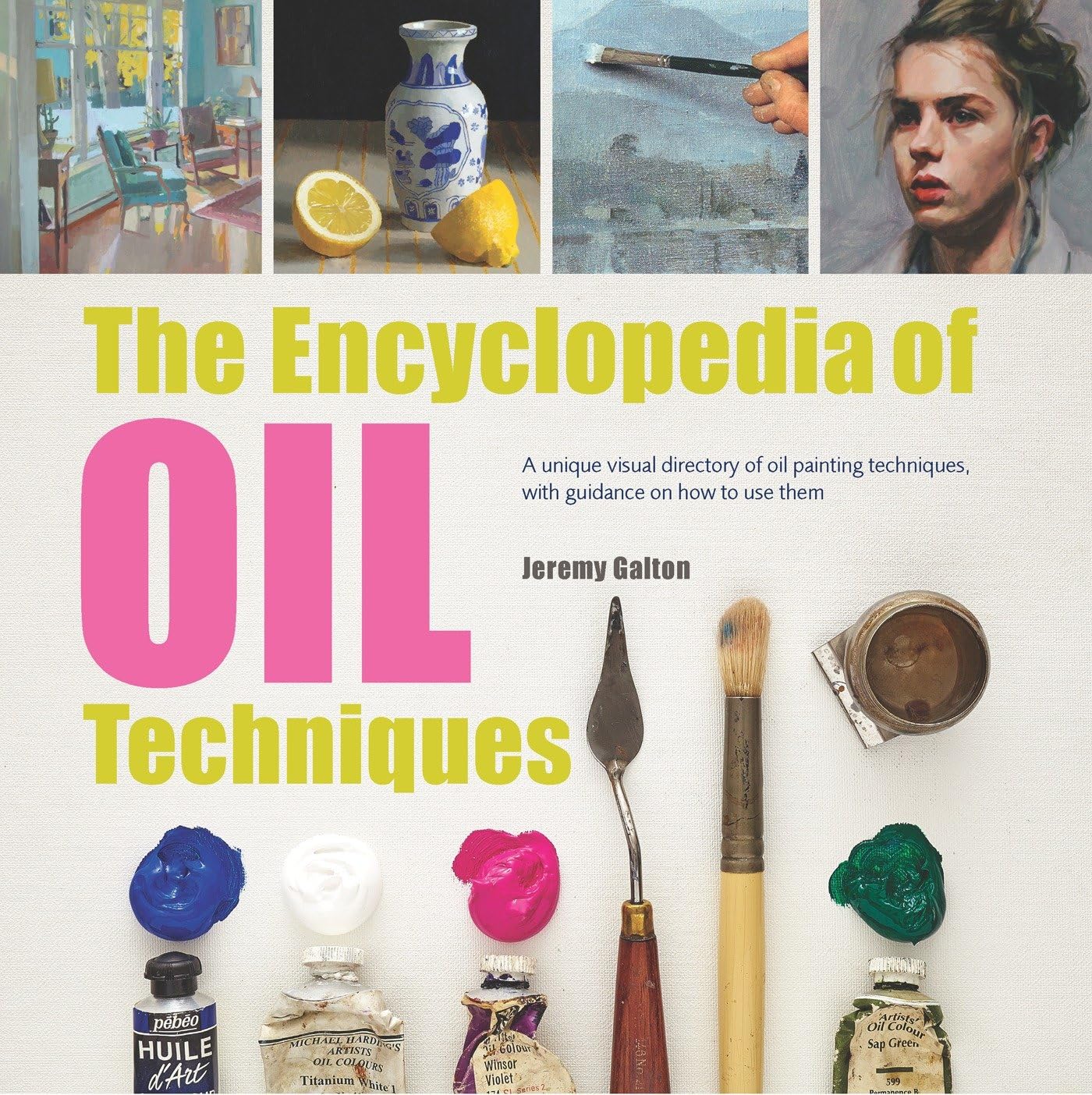
Jeremy Galton’s book is described in its subtitle as a unique visual directory of oil painting techniques with guidance on how to use them. That makes it a reference rather than a course: you open it when you want to know how glazing, scumbling, alla prima or knife painting work.
A visual directory pairs well with any other book on this list. When a project book mentions a technique you have not tried, this is where you look it up.
Best suited for: Painters at any level who want a reference to keep beside the easel.
Key features:
- Author: Jeremy Galton
- Paperback
- Visual directory of techniques
- Guidance on applying each technique
Pros:
- Easy to dip into
- Covers many techniques in one place
- Useful for years
Cons and limitations:
- Not a step-by-step course
- Breadth over depth on any single topic
Buying consideration: Use it as a companion volume rather than your only book.
3. Fill Your Oil Paintings with Light & Color — Best for light and color

Kevin Macpherson’s title puts its focus right on the cover: light and color, the two qualities that most separate a lively oil painting from a flat one. A focused book like this is best after you can handle the paint, because it asks you to think about how color temperature and value create light.
If your paintings are accurate but feel dull, a book centered on light and color is the logical next step.
Best suited for: Painters past the basics who want more luminous, convincing color.
Key features:
- Author: Kevin Macpherson
- Paperback
- Focus on light and color in oils
Pros:
- Targets a common weak spot
- Single-topic depth
- Applies to every subject
Cons and limitations:
- Assumes basic paint handling
- Not a general beginner manual
Buying consideration: Pair it with simple color studies: small, quick paintings of the same subject in different light.
4. The Elements of Landscape Oil Painting — Best for landscape painters

Suzanne Brooker’s hardcover focuses on landscape, with its subtitle naming techniques for rendering sky, terrain, trees and water. Breaking landscape into elements is an effective way to learn because each part of nature has its own logic: skies are lighter and cooler near the horizon, trees have mass and edges, water reflects.
If landscape is your main subject, a subject-specific book gives deeper, more relevant guidance than a general manual.
Best suited for: Landscape painters, from studio to plein air.
Key features:
- Author: Suzanne Brooker
- Hardcover
- Sky, terrain, trees and water techniques
Pros:
- Focused on one genre
- Element-by-element approach
- Durable hardcover
Cons and limitations:
- Less useful for portrait or still life painters
- Hardcover is heavier to carry
Buying consideration: Practice each element as a small study before combining them in a full landscape.
5. The Beginner’s Guide to Oil Painting — Best for first projects

Craig Stephens’ book is built around simple still life projects to help you master the basics, according to its subtitle. Still life is an ideal first subject because the objects stay put, the light can be controlled, and you can repeat the same setup until it clicks.
Project books suit people who learn by doing. You finish each project with a painting, which keeps motivation high.
Best suited for: True beginners who want to paint something finished early on.
Key features:
- Author: Craig Stephens
- Paperback
- Simple still life projects
Pros:
- Achievable subjects
- Learn by painting
- Good confidence builder
Cons and limitations:
- Still life focus only
- Less theory than a full course
Buying consideration: Set up the same objects at home rather than working only from the book’s images.
6. Easy Oil Painting (Design Originals) — Best for small-format starter projects

Estelle Day’s book offers nine step-by-step projects of simple subjects, and the listing title references 4-inch square paintings. Small paintings are an underrated learning tool: they use little paint, dry sooner, and can be finished in one sitting.
This is a good choice for anyone with limited time or space, or for anyone intimidated by a large blank canvas.
Best suited for: Busy beginners and anyone who wants quick, low-pressure practice.
Key features:
- Author: Estelle Day
- Paperback
- 9 step-by-step projects
- Small square format
Pros:
- Quick to complete
- Low material cost
- Step-by-step format
Cons and limitations:
- Small scale limits some techniques
- Fewer projects than larger books
Buying consideration: Buy a pack of small panels or canvas boards so you can repeat each project.
7. Painting with Bob Ross — Best for wet-on-wet landscape fans

This book from Bob Ross Inc promises step-by-step oil painting instruction in the familiar wet-on-wet landscape style. That method, painting into a wet base layer to finish in a single session, is approachable and fun, and it teaches confident brush and knife handling.
It is a specific style rather than a broad foundation. Many painters enjoy it as an entry point, then add a general course to learn other approaches.
Best suited for: Fans of the show and anyone who wants fast, finished landscapes.
Key features:
- Publisher: Bob Ross Inc
- Paperback
- Step-by-step oil instruction
Pros:
- Approachable, encouraging method
- Completed paintings in one session
- Fun way to start
Cons and limitations:
- Teaches one particular style
- Relies on specific materials and mediums
Buying consideration: Follow the method closely at first, then experiment with your own compositions.
Buying Guide: How to Choose Oil Painting Instructional Books
Match the book type to how you learn
Courses suit people who like structure. Project books suit people who learn by finishing paintings. References suit people who want to look up answers as questions arise. Most painters benefit from one of each, eventually.
Check the stage of learning
Beginner books spend time on materials and simple subjects. Intermediate books assume you can mix colors and handle paint. Buying too advanced leads to frustration; too basic wastes money.
Choose a subject you care about
Motivation is the biggest factor in learning. If you love landscapes, a landscape book will keep you painting. If you are unsure, still life is the most controllable subject for practice.
Look inside first
Use the sample pages on the Amazon listing to check the writing style, image quality and how detailed the steps are. Clear photos of each stage matter more than beautiful finished paintings.
Consider format and durability
Paperbacks are lighter and cheaper; hardcovers last longer on a studio shelf. Lay-flat binding is helpful when you are painting alongside the book.
Think about materials lists
Some books teach with specific colors and mediums. Check whether the materials list matches what you own, or budget for a few additions.
A Suggested Reading Path
Books work best in sequence. Here is one way to combine the titles above so each builds on the last rather than repeating it.
- First month: a project book such as Stephens’ still life guide or Day’s small-square tutorials. The goal is simply to get comfortable with how oil paint moves, dries and mixes.
- Months two to six: a structured course such as Staiger’s. Work through lessons in order and repeat the hard ones. Keep the Galton encyclopedia nearby to look up techniques the course mentions.
- After six months: a single-topic book. Macpherson on light and color is the obvious choice for most painters; Brooker on landscape if that is your main subject.
- Any time: the Bob Ross book as a change of pace. Wet-on-wet sessions build speed and decisiveness, which complements slower, layered methods.
What a Good Oil Painting Book Should Cover
Whatever you buy, a useful instructional book for oil painting usually addresses most of the following topics. Use this as a checklist when comparing sample pages.
- Materials and safety: paints, brushes, surfaces, mediums, solvents and ventilation.
- Fat over lean: the rule that later layers contain more oil than earlier ones, to prevent cracking.
- Value: seeing and mixing lights and darks accurately, often taught with a value scale.
- Color mixing: working from a limited palette, temperature and saturation.
- Edges: when to keep them hard, soft or lost.
- Composition: arranging shapes so the eye moves through the painting.
- Drying and varnishing: how long to wait and how to protect the finished work.
A beginner book will touch these lightly, while a course will cover each in depth. If a book skips several of them entirely, it is probably a project collection rather than a teaching text, which is fine as long as you know that going in.
How to Learn Effectively from an Oil Painting Book
Reading about painting and painting are different skills. Turn each chapter into an exercise: paint a value scale, mix a color chart, then try the chapter’s project. Repeat projects with your own subject matter to make the lesson stick.
Keep a small notebook of what worked and what did not. Note the colors you mixed and the medium ratios you used. Over time, this becomes your personal reference, more useful than any single book.
Finally, paint small and often. Three small studies a week will teach more than one large painting a month.
Once you have worked through a basic project or two, put the skills to use on subjects with a clear technical challenge. Our step-by-step guides to painting a seashell in oil and painting fog in oil are good next exercises.
Common Mistakes to Avoid
- Reading without painting. Books only help when you practice the exercises.
- Buying several books on the same level. Mix a course, a reference and a topic book instead.
- Skipping basic exercises. Value scales and color charts feel tedious but pay off quickly.
- Copying only finished images. Paint from real objects too, so you learn to see, not just to copy.
- Ignoring the materials list. Different paints and mediums change results.
FAQs
What is the best oil painting book for a complete beginner?
A beginner project book or a structured course is the best start. Project books with simple still life subjects build confidence quickly, while a course gives a full progression.
Is a technique encyclopedia useful for beginners?
Yes, as a companion. It explains techniques when you encounter them, but it is not designed to teach in order like a course.
Can I learn oil painting from books alone?
Many painters learn largely from books combined with regular practice. Supplementing with videos or a local class can speed up learning, especially for paint handling.
Are Bob Ross books good for learning oil painting?
They are a fun, approachable entry into wet-on-wet landscape painting. They teach one style, so add a general book for broader foundations.
Should I buy a landscape-specific book?
If landscape is your main interest, yes. Subject-specific books go deeper into the problems of that genre.
How many oil painting books do I need?
One or two to start: a beginner course or project book, plus a reference. Add topic-focused books like light and color as you progress.
Final Recommendation
If you want one book that teaches in a logical order, choose Staiger’s course. Add Galton’s encyclopedia as a reference you will keep for years. When the basics feel comfortable, Macpherson’s book on light and color is a natural step up.
Landscape painters should go straight to Brooker’s elements-based approach. Beginners who want quick results will enjoy Stephens’ still life projects or Day’s small-format tutorials, and the Bob Ross book is a cheerful introduction to wet-on-wet painting.




