
PaintingProGuide is reader-supported. When you buy through links on this page we may earn an affiliate commission at no extra cost to you.
Video tutorials are great for watching a stroke happen. Books are better at explaining why it works. When a glaze turns muddy, a highlight sinks, or a painting cracks a year after it dried, the answer is usually in the chemistry and sequence of oil paint: fat over lean, thick over thin, slow-drying over fast-drying. The best oil painting books for techniques teach those principles so you can diagnose your own problems instead of copying someone else’s finished picture.
We picked six oil painting books that cover different needs: a visual technique reference, a classic on principles, a structured course, a deep dive into traditional old-master methods, a pocket book of tips and a landscape-specific guide. For each, we explain who it is for and how to get the most out of it.
Quick answer: For a broad, visual reference you will keep open beside the easel, start with The Encyclopedia of Oil Painting Techniques by Jeremy Galton. If you want to understand traditional methods in depth, Traditional Oil Painting by Virgil Elliot is the serious study. Beginners who want lessons in order should choose The Oil Painting Course You’ve Always Wanted by Kathleen Lochen Staiger.
Our Top Picks at a Glance
- The Encyclopedia of Oil Painting Techniques (Jeremy Galton) — Best visual technique reference
- Traditional Oil Painting (Virgil Elliot) — Best for advanced, old-master methods
- The Oil Painting Course You’ve Always Wanted (Kathleen Lochen Staiger) — Best structured course
- Oil Painting Techniques and Materials (Harold Speed) — Best classic on principles
- The Elements of Landscape Oil Painting (Suzanne Brooker) — Best for landscape painters
- The Little Book of Oil Painting Secrets (Scott Maier) — Best pocket-size tip book
| Product | Best For | Key Spec | Key Strength | Price Tier |
|---|---|---|---|---|
| Encyclopedia of Oil Painting Techniques | All levels | Paperback, visual directory | Technique-by-technique lookup | $$ |
| Traditional Oil Painting | Advanced | Hardcover | Renaissance-to-present methods | $$$ |
| The Oil Painting Course You’ve Always Wanted | Beginner to intermediate | Paperback, guided lessons | Sequential lessons | $$ |
| Oil Painting Techniques and Materials | Intermediate | Paperback (Dover) | Principles of tone and form | $$ |
| The Elements of Landscape Oil Painting | Landscape painters | Hardcover | Sky, terrain, trees, water | $$ |
| The Little Book of Oil Painting Secrets | Quick tips | Hardcover, pocket size | Portable reference | $ |
How We Chose
We have not reviewed every page of each book for this guide. Picks are based on the Amazon listing details checked in October 2026, including title, author, format and stated focus; how well each book’s scope fits a specific stage of learning oil technique; and how widely each title is reviewed by Amazon buyers. Where we describe a book’s approach, it is drawn from its title, subtitle and well-established reputation.
- Technique coverage: does the book explain methods like glazing, scumbling, impasto and alla prima?
- Learning stage: beginner course, intermediate principles or advanced study.
- Subject focus: general technique versus landscape or traditional methods.
- Format: large reference versus portable book.
- Longevity: titles that stay useful as you improve.
Best Oil Painting Books for Techniques Reviewed
1. The Encyclopedia of Oil Painting Techniques by Jeremy Galton — Best for a visual technique reference
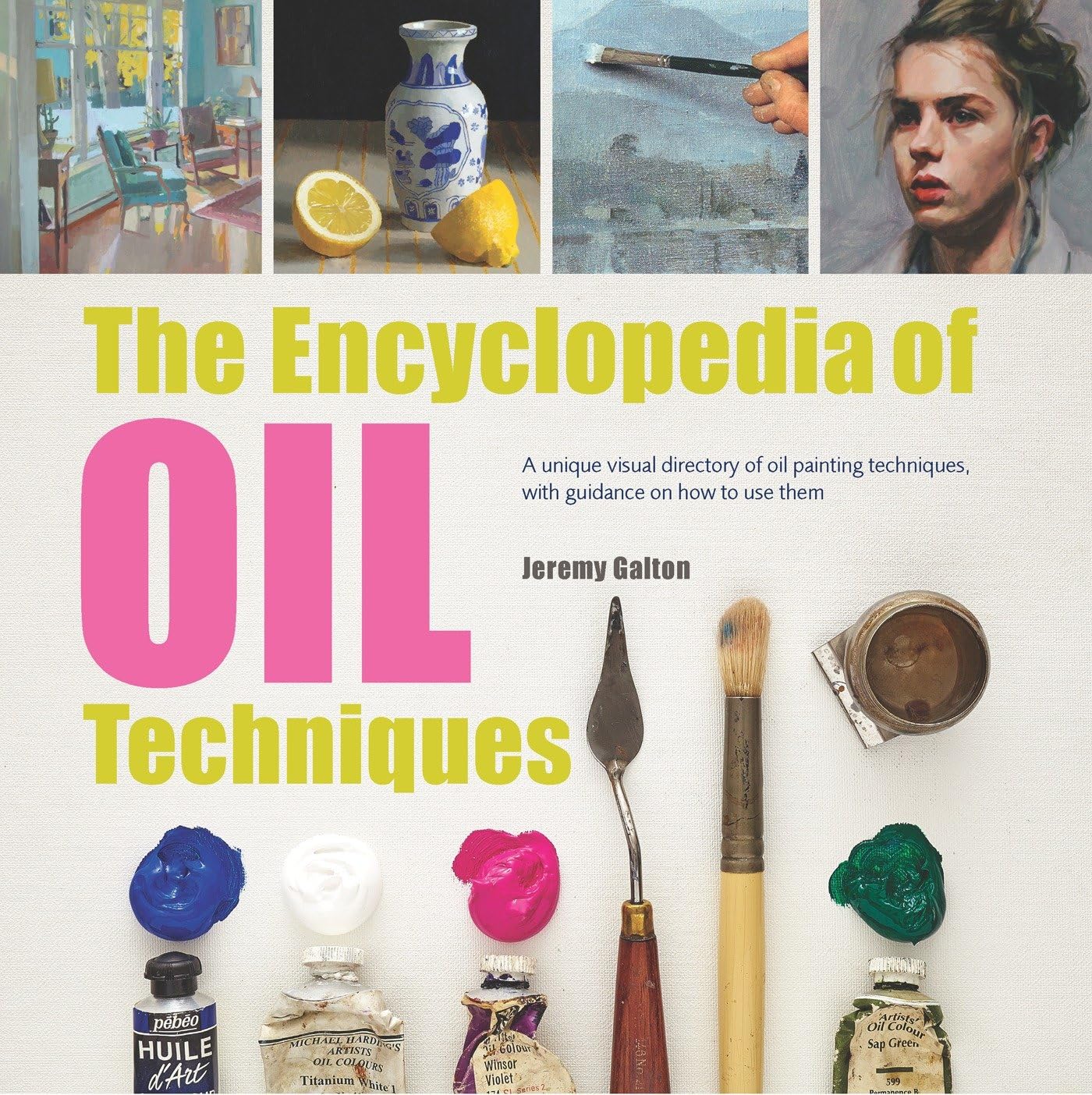
As its subtitle says, Galton’s encyclopedia is a visual directory of oil painting techniques, with guidance on how to use them. That format suits the way most painters actually use a technique book: you hit a problem, such as how to make a sky recede or how to build texture with a knife, and you look up the method.
An encyclopedia layout also helps you discover techniques you did not know to search for. Flipping through it is a quick way to build a vocabulary of methods, from underpainting to broken color. A separate edition with a step-by-step subtitle is also listed on Amazon; check which edition you are buying.
Best suited for: Painters at any level who want a reference to look up specific techniques.
Key features:
- Paperback
- Organized as a visual directory of techniques
- Guidance on applying each technique
- Multiple editions available
Pros:
- Easy to look up a single technique
- Visual format shows results
- Useful across skill levels
Cons and limitations:
- Reference style, not a progressive course
- Breadth over depth on each method
- Edition differences can confuse buyers
Buying consideration: Use it alongside practice: pick one technique a week, read the entry, then paint a small study using only that method.
2. Traditional Oil Painting by Virgil Elliot — Best for advanced, old-master methods

Virgil Elliot’s book is subtitled Advanced Techniques and Concepts from the Renaissance to the Present, and it is widely regarded as a serious study of how traditional oil paintings were built and how to make paintings that last. It is the most in-depth title on this list.
Expect a book that rewards slow reading. It is best for painters who already handle the basics and now want to understand layered indirect painting, materials and permanence.
Best suited for: Intermediate to advanced painters, and anyone interested in classical methods.
Key features:
- Hardcover
- Advanced techniques and concepts
- Covers methods from the Renaissance to the present
- Focus on traditional practice
Pros:
- Depth on traditional methods
- Helps paintings last
- Long-term reference value
Cons and limitations:
- Highest price tier here
- Dense for beginners
- Less about quick, direct painting
Buying consideration: Read one chapter, then try its method on a small panel before moving on; the concepts land faster in paint than on the page.
3. The Oil Painting Course You’ve Always Wanted by Kathleen Lochen Staiger — Best for a structured course

Staiger’s book is built as guided lessons for beginners and experienced artists. If you want to be told what to paint next and why, a course format beats a reference book: each lesson builds a skill you need for the following one.
For self-taught painters, a sequence removes the guesswork of what to practice. Work through it in order, even the lessons that feel too easy.
Best suited for: Beginners and returning painters who want a step-by-step program.
Key features:
- Paperback
- Guided lessons
- Aimed at beginners and experienced artists
- Course structure
Pros:
- Clear learning path
- Builds skills in order
- Good for self-study
Cons and limitations:
- Less useful as a quick lookup
- Requires commitment to follow
- One teacher’s method
Buying consideration: Schedule lessons like a class, for example one per week, and keep every exercise to track progress.
4. Oil Painting Techniques and Materials by Harold Speed — Best for a classic on principles

Harold Speed was an early 20th-century British painter and teacher, and this Dover Art Instruction reprint is one of the long-standing classics on how oil painting works. It focuses on principles such as tone, form and the handling of paint more than on step-by-step projects.
Being a classic means the language and examples are of their time. The trade-off is that its ideas about seeing tone and form are as useful now as when it was written.
Best suited for: Intermediate painters ready to think about the fundamentals behind their technique.
Key features:
- Paperback (Dover Art Instruction series)
- Classic text on oil technique and materials
- Focus on principles
- Long in print
Pros:
- Timeless fundamentals
- Affordable reprint
- Pairs well with modern books
Cons and limitations:
- Older writing style
- Some materials advice predates modern paints
- Few step-by-step demos
Buying consideration: Pair Speed with a modern technique reference: read him for why, the other for how.
5. The Elements of Landscape Oil Painting by Suzanne Brooker — Best for landscape painters

As the subtitle puts it, Brooker’s book is about techniques for rendering sky, terrain, trees and water. Those are the four problems almost every landscape painter wrestles with, and grouping techniques by subject is useful when you are mid-painting and stuck on one element.
If landscapes are your main subject, a focused book like this is a faster route to improvement than a general reference.
Best suited for: Landscape and plein air painters who want subject-specific techniques.
Key features:
- Hardcover
- Techniques for sky, terrain, trees and water
- Landscape focus
- Subject-by-subject organization
Pros:
- Targets common landscape problems
- Organized by subject
- Useful studio and plein air companion
Cons and limitations:
- Narrow subject range
- Less on portraits or still life
- Assumes basic oil handling
Buying consideration: Paint the same simple scene four times, each time focusing on one chapter: sky, terrain, trees, then water.
6. The Little Book of Oil Painting Secrets by Scott Maier — Best for pocket-size tips

Maier’s book is described as a world of practical art in your pocket. It is a small hardcover format, which makes it the easiest title here to carry in a paint box or keep on the studio table.
Tip books do not replace a course, but they are good for short sessions and for jogging your memory about a technique you have already learned.
Best suited for: Painters who want quick, portable reminders and inspiration.
Key features:
- Hardcover, pocket size
- Practical tips format
- Portable
- Lowest price tier here
Pros:
- Easy to carry
- Quick reading sessions
- Affordable gift
Cons and limitations:
- Limited depth
- Not a structured course
- Small images
Buying consideration: Keep it in your plein air bag; it is useful during setup breaks and when deciding how to approach a scene.
Buying Guide: How to Choose Oil Painting Books for Techniques
Decide between reference and course
Reference books, like encyclopedias, let you look up a technique when you need it. Courses walk you through skills in order. Most painters benefit from one of each.
Match the book to your stage
Beginners: a course and a visual reference. Intermediate painters: principles books like Speed and subject-focused titles. Advanced painters: deep technical studies such as Elliot.
A book far above your level can be discouraging; one below it is quickly outgrown.
Consider your subjects
If you mainly paint landscapes, a subject-focused book delivers more per page than a general one. Portrait or still life painters should look for titles that match their subjects too.
Check the format
Hardcovers lie flatter and survive the studio longer; paperbacks are lighter and cheaper. Pocket books are best as companions, not primary teachers.
Look for materials coverage
Technique depends on materials: mediums, solvents, grounds and drying. Books that explain materials help you avoid cracking, yellowing and dull patches.
Edition matters
Some titles exist in several editions with different subtitles or page counts. Check the publication details on the listing.
Core Techniques Every Oil Painting Book Should Explain
| Technique | What It Is | When to Use It |
|---|---|---|
| Fat over lean | Each layer has more oil than the one beneath | Any multi-layer painting, to prevent cracking |
| Underpainting | A thin, often monochrome first layer | Establishing values and composition |
| Glazing | Thin transparent layers over dry paint | Deepening color and luminosity |
| Scumbling | Thin, broken opaque paint over a dry layer | Softening, haze, atmospheric effects |
| Alla prima | Wet-on-wet, finished in one session | Plein air, studies, loose styles |
| Impasto | Thick paint with visible strokes | Texture and highlights |
How to Learn From a Technique Book
- Read one technique section at a time.
- Paint a small study, about 6 x 8 inches, using only that technique.
- Compare your result with the book’s example and note differences.
- Repeat the study once more with adjustments.
- Use the technique in a real painting within two weeks so it sticks.
A 12-Week Reading and Practice Plan
If you buy two books, a course and a reference, this plan turns them into a self-directed term of study. Each week has a reading focus and a small painting exercise, roughly 6 x 8 inches, so you can finish it in one or two sessions.
| Weeks | Reading Focus | Practice Exercise |
|---|---|---|
| 1-2 | Materials, grounds and brushes | Make a value scale and a brush-mark sampler |
| 3-4 | Underpainting and values | Monochrome still life of three simple objects |
| 5-6 | Color mixing and temperature | Same still life in a limited palette of four colors |
| 7-8 | Alla prima and edges | One-session landscape study, focusing on soft and hard edges |
| 9-10 | Glazing and scumbling | Glaze over your week 3-4 underpainting once dry |
| 11-12 | Composition and finishing | A larger painting combining three techniques |
Keep a notebook alongside the plan. Write down the colors you mixed, how long each layer took to dry and what you would change. Over twelve weeks, those notes become a personal technique book that is more useful than any single title, because it records how the methods work with your paints, your surfaces and your climate.
When a technique does not work, go back to both books. A reference often shows the result while a course explains the sequence, and reading the two side by side usually reveals the step you skipped, such as painting a glaze over paint that was not fully dry or using a lean layer over a fat one.
Keep Building Your Technique
For a deeper look at choosing a single primary title, see our guide to the best oil painting techniques book. Our practical article on layering techniques in oil painting for depth and texture pairs well with the fat-over-lean principles above, and the overview on mastering oil painting techniques maps out which methods to learn first.
Common Mistakes to Avoid
- Buying five books and reading none. Start with one and paint from it.
- Reading without painting. Technique is learned with a brush, not by reading alone.
- Skipping the materials chapters. They explain most cracking, sinking and yellowing problems.
- Choosing advanced texts too early. Build basic handling first.
- Ignoring editions. Make sure you get the edition you intended.
- Copying finished paintings only. Do the exercises; they build skill faster.
FAQs
What is the best oil painting book for beginners?
A structured course like The Oil Painting Course You’ve Always Wanted, paired with a visual reference such as Galton’s Encyclopedia of Oil Painting Techniques, gives beginners both a path and a lookup guide.
Is Harold Speed’s oil painting book still relevant?
Yes. Its focus on principles such as tone and form remains useful, although some materials advice reflects its era. Pair it with a modern book.
What book teaches old master oil painting techniques?
Traditional Oil Painting by Virgil Elliot covers advanced techniques and concepts from the Renaissance to the present.
Are oil painting books better than video courses?
They complement each other. Videos show the motion of a stroke; books explain principles and are faster to reference mid-painting.
Which oil painting book is best for landscapes?
The Elements of Landscape Oil Painting by Suzanne Brooker focuses on rendering sky, terrain, trees and water.
How many oil painting books do I need?
Two is a good start: one course or principles book and one visual reference. Add subject-specific titles as your focus narrows.
Final Recommendation
For one book to keep beside the easel, Galton’s Encyclopedia of Oil Painting Techniques is the most useful technique lookup. Beginners who want a guided path should start with Staiger’s course. Intermediate painters will get lasting value from Harold Speed’s principles, landscape painters from Brooker’s subject-by-subject approach, and advanced painters from Elliot’s Traditional Oil Painting. Keep Maier’s pocket book in your paint bag for quick reminders.




