

PaintingProGuide is reader-supported. When you buy through links on this page we may earn an affiliate commission at no extra cost to you.
Professional oil painters are not defined by secret techniques; they are defined by control. The best oil painting techniques for professionals are the ones that give reliable results across a whole body of work: a planned ground and underpainting, disciplined fat-over-lean layering, deliberate edge control, value massing that reads at a distance, and a palette and medium system that stays archival. Glazing, scumbling, impasto and alla prima are tools inside that system, chosen for each passage rather than applied by habit.
This guide goes through the techniques working painters rely on, how they fit together in direct and indirect workflows, the material chemistry behind them, and the reference books from the Amazon listings we checked that are worth keeping in a professional studio.
Quick answer: Master three systems before anything else: a consistent fat-over-lean layer structure, value massing with deliberate edge control, and a limited, well-understood palette. For a master painter’s approach to light and edges, Oil Painting Secrets from a Master (David A. Leffel) is the standout reference. For a visual directory of individual techniques, keep The Encyclopedia of Oil Painting Techniques on the shelf.
Core Oil Painting Techniques Professionals Rely On
1. Toned grounds and imprimatura
A thin, transparent wash of color over the primed surface, often a warm earth such as burnt sienna or raw umber, removes the glare of white and establishes a middle value. Painting lights and darks against a mid-tone is faster and more accurate than working up from white. Many professionals keep a stock of pre-toned panels so every session starts at the same point.
2. Underpainting: grisaille, verdaccio and brunaille
In indirect painting, the structure of the image is resolved first in a monochrome underpainting: gray (grisaille), green-gray (verdaccio, classically under flesh) or brown (brunaille). Color is then added in later layers. It separates the problems of drawing and value from the problem of color, which is why it remains common in portrait and figurative work.
3. Fat over lean
Each successive layer should contain slightly more oil (be “fatter”) than the one beneath it. Lean layers dry faster and stay flexible enough to accept fatter ones; reverse that order and upper layers can crack as the lower, oilier layers keep moving. In practice, professionals thin early layers with solvent or a lean medium and gradually increase oil content toward the final passages.
4. Alla prima (direct painting)
Wet-into-wet painting completed in one session, or before the surface sets. It demands confident mixing, accurate value judgments and economical brushwork. Professionals who work alla prima still plan: a toned ground, a quick block-in of big shapes, and a clear focal point before any detail.
5. Glazing
A thin, transparent layer of color in a medium, applied over a dry passage. Glazes deepen shadows, unify temperature, intensify saturation and create a luminous effect because light passes through the glaze and reflects off the layer beneath. Transparent pigments like the quinacridones, phthalos and transparent earths glaze best.
6. Scumbling
The opposite of glazing: a thin, semi-opaque, usually lighter layer dragged or rubbed over a dry passage so the underlayer shows through in broken patches. It softens forms, creates atmosphere and suggests haze or bloom on surfaces.
7. Impasto and broken color
Thick, textured paint that catches real light. Professionals reserve impasto for lights and focal areas, keeping shadows thinner, so the physical surface reinforces the illusion of light. Broken color, where strokes of different hues sit side by side rather than being blended, keeps passages lively and vibrating.
8. Edge control
Hard, soft and lost edges direct the viewer’s eye. The hardest edges and strongest contrasts go at the focal point; edges soften and lose as they move into shadow and toward the periphery. This is one of the clearest differences between amateur and professional work.
9. Value massing and simplification
Group the image into a few large value shapes before rendering. A painting that reads clearly as three or four value masses at thumbnail size will hold together at full size. Squinting, using a black mirror or checking a grayscale photo are standard studio habits.
10. Color temperature shifts
Warm light usually produces cool shadows and the reverse. Shifting temperature across a form, rather than just darkening it, creates a convincing sense of light. Professionals often mix strings of a color in steps of value and temperature before painting.
For a broader list with short definitions, see our complete list of oil painting techniques, and our breakdown of oil painting brush techniques covers the stroke-level side: loading, dragging, rolling and blending with different brush shapes.
Direct vs. Indirect: Choosing a Workflow
- Direct (alla prima): faster, fresher brushwork, ideal for plein air, studies and gallery work with an expressive surface. Requires strong mixing and value judgment.
- Indirect (layered): slower, more controllable, suited to portraits, commissions and highly finished realism. Requires patience and strict fat-over-lean discipline.
- Hybrid: many professionals block in alla prima, let it dry, then refine with glazes and scumbles. It combines spontaneity with control.
Our guide to layering techniques in oil painting for depth and texture goes further into how glazes, scumbles and impasto stack in an indirect workflow.
Materials and Chemistry Behind the Techniques
Technique depends on materials. A glaze behaves differently in linseed oil than in an alkyd medium; impasto cures differently from a thin passage. Professionals standardize their materials so results are repeatable:
- Grounds: acrylic gesso or oil ground on canvas or panel; rigid panels suit fine detail and glazing.
- Oils: linseed for strength and flexibility, walnut or safflower for paler whites.
- Mediums: alkyd mediums speed drying for layered work; oil-and-solvent mixes for traditional workflows.
- Solvents: odorless mineral spirits with good ventilation, or solvent-free methods using oil alone for cleanup.
- Drying times: earths and lead-based whites dry faster; cadmiums and some organics slower.
- Varnish: a removable final varnish once the painting is thoroughly dry protects the surface and evens sheen.
Our overview of oil painting techniques and materials explains how grounds, oils, mediums and solvents interact with each technique.
Reference Books for Professional Oil Painters
- Oil Painting Secrets from a Master (David A. Leffel / Linda Cateura) — Best for light, edges and professional-quality painting
- The Encyclopedia of Oil Painting Techniques (Jeremy Galton) — Best visual directory of techniques
- The Field Guide to Landscape Painting in Oils (Scott Maier) — Best for planning and outdoor principles
- The Elements of Landscape Oil Painting (Suzanne Brooker) — Best for rendering sky, terrain, trees and water
- 1,500 Color Mixing Recipes (William F. Powell) — Best quick color-mixing reference
- The Oil Painting Course You’ve Always Wanted (Kathleen Lochen Staiger) — Best structured course for refreshing fundamentals
| Product | Best For | Key Spec | Key Strength | Price Tier |
|---|---|---|---|---|
| Oil Painting Secrets from a Master | Light and edges | Hardcover; David A. Leffel’s methods | Master-level approach | $$$ |
| Encyclopedia of Oil Painting Techniques | Technique reference | Paperback; visual directory | Broad coverage | $$ |
| Field Guide to Landscape Painting in Oils | Landscape planning | Hardcover; techniques, planning, principles | Outdoor focus | $$ |
| Elements of Landscape Oil Painting | Landscape rendering | Hardcover; sky, terrain, trees, water | Element-by-element | $$ |
| 1,500 Color Mixing Recipes | Color mixing | Spiral-bound; oil, acrylic, watercolor | Lies flat at the easel | $$ |
| The Oil Painting Course You’ve Always Wanted | Fundamentals refresh | Paperback; guided lessons | Beginner to experienced | $$ |
How We Chose
We have not studied these books page by page for this guide. Our picks are based on the Amazon listing details checked in October 2026, which for books mainly means title, author, format and stated scope; how closely each title matches what a working oil painter needs; and how widely each product is reviewed by Amazon buyers. We left out a beginner-only still life guide from the results because it does not fit a professional audience.
Best Books on Oil Painting Techniques for Professionals Reviewed
1. Oil Painting Secrets from a Master by Linda Cateura (with David A. Leffel) — Best for light, edges and professional-quality painting

The title describes prominent artist and teacher David A. Leffel sharing his secrets for making professional-quality paintings, written by Linda Cateura. Leffel is widely associated with a light-and-shadow approach rooted in the tradition of painters like Rembrandt, which makes this book especially relevant to edge control, value massing and the handling of light.
It is a hardcover in the highest price tier here, and it is aimed squarely at painters who already have the basics.
Best suited for: Figurative, portrait and still life painters refining light, edges and finish.
Key features:
- Hardcover
- Methods of David A. Leffel
- Professional-quality focus
Pros:
- Master-level perspective
- Strong on light and edges
- Relevant to professional work
Cons and limitations:
- Highest price tier here
- Assumes existing skill
Buying consideration: Read it alongside your own paintings: after each chapter, revisit a recent piece and note where the principles apply.
2. The Encyclopedia of Oil Painting Techniques by Jeremy Galton — Best for a visual directory of techniques
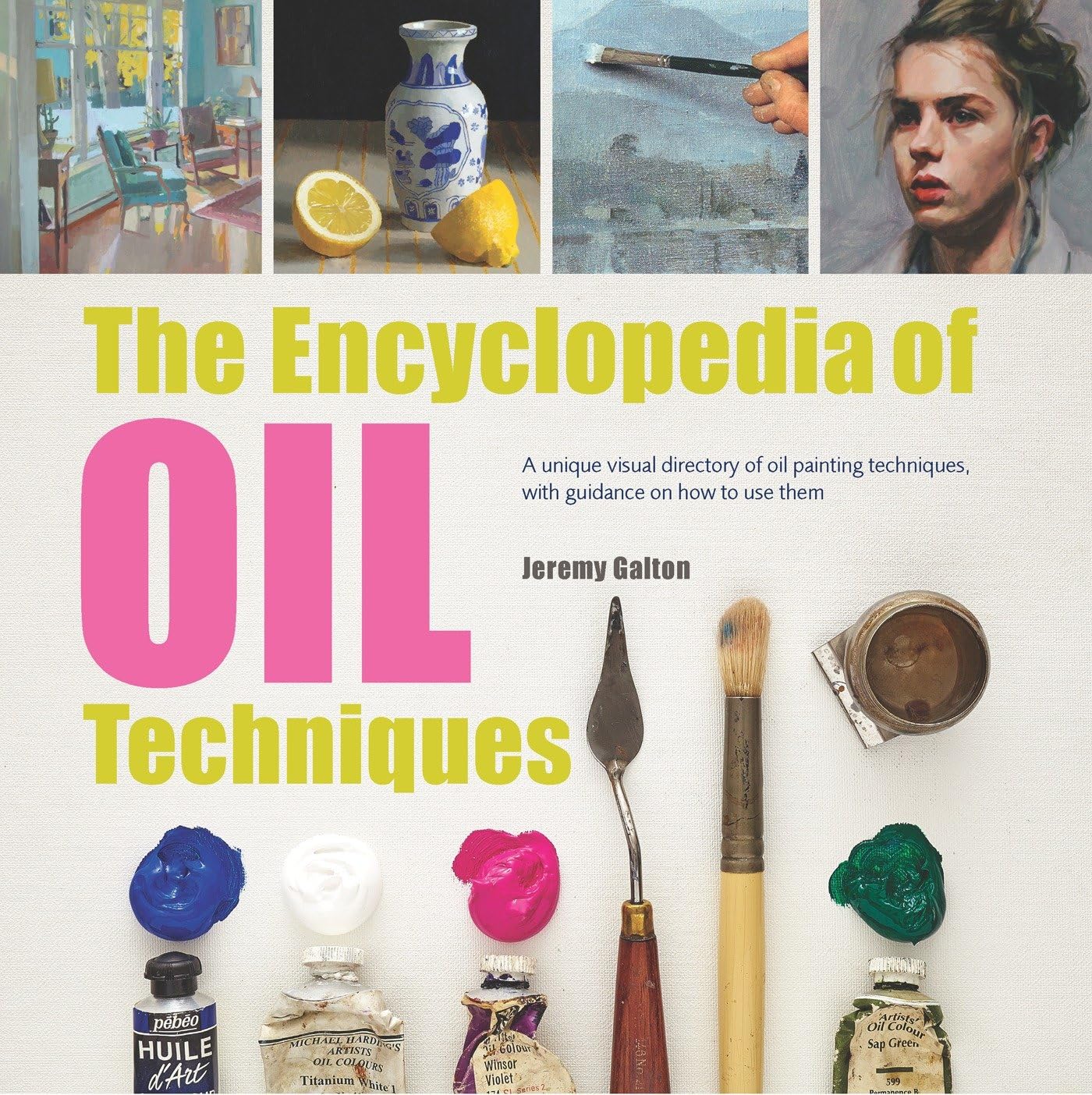
Galton’s book is described as a unique visual directory of oil painting techniques with guidance on how to use them. For professionals, a directory format is useful as a quick reference when you want to revisit a technique you use rarely, such as sgraffito, knife painting or a particular glazing approach.
It sits in the mid price tier and suits both studio reference and teaching.
Best suited for: Professionals who teach, or who want a quick reference for less familiar techniques.
Key features:
- Paperback
- Visual directory format
- Guidance on applying each technique
Pros:
- Broad coverage
- Easy to look things up
- Useful for teaching
Cons and limitations:
- Breadth over depth
- Some entries will be familiar to experienced painters
Buying consideration: Use it to plan experiments: pick a technique you have never used and try it on a small panel before a major piece.
3. The Field Guide to Landscape Painting in Oils by Scott Maier — Best for landscape planning and outdoor principles

The title promises techniques, planning and principles for capturing the great outdoors in oils. Planning is where many professional landscape painters gain the most: deciding on value structure, composition and color strategy before committing paint, especially in plein air where light changes quickly.
Best suited for: Landscape and plein air painters.
Key features:
- Hardcover
- Techniques, planning and principles
- Outdoor focus
Pros:
- Emphasis on planning
- Relevant to plein air
- Mid price tier
Cons and limitations:
- Landscape-specific
- Limited value for studio figure work
Buying consideration: Apply its planning advice to a series of small studies before scaling up to a gallery piece.
4. The Elements of Landscape Oil Painting by Suzanne Brooker — Best for rendering sky, terrain, trees and water

Brooker’s hardcover is organized around rendering specific elements: sky, terrain, trees and water. That element-by-element approach is useful when a particular subject keeps weakening otherwise strong paintings, such as overworked foliage or flat water.
Best suited for: Painters who want targeted solutions for specific landscape elements.
Key features:
- Hardcover
- Sky, terrain, trees and water
Pros:
- Targeted problem-solving
- Mid price tier
Cons and limitations:
- Landscape-specific
- Rendering focus rather than composition
Buying consideration: Work through the chapter on your weakest element with a set of small studies.
5. 1,500 Color Mixing Recipes for Oil, Acrylic and Watercolor by William F. Powell — Best for quick color-mixing reference

Powell’s spiral-bound book offers recipes for achieving precise color in landscapes, portraits, still lifes and more, across oil, acrylic and watercolor. The spiral binding lies flat at the easel, which matters for a reference you consult mid-session.
Experienced painters may not need recipes for common mixes, but it is handy for unusual target colors and for teaching.
Best suited for: Painters who teach or want a quick reference for difficult mixes.
Key features:
- Spiral-bound
- Recipes across oil, acrylic and watercolor
- Landscape, portrait and still life subjects
Pros:
- Lies flat at the easel
- Low-to-mid price tier
- Useful for students
Cons and limitations:
- Recipes depend on specific paint brands and pigments
- Less useful once your palette is fixed
Buying consideration: Translate recipes into your own palette’s pigments; results vary with brand and pigment.
6. The Oil Painting Course You’ve Always Wanted by Kathleen Lochen Staiger — Best for a structured fundamentals refresh

The subtitle describes guided lessons for beginners and experienced artists. For professionals, a structured course can be a useful reset when habits have drifted, or a teaching outline for workshops.
Best suited for: Professionals who teach, or want a structured refresher.
Key features:
- Paperback
- Guided lessons
- Beginner to experienced
Pros:
- Structured format
- Useful for workshop planning
- Mid price tier
Cons and limitations:
- Partly beginner-level
- Less depth on advanced topics
Buying consideration: Use it as a lesson framework if you teach, adapting exercises for your students’ level.
Buying Guide: How to Choose Technique References as a Professional
Target your weakest system
If edges and light are weak, a master’s approach like Leffel’s helps most. If landscapes fall apart, an element-based book is more useful.
Prefer principles over recipes
Principles adapt to any palette and subject. Recipes help in specific cases.
Consider format
Spiral-bound books lie flat at the easel; hardcovers suit study at a desk.
Match the book to your genre
Landscape, figurative and still life painters face different core problems.
Use books alongside practice
Read a chapter, then paint a focused study. Without practice, reading changes little.
For a broader view of how these techniques connect, our core guide to mastering oil painting techniques ties them together, and our tutorial on painting a seashell in oil is a compact still life exercise for practicing glazing and edge control.
Common Mistakes Even Experienced Painters Make
- Breaking fat over lean in late layers: adding solvent-heavy passages over oily ones risks cracking.
- Over-rendering: uniform detail everywhere flattens the focal point.
- Using opaque pigments for glazes: they dull rather than enrich.
- Ignoring temperature: darkening shadows with black instead of shifting temperature looks lifeless.
- Varnishing too early: final varnish should wait until the paint is thoroughly dry.
- Changing materials mid-series: inconsistent mediums produce inconsistent sheen and drying.
FAQs
What oil painting techniques do professionals use most?
Most rely on toned grounds, fat-over-lean layering, value massing, edge control and temperature shifts, then choose glazing, scumbling, impasto or alla prima for specific passages.
Is alla prima or layered painting more professional?
Neither. Both are professional workflows. Alla prima suits expressive work and plein air; layered painting suits highly finished portraits and realism. Many painters combine them.
What does fat over lean mean?
Each layer should contain slightly more oil than the one below. It keeps upper layers flexible as lower ones dry and helps prevent cracking.
Which pigments are best for glazing?
Transparent pigments, such as quinacridones, phthalocyanines and transparent earth oxides, glaze best. Opaque pigments like cadmiums are better for direct painting and scumbles.
How long should I wait before varnishing an oil painting?
Final varnishing typically waits until the painting is thoroughly dry, often several months for thick paint. Follow the varnish manufacturer’s guidance.
Which book is best for professional oil painters?
Oil Painting Secrets from a Master, featuring David A. Leffel, is strong on light and edges. The Encyclopedia of Oil Painting Techniques is a useful broad reference.
Final Recommendation
Professional oil painting rests on systems: a consistent ground and underpainting, fat-over-lean layering, value massing, edge control and temperature shifts. Glazing, scumbling, impasto and alla prima are tools you choose within that structure.
For deepening those systems, Oil Painting Secrets from a Master is the strongest reference on light and edges, and The Encyclopedia of Oil Painting Techniques covers the full range of methods. Landscape painters should add The Field Guide to Landscape Painting in Oils or The Elements of Landscape Oil Painting, while 1,500 Color Mixing Recipes and The Oil Painting Course You’ve Always Wanted are practical tools for teaching and quick reference.




