
PaintingProGuide is reader-supported. When you buy through links on this page we may earn an affiliate commission at no extra cost to you.
Painting on fabric is closer to scrubbing than stroking. Textile fibers absorb paint unevenly, so you often need to work color into the weave with a firm, short stroke, then switch to a fine brush for outlines and details that must stay crisp on a moving, slightly stretchy surface. The best paint brushes for fabric painting are synthetic brushes with some spring and stiffness: flats and filberts to push paint into the fibers, pointed rounds and liners for details, and a few inexpensive brushes you do not mind wearing out on rough denim or canvas tote bags.
Quick answer: The Benicci 12-piece Professional Brush Set is our top pick: its flat, round, filbert and fan shapes in durable nylon cover both fill and detail, and the listing names fabric among suitable surfaces. For fine outlines, the Phinus 20-piece pointed round set adds many detail tips, and for workshops or kids, the ONEXIZ 162-piece bulk set gives you plenty of flats and rounds.
This guide covers painting T-shirts, sneakers, denim jackets, tote bags, pillow covers and other textiles with fabric paint or acrylic mixed with textile medium. It explains which brush shapes do which job, how to prepare fabric and how to make your designs last through the wash.
Our Top Picks at a Glance
- Benicci 12-Piece Professional Brush Set — Best overall brush set for fabric painting
- KEVIN&SASA 24-Piece Brush Set with Case — Best variety set for larger fabric projects
- Phinus 20 Pcs Pointed Round Brushes — Best for fine outlines and details on fabric
- Soucolor 20 Pcs Pointed Tip Brushes — Best value detail set
- ONEXIZ 162 Pcs Bulk Flat and Round Brushes — Best for classes, parties and kids
- GOTIDEAL 10 Pcs Round Pointed Brushes — Best small starter set
| Product | Best For | Key Spec | Key Strength | Price Tier |
|---|---|---|---|---|
| Benicci 12-Piece | All-round fabric work | Flat, round, fan, filbert; nylon; ergonomic handles | Right shapes, no filler | $ |
| KEVIN&SASA 24-Piece | Larger projects | 24 brushes, canvas carry case | Wide range of sizes | $ |
| Phinus 20 Pcs | Fine details | 10 sizes, round pointed, double crimped | Many fine tips | $ |
| Soucolor 20 Pcs | Value detail | 10 sizes, pointed, nylon | Holds shape after washing | $ |
| ONEXIZ 162 Pcs | Groups and kids | 81 flat plus 81 round, triple crimped nylon | Bulk count | $ |
| GOTIDEAL 10 Pcs | Starter | 10 round pointed sizes, double crimped | Low cost | $ |
How We Chose
We did not paint fabric with these brushes. The picks are based on the Amazon listing details and specifications checked in October 2026, how well each set’s shapes and bristles fit textile painting, and how widely each product is reviewed by Amazon buyers. We left out one 10-piece set that duplicated the GOTIDEAL option while marketing nail art as a main use.
What we looked at:
- Bristle stiffness: synthetic nylon with enough spring to work paint into fibers.
- Shapes: flats and filberts for fills, pointed rounds and liners for details.
- Durability: fabric, especially denim and canvas, is abrasive on bristles.
- Easy cleanup: fabric paints are water based and must be washed out before they dry.
- Count and value: fabric painting often uses several brushes at once.
Best Paint Brushes for Fabric Painting Reviewed
1. Benicci 12-Piece Professional Brush Set — Best for all-round fabric painting

Benicci positions this as a set with the right variety and no wasted brushes: flat, round, fan and filbert shapes for backgrounds, blending, textures and fine detail. The listing describes high-grade nylon bristles that keep their shape, do not shed and hold paint evenly, with ergonomic wooden handles. It names canvas, fabric and wood among reliable surfaces.
For fabric, flats and filberts are the workhorses. Their firm edges let you scrub paint into the weave so it penetrates evenly instead of sitting on top. Rounds handle lettering and details, and a fan brush can create texture like grass or fur on a jacket or bag.
Twelve brushes is a manageable kit: enough shapes to complete most designs without a cluttered workspace.
Best suited for: Hobbyists customizing clothing, shoes and bags who want one quality set.
Key features:
- 12 brushes
- Flat, round, fan, filbert shapes
- Nylon bristles
- Ergonomic wooden handles
Pros:
- Thoughtful shape selection
- Fabric listed as a suitable surface
- Resists shedding per listing
- Good for fill and detail
Cons and limitations:
- No very fine liner in the shape list
- Higher tier than bulk sets
Buying consideration: Keep one flat brush just for scrubbing paint into fabric; it will wear faster than your detail brushes.
2. KEVIN&SASA 24-Piece Brush Set with Case — Best for larger fabric projects

KEVIN&SASA bundles 24 brushes in different functional shapes with a canvas brush case. The listing positions the set for watercolor and acrylic painting and for kids and back-to-school use.
For fabric painters working on larger pieces such as tablecloths, banners or several garments, a big variety means you can dedicate different brushes to different colors and keep them from contaminating each other. The case keeps bristles protected between sessions.
Best suited for: Fabric painters working on bigger projects or multiple pieces at once.
Key features:
- 24 brushes
- Varied shapes and sizes
- Canvas carry case
Pros:
- Many sizes
- Case for storage and transport
- Good for color separation
Cons and limitations:
- Listing gives few bristle details
- Not specifically designed for fabric
Buying consideration: Assign brushes to light and dark colors separately so pale fabric paints stay clean.
3. Phinus 20 Pcs Pointed Round Brushes — Best for fine outlines and details on fabric

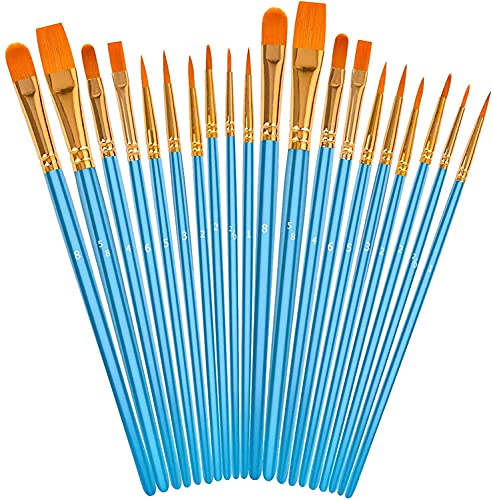
Phinus offers 20 round pointed brushes in 10 sizes from 5/8 down to 2/0, with durable synthetic nylon, rust-resistant nickel ferrules and wooden handles, individually handcrafted and double crimped. The listing highlights tight, small spots and tiny dots.
On fabric, details such as outlines, lettering, eyes on a character design or dots on a sneaker need a sharp point. Fabric fibers wear points down quickly, so having two of each size is useful.
Best suited for: Fabric artists doing detailed designs, lettering and shoe customization.
Key features:
- 20 brushes, 10 sizes
- Round pointed
- Synthetic nylon
- Double crimped ferrules
Pros:
- Many fine tips
- Duplicates of each size
- Very affordable
Cons and limitations:
- Rounds only, no flats
- Not ideal for large fills
Buying consideration: For crisp outlines on fabric, slightly thicker paint works better than thin; thin paint wicks along fibers.
4. Soucolor 20 Pcs Pointed Tip Brushes — Best for value detail work

Soucolor lists 20 brushes in 10 sizes with soft, strong bristles, nickel ferrules and wooden handles. It says they do not shed, hold paint well, clean easily in soap and water and retain their shape after drying.
Easy cleaning matters with fabric paint, which can set in bristles if left to dry. A large pack of rounds lets you rotate brushes during a session.
Best suited for: Painters who want a cheap supply of detail brushes for fabric projects.
Key features:
- 20 brushes, 10 sizes
- Pointed tips
- Synthetic bristles
- Soap and water cleanup
Pros:
- Low cost
- Easy to clean
- Holds shape
Cons and limitations:
- Rounds only
- Soft bristles less good for scrubbing paint into fibers
Buying consideration: Use the larger rounds to fill small shapes and the smaller ones for outlines.
5. ONEXIZ 162 Pcs Bulk Flat and Round Brushes — Best for classes, parties and kids

ONEXIZ packs 162 brushes: 81 flats with a 0.59 inch edge and 81 rounds with 0.39 inch tips. The listing claims triple-crimped nylon bristles and aluminum ferrules, and names fabric printing, classroom projects, ceramics and face designs among uses.
For a T-shirt painting party or a school tote bag project, a bulk pack means everyone gets a flat and a round, and lost or ruined brushes are not a problem.
Best suited for: Teachers, party hosts and families running group fabric painting projects.
Key features:
- 162 brushes: 81 flat, 81 round
- Nylon bristles
- Aluminum ferrules
- Bulk pack
Pros:
- Huge count
- Simple two-shape system
- Low cost per brush
Cons and limitations:
- Only two sizes
- Not for fine detail
Buying consideration: Give each participant one flat and one round, and keep spares in a cup of water to stop paint drying.
6. GOTIDEAL 10 Pcs Round Pointed Brushes — Best for a small starter set

GOTIDEAL lists ten round-pointed brushes in different sizes, with UV-coated wooden handles and double-crimped ferrules. It is a small, inexpensive set for trying fabric painting.
Pair it with one or two flat brushes and you have enough to customize a shirt or a pair of shoes.
Best suited for: Beginners trying fabric painting for the first time.
Key features:
- 10 brushes
- Round pointed sizes
- UV-coated wood handles
- Double crimped
Pros:
- Very low cost
- Variety of round sizes
- Good starter kit
Cons and limitations:
- Rounds only
- Not built for heavy scrubbing
Buying consideration: Add a stiff flat brush for working paint into the weave on larger areas.
Buying Guide: How to Choose Paint Brushes for Fabric Painting
Synthetic bristles with some spring
Fabric paints are water based and thick. Synthetic nylon bristles hold up, spring back and wash out easily. Very soft watercolor-style brushes can be too floppy to push paint into fibers.
Flats and filberts for fills
To get even color on fabric, you often need to work paint into the weave with short strokes. A firm flat or filbert does this best. Stencil brushes, used with a dabbing motion, also work well for stenciled designs.
Pointed rounds and liners for detail
Outlines, lettering and fine features need a sharp point. Keep separate detail brushes from your scrubbing brushes so the points last.
Match brush to fabric
Smooth cotton T-shirts take paint easily. Denim and canvas are rougher and wear brushes faster. Stretchy fabrics such as jersey need lighter paint layers that flex. Leather and synthetic sneakers often use specialized leather or acrylic paint with stiffer brushes.
Cleanup matters
Fabric paint is designed to be permanent once set, and it can set in bristles too. Keep brushes in water during the session and wash them thoroughly afterward.
Number of brushes
A practical kit has two flats, two rounds and one liner. Add more if you paint multicolored designs so you can dedicate brushes to light and dark colors.
Value versus longevity
Fabric is hard on brushes. Many fabric painters use inexpensive brushes for scrubbing and keep better brushes for details.
Fabric Paint Basics
Fabric paint: made for textiles, stays flexible and is usually washable once heat set according to the maker instructions.
Acrylic plus textile medium: regular acrylic paint can be mixed with a textile or fabric medium to make it softer and more flexible on fabric. Follow the medium label for ratios and heat setting.
Fabric markers: useful for fine lines and lettering alongside brushwork.
Leather and shoe paint: specialized acrylic-based paints for leather sneakers and synthetic shoes, often requiring a preparer to remove factory finish.
How to Paint Fabric Step by Step
- Pre-wash the fabric without fabric softener to remove sizing that can block paint.
- Insert a barrier. Place cardboard or wax paper inside shirts and bags so paint does not bleed through.
- Stretch slightly. Pin or tape the fabric taut on a board for even painting.
- Transfer the design. Use chalk, a disappearing fabric marker or transfer paper.
- Fill large areas first with a flat brush, working paint into the fibers.
- Add details with rounds and liners once fill colors are dry to the touch.
- Dry and heat set according to the paint instructions, usually with an iron or dryer after a waiting period.
- Wait before washing, then wash inside out on a gentle cycle.
Popular Fabric Painting Projects
T-shirts: simple designs, lettering and characters. Use thin layers so the shirt stays soft.
Tote bags: canvas totes take bold designs and stencils well. Rough canvas wears brushes faster.
Denim jackets: back panels are a popular canvas for detailed art. Use firm brushes and possibly multiple coats.
Sneakers: canvas sneakers take fabric paint; leather sneakers need leather paint and a preparer.
Pillow covers and home textiles: stencils and large fills with stencil brushes or flats.
Brush Techniques for Fabric
Scrubbing in. For solid fills, load a flat brush moderately and use short back-and-forth strokes to push paint down into the fibers. It gives more even color than long strokes that only coat the surface.
Stippling. Dabbing straight down with a flat or stencil brush is the cleanest way to paint through a stencil without paint creeping under the edges.
Dry brushing. A nearly dry flat dragged lightly across denim or canvas creates a distressed, vintage look that suits jackets and bags.
Outlining last. Paint fills first, let them dry, then outline with a pointed round. Outlining first and filling after risks smudging the line.
Layering light over dark. On dark fabric, paint a white or light base layer first where light colors will go. It makes bright colors pop instead of disappearing into the fabric.
Brush Care for Fabric Painters
Because fabric paint is designed to be permanent, never let it dry in your brushes. Our guide on keeping paint brushes from shedding explains how to protect ferrules and bristles, and drying paint brushes correctly keeps points sharp for the next project. For large textile pieces such as banners and tablecloths, see the guide on painting with large brushes.
Common Mistakes to Avoid
- Painting unwashed fabric with sizing that blocks paint absorption.
- Forgetting a barrier inside shirts so paint bleeds through.
- Using very thick layers that crack when the fabric flexes.
- Letting fabric paint dry in brushes.
- Skipping heat setting, so the design fades or washes out.
- Using regular acrylic on clothing without textile medium.
FAQs
What brushes are best for fabric painting?
Synthetic nylon brushes: firm flats and filberts for filling, and pointed rounds and liners for details.
Can I use regular paint brushes on fabric?
Yes. Synthetic acrylic brushes work well, though fabric wears them faster. Keep dedicated detail brushes for fine work.
Do I need special paint for fabric?
Use fabric paint, or mix acrylic with textile medium so the paint stays flexible and washable after heat setting.
How do I make fabric paint permanent?
Follow the paint instructions, which usually involve drying and then heat setting with an iron or dryer.
How do I stop fabric paint from bleeding?
Pre-wash the fabric, use slightly thicker paint for outlines, and place a barrier behind the fabric.
What brush is best for painting shoes?
Small flats and pointed rounds in synthetic nylon. Canvas shoes take fabric paint; leather shoes need leather paint.
Final Recommendation
For most fabric painters, the Benicci 12-piece set provides the right mix of flats, filberts and rounds in durable nylon. Add the Phinus or Soucolor 20-piece sets for fine details and lettering, and choose the KEVIN&SASA 24-piece set if you want variety and a case. For classes and parties, the ONEXIZ 162-piece bulk set keeps everyone supplied, and the GOTIDEAL 10-piece set is a low-cost way to start.




