
PaintingProGuide is reader-supported. When you buy through links on this page we may earn an affiliate commission at no extra cost to you.
A pouring medium for acrylic paint turns thick color into a fluid that flows across a canvas, levels smoothly and dries without the chalky weakness you get from thinning with water alone. The best pouring medium keeps colors separate long enough to form cells and lacing, dries without crazing, and gives the finish you want, whether that is wet-look gloss or a softer satin.
Pouring uses a lot of medium, so value and container size matter more here than with most art supplies. This guide ranks professional gloss media, bulk pump bottles, the popular Floetrol additive, and an inexpensive craft option, and explains which pouring styles each one suits.
Quick answer: Liquitex Professional Pouring Medium (32 oz, gloss) is the best pouring medium for acrylic paint when you want a high-gloss, wet-look finish from a professional brand; its high resin solids help pours level into even, flowing color. For volume at a lower tier, U.S. Art Supply’s 64 oz Gloss Pouring Medium and Shuttle Art’s 1,000 ml pump bottle are strong choices. Floetrol is the economical additive many pourers use for cells, best combined with an acrylic medium.
Our Top Picks at a Glance
- Liquitex Professional Pouring Medium, 32 oz Gloss — Best overall pouring medium
- U.S. Art Supply Professional Gloss Pouring Medium, 64 oz — Best value half gallon
- Shuttle Art Pouring Medium, 33.8 oz — Best pump bottle with simple 1:1 mixing
- Nicpro Pouring Medium, 69 oz — Best jumbo pump bottle for classes
- Handy Art Acrylic Pouring Medium, 1 Gallon — Best gallon for studios
- Flood Floetrol, 1 Gallon — Best additive for cells on a budget
- Apple Barrel Pouring Medium, 16 oz — Best small bottle for satin practice pours
| Product | Best For | Key Spec | Key Strength | Price Tier |
|---|---|---|---|---|
| Liquitex Pouring Medium 32 oz | Glossy professional pours | High resin solids, gloss | Wet-look finish (listed) | $$ |
| U.S. Art Supply Gloss 64 oz | Value and volume | Half gallon, gloss | Does not slow drying (listed) | $$ |
| Shuttle Art 33.8 oz | Easy mixing | 1,000 ml pump, 1:1 ratio | Pump and dust cap | $$ |
| Nicpro 69 oz | Classes and bulk | 2,040 ml pump | Visual bottle | $$ |
| Handy Art Gallon | Studios | 128 oz, gloss | Made in USA | $$$ |
| Flood Floetrol | Cells on a budget | 1 gallon additive | Improves flow and leveling | $$ |
| Apple Barrel 16 oz | Practice and crafts | 16 oz, satin | Soap-and-water cleanup | $ |
How We Chose
These picks are based on the Amazon listing details and specifications for each product as checked in October 2026, how well each medium’s finish, formulation and volume fit acrylic pouring, and how widely each is reviewed by Amazon buyers. We have not run pour tests; claims such as “prevents cracking” are the makers’ and are labeled that way.
- Formulation: acrylic polymer media first; additives second.
- Finish: gloss for depth, satin for softer pieces.
- Volume and dispensing: pumps and large bottles for regular pourers.
- Mixing guidance: clear ratios help beginners.
- Crazing and cracking: what each maker says about it.
Pouring Medium vs Floetrol vs Water
Acrylic pouring medium is binder: acrylic polymer that thins paint while adding film strength and gloss. It is the safest base for pours you plan to keep.
Floetrol is a latex paint conditioner designed for house painting. Its listing calls it a go-to additive for fluid art that creates cells and improves consistency. Many pourers mix it with paint, often together with an acrylic medium or glue-based mix, because it encourages cells and is cheap in gallon form. It is not an artist-grade medium, so use it thoughtfully on pieces you want to last.
Water thins paint but dilutes the binder. A little is fine for adjusting consistency; lots of water leads to weak, dull or cracked pours.
Best Pouring Mediums for Acrylic Paint Reviewed
1. Liquitex Professional Pouring Medium, 32 oz Gloss — Best Overall Pouring Medium

Liquitex describes this as a fluid medium with an acrylic polymer of high resin solids, creating even puddles, poured sheets and flowing applications of color. The listing adds that it dries to a high-gloss, wet-look finish and lowers the viscosity of heavier-body paints for better flow.
Liquitex recommends mixing with Soft Body acrylic for a smooth, even colored film. A 32 oz bottle is a practical size for regular hobby pourers, while still coming from a professional maker.
Pair it with fluid or soft-body paint for the easiest mixing, and test heavier paints in small cups first.
Best suited for: Pourers who want a professional, glossy result for finished pieces.
Key features (from the listing):
- 32 oz bottle
- Acrylic polymer with high resin solids
- Dries to high-gloss, wet-look finish (listed)
- Lowers viscosity of heavier paints
Pros:
- Professional brand
- High gloss without varnish
- Good leveling
Cons and limitations:
- Higher cost per ounce than bulk brands
- Listing volume detail is inconsistent
- Cells may need additives
Buying consideration: For pronounced cells, many pourers add a drop of silicone or use a cell-forming additive alongside a professional medium.
2. U.S. Art Supply Professional Gloss Pouring Medium, 64 oz — Best Value Half Gallon
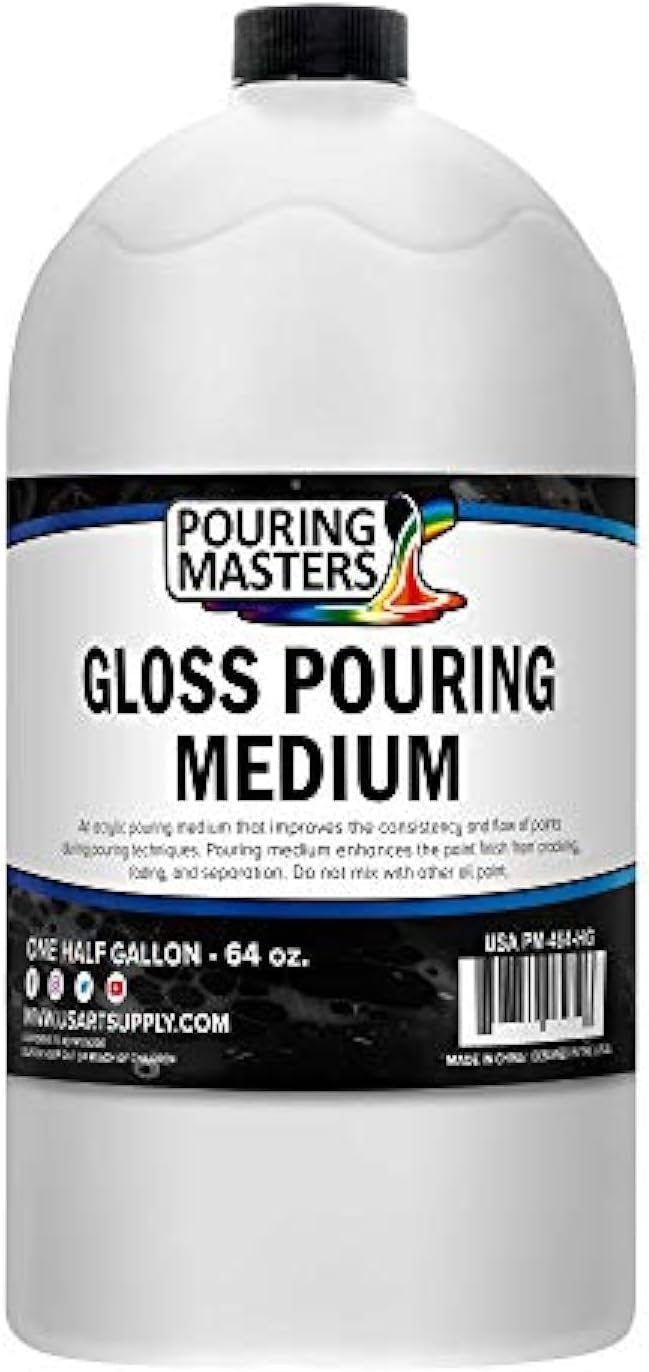
U.S. Art Supply’s Pouring Masters gloss medium is a clear acrylic polymer medium for poured sheets, puddles, cells and flowing color. The listing says it prevents cracking, fading and separation, increases shine, and will not slow drying, alter color or reduce adhesion.
A half gallon is a good balance between value and manageable size for frequent pourers.
Best suited for: Regular pourers who want a gloss acrylic medium in a larger size.
Key features (from the listing):
- 64 oz (half gallon)
- Clear gloss acrylic polymer medium
- For sheets, puddles, cells and flowing color
- ASTM D4236
Pros:
- Strong value
- Gloss finish
- Clear claims about drying and adhesion
Cons and limitations:
- Listing details list an incorrect volume
- Anti-cracking claim is the maker’s
- Large bottle without a pump
Buying consideration: Decant into squeeze bottles for daily use to avoid opening the main container every session.
3. Shuttle Art Pouring Medium, 33.8 oz Pump Bottle — Best Pump Bottle with 1:1 Mixing

Shuttle Art’s 1,000 ml bottle has a pump dispenser and dust cap for measured, mess-free use. The listing recommends a simple 1:1 ratio of medium to paint, adjustable to taste, and says it increases flow and transparency, reduces viscosity and prevents muddying.
Clear ratio guidance and a pump make it one of the easiest media for beginners.
Best suited for: Beginners and workshop hosts who want simple mixing and easy dispensing.
Key features (from the listing):
- 33.8 oz (1,000 ml)
- Pump dispenser with dust cap
- 1:1 mixing ratio (listed)
- Gloss finish
Pros:
- Easy to measure
- Clean dispensing
- Good size
Cons and limitations:
- Crack-free claim unverified
- Lesser-known brand
- Pump can clog if medium dries in the nozzle
Buying consideration: Wipe the pump nozzle after each use and replace the dust cap to prevent dried medium blocking it.
4. Nicpro Pouring Medium, 69 oz — Best Jumbo Pump Bottle

Nicpro’s 2,040 ml bottle with a built-in pump is designed for big projects, classrooms and workshops. The listing describes a translucent medium that reduces viscosity, increases flow, transparency and smoothness, keeps colors from mixing together and dries transparent.
A visible bottle lets you see how much is left. The medium conforms to ASTM D4236 and EN71.
Best suited for: Teachers, workshop leaders and very regular pourers.
Key features (from the listing):
- 69 oz (2,040 ml) with pump
- Dries transparent (listed)
- Increases flow and transparency
- ASTM D4236 and EN71
Pros:
- Huge volume
- Pump dispenser
- Safety standards listed
Cons and limitations:
- Big bottle to store
- Anti-crack and anti-fade claims unverified
- Gloss level not detailed beyond “gloss”
Buying consideration: For classes, pre-mix colors in labeled bottles before the session so students spend time pouring rather than measuring.
5. Handy Art Acrylic Pouring Medium, 1 Gallon — Best Gallon for Studios

Handy Art’s gallon is formulated for smooth, consistent flow suitable for dirty pours, flip cups and Dutch pours. The listing says it dries to a clear, high-gloss finish, and it is AP certified non-toxic and made in the USA.
A gallon is the most economical choice for studios producing many pieces.
Best suited for: Studios, art businesses and educators.
Key features (from the listing):
- 1 gallon
- Clear, high-gloss finish (listed)
- For dirty pour, flip cup and Dutch pour
- Made in the USA
Pros:
- Best bulk value
- Domestic manufacture
- Clear technique guidance
Cons and limitations:
- Listing details state conflicting volumes
- Large upfront cost
- Storage space needed
Buying consideration: Keep the gallon sealed and away from freezing; acrylic media can be ruined by freezing.
6. Flood Floetrol Latex Paint Additive, 1 Gallon — Best Additive for Cells on a Budget

Floetrol is designed for house painting: it conditions acrylic and latex paint so it flows, self-levels and dries without brush or roller marks, and extends open time. The listing also calls it a go-to additive for fluid art that creates cells and improves consistency.
Because it is not an artist medium, many pourers combine it with an acrylic pouring medium rather than relying on it alone. It cleans up with soap and water.
Best suited for: Budget pourers chasing cells, and artists making practice or décor pieces.
Key features (from the listing):
- 1 gallon
- Improves flow and leveling
- Extends open time
- Soap-and-water cleanup
Pros:
- Very economical
- Popular for cells
- Large volume
Cons and limitations:
- House-paint additive, not an artist medium
- Long-term archival behavior not documented
- Can affect varnish adhesion if residue remains
Buying consideration: Clean the cured surface before varnishing a Floetrol pour, especially if you also used silicone.
7. Apple Barrel Pouring Medium, 16 oz — Best Small Bottle for Practice

Apple Barrel’s 16 oz craft medium turns acrylic paint into a pourable mix for marbled and swirled effects. It dries to a subtle satin finish, works for dirty pours and direct pours, and cleans up with soap and water.
Satin is less dramatic than gloss but suits some pieces, and the small bottle is perfect for learning.
Best suited for: Beginners and crafters trying pours for the first time.
Key features (from the listing):
- 16 oz
- Satin finish
- Dirty pour and direct pour
- Soap-and-water cleanup
Pros:
- Low tier
- Easy to try
- Craft-friendly
Cons and limitations:
- Satin, not gloss
- Small for regular pourers
- Craft grade
Buying consideration: If you want gloss on a satin pour, varnish it after full curing.
Popular Pouring Techniques and the Medium They Need
Dirty pour and flip cup
Layer colors in one cup, then pour or flip the cup onto the canvas. These techniques benefit from a medium that keeps colors from blending into mud, which most listings here address. Consistent viscosity across colors is the key.
Swipe
Pour colors, then drag a contrasting color across with a damp paper towel or palette knife to reveal cells. Medium that stays fluid for a little while helps.
Dutch pour
Colors are blown across the canvas with air from a straw or hair dryer on a cool setting. Thinner mixes and a smooth, leveling medium give elegant lacing.
Puddle or tree ring pour
Paint is poured in a controlled stream to make concentric rings. A medium with good leveling and high resin solids, such as Liquitex, keeps rings crisp.
A Simple Pouring Setup
Cover your table with plastic sheeting and set a large tray or box lid underneath the canvas to catch runoff. Raise the canvas on four cups so paint can drip off the edges freely. Use a spirit level or a phone level app to make sure the surface is flat; even a slight tilt sends paint drifting to one side as it dries.
Mix each color in its own cup with medium, using a craft stick, and bring them all to the same consistency. Keep gloves, paper towels and a palette knife within reach for edges and corrections. After pouring, leave the piece flat in a dust-free room, covered loosely with a box if needed, and resist the urge to move it until it is dry to the touch. Save leftover runoff paint in a cup; it can become a background color for the next pour.
Buying Guide: How to Choose a Pouring Medium for Acrylic Paint
Prefer acrylic polymer media for finished work
Polymer media add binder and help the dried pour stay strong and flexible. Additives such as Floetrol are useful but best paired with a medium.
Choose your finish
Gloss deepens color and gives a wet look. Satin is softer. You can always change the final sheen with varnish.
Match volume to how often you pour
Pouring consumes medium fast. A 16 to 32 oz bottle suits occasional pourers; half gallons and gallons suit regular pourers and teachers.
Look for clear mixing guidance
Ratios like Shuttle Art’s 1:1 make it easier to get repeatable results.
Think about dispensing
Pumps and squeeze bottles speed up mixing and reduce mess.
Consider crazing risk
Thick pours, drafts and fast drying cause crazing. Choose a medium that addresses it and dry pieces slowly on a level surface.
More Acrylic Medium Guides
If you are deciding between pouring medium and other acrylic media, our overview of what medium to use with acrylic paint explains each type. Once your pour has cured, protect it with our guide on how to varnish an acrylic painting.
Common Mistakes to Avoid
- Thinning with lots of water instead of medium.
- Mixing colors to different consistencies.
- Pouring on an unlevel surface.
- Using a heat gun too close or too long, which can scorch or craze paint.
- Varnishing before thick pours have cured.
- Leaving silicone residue on the surface before varnishing.
FAQs
What is the best pouring medium for acrylic paint?
Liquitex Professional Pouring Medium is a strong choice for glossy, professional results. U.S. Art Supply and Shuttle Art offer good value in larger sizes.
Can I use Floetrol as a pouring medium?
Many pourers use Floetrol for cells, often mixed with an acrylic medium. It is a house-paint additive rather than an artist medium.
What ratio of pouring medium to paint should I use?
It depends on paint body and product. Shuttle Art suggests 1:1. Heavier paints need more medium. Aim for a consistency like warm honey.
Why are my acrylic pours cracking?
Common causes include thick layers drying too fast, too much water, drafts or heat. A good medium and slow, level drying reduce cracking.
Do I need to varnish an acrylic pour?
Gloss media dry shiny, but varnish adds UV and dust protection and evens sheen. Clean the surface first if you used silicone.
Can I use pouring medium on wood?
Yes. Many listings mention wood, canvas and other surfaces. Prime or seal raw wood first for best adhesion.
Final Recommendation
Choose Liquitex Professional Pouring Medium for glossy, professional pours. For value, U.S. Art Supply’s half gallon or Shuttle Art’s pump bottle are excellent, and Nicpro or Handy Art make sense for classes and studios. Use Floetrol for budget cells alongside a medium, and Apple Barrel for satin practice pours while you learn.





2 Comments