
PaintingProGuide is reader-supported. When you buy through links on this page we may earn an affiliate commission at no extra cost to you.
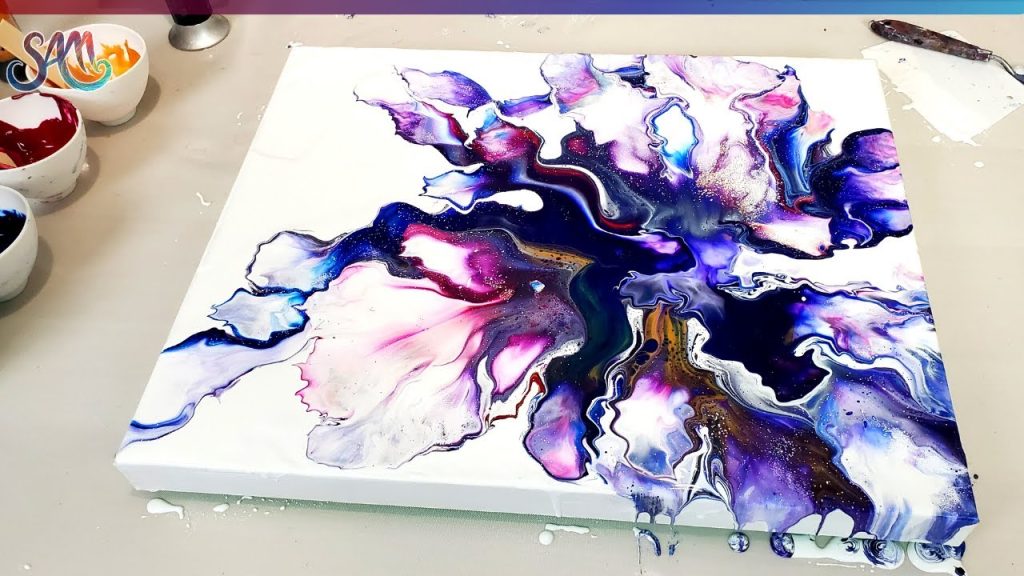
Pouring acrylic paint is acrylic thinned to a flowing, honey-like consistency so it can be poured, tilted and layered into cells, lacing and marbled patterns. You can buy it premixed and ready to pour, or make your own by mixing regular acrylic with a pouring medium such as Floetrol and a little water. Premixed pour paint is easier and more consistent for beginners; mixing your own is cheaper once you pour regularly.
This page explains how pouring paint works, the main techniques, how to get cells, and how to avoid cracks and crazing. It also compares seven pouring paints and supplies from our October 2026 Amazon check, from a 32 oz ready-to-pour white to bulk premixed sets and the popular Floetrol additive.
Quick answer: For beginners, a premixed set such as the Nicpro 8-Color Bulk Pour Paint Set (1,000 ml per color with silicone oil and gloves) removes the guesswork. Every pourer goes through white fastest, so the Pouring Masters Titanium White 32 oz is a smart add-on. If you want to mix your own, combine a bulk acrylic set like the Nicpro 14-Color 500 ml Set with Flood Floetrol.
What Makes Pouring Paint Different?
Regular acrylic is too thick to flow and too strong to layer in a pour. Pouring paint is thinned with a medium that keeps the acrylic binder strong while lowering viscosity, so colors flow over each other without mixing into mud and dry without cracking. Thinning with water alone weakens the binder and can lead to cracking, dull colors and paint that lifts. That is why pouring mediums, or premixed pour paints that already contain one, are the standard approach.
The target consistency is usually described as warm honey or heated syrup: when you lift a stir stick, the paint should flow off in a steady stream and the trail on the surface should disappear within a couple of seconds.
Pouring Paints and Supplies at a Glance
| Product | Best For | Key Spec | Key Strength | Price Tier |
|---|---|---|---|---|
| Nicpro 8 Colors Bulk Pour Paint | Beginners pouring often | 8 x 1,000 ml premixed, silicone oil, gloves | Big volume, no mixing needed | $$$ |
| Pouring Masters Titanium White | Every pourer | 32 oz premixed white | Honey-like, ready to pour | $$ |
| Acro Color 30 Pour Set | Trying many colors | 30 x 2 oz incl. metallic, neon, pastel | Variety for small pours | $$ |
| ABEIER Metallic Pour Set | Metallic pours | 18 x 2 oz metallic, premixed | Shimmer, ASTM D-4236 | $$ |
| Nicpro Iridescent Pour Kit | Iridescent color-shift pours | 20 x 8.45 oz iridescent, pour oil, gloves | Color shifts with angle | $$$ |
| Flood Floetrol, 1 gal | Mixing your own pour paint | 1 gallon additive | Improves flow; popular for cells | $$ |
| Nicpro 14 Colors 500 ml | Base paint for DIY mixing | 14 x 500 ml acrylic | Bulk colors to mix with medium | $$$ |
How We Chose
We compared these products using the Amazon listing details and specifications checked in October 2026: whether paint is premixed, volume per color, included accessories such as silicone oil, finish type, safety labels and stated drying times, along with how widely each product is reviewed by Amazon buyers. We did not pour test paintings ourselves. We focused on value for regular pouring, consistency out of the bottle and how complete each option is for beginners.
- Ready-to-pour vs mix-your-own: convenience versus cost.
- Volume: pours consume far more paint than brush painting.
- White supply: the most-used color in most pours.
- Accessories: silicone oil, gloves and pipettes that help beginners.
- Effects: metallic, iridescent and neon options for specific looks.
Best Pouring Acrylic Paints and Supplies Reviewed
1. Nicpro 8-Color Bulk Pour Paint Set — Best for Beginners Who Pour Often

Nicpro’s bulk set provides eight premixed pour colors, white, yellow, orange, red, violet, blue, green and black, each in a 1,000 ml (33.8 oz) bottle, along with 2 oz of 100 percent silicone pour oil, 50 pairs of gloves, instructions and a color wheel. The listing stresses that the paint flows easily without extra mediums or additives and is thinner than regular acrylic.
Volume is the reason to buy it. A single medium canvas pour can use several ounces of paint, so small 2 oz bottles disappear after a few attempts. With a liter of each color, you can practice techniques and color combinations without rationing.
Best suited for: Beginners and regular pourers who want consistency and plenty of paint.
Key features:
- 8 premixed colors, 1,000 ml each
- 2 oz silicone pour oil
- 50 pairs of gloves, instructions, color wheel
- High-gloss finish, non-toxic
Pros:
- Huge volume per color
- No mixing required
- Silicone included for cells
Cons:
- Only eight colors
- Large bottles need storage
- Highest price tier here
Buying consideration: Start with simple three or four color combinations; too many colors in one pour quickly turn muddy.
2. Pouring Masters Titanium White, 32 oz — Best White for Every Pourer

White is the backbone of most pours: it separates colors, creates contrast and forms the base layer in many techniques. U.S. Art Supply’s Pouring Masters Titanium White comes in a 32 oz bottle, formulated with a honey-like consistency ready to pour. The listing says it suits dirty pours, flip cups, Dutch pours and tree ring pours, works with pouring medium, silicone oil or cell activators, and is part of an 84-color range. It dries to a gloss finish.
Best suited for: Any pourer, especially as a white supplement to color sets.
Key features:
- 32 oz titanium white
- Ready-to-pour honey consistency
- Works with silicone and cell activators
- Gloss finish
Pros:
- Big volume of the most-used color
- Ready to use
- Part of a large color range
Cons:
- Single color
- Gloss finish may differ from other paints
- Needs color sets alongside
Buying consideration: Buy white in a larger size than any other color; you will use it in almost every pour.
3. Acro Color 30-Color Pour Set — Best for Trying Many Colors

Acro Color’s set includes 30 premixed, ready-to-use high-flow colors in 2 oz bottles, including metallic, neon and pastel shades. The listing says it suits canvas, paper, glass and wood.
Variety is the appeal: it lets you discover color combinations you love before investing in larger bottles. Two ounces per color is enough for small pours such as coasters, tiles and 8 x 10 canvases.
Best suited for: Beginners exploring color combinations on small surfaces.
Key features:
- 30 premixed colors, 2 oz each
- Includes metallic, neon and pastel
- Ready to pour
- Canvas, paper, glass, wood
Pros:
- Huge color variety
- Includes special effect colors
- Good for experiments
Cons:
- Small bottles
- Not enough for large canvases
- No silicone or accessories
Buying consideration: Note your favorite combinations, then buy those colors in larger bottles.
4. ABEIER Metallic Pour Set — Best for Metallic Pours

ABEIER’s set has 18 metallic pouring colors in 2 oz bottles, premixed with pouring medium and ready to pour into a cup or directly onto a surface. The listing says it can create cellular effects, is waterproof and fade-resistant once dry, works on canvas, glass, wood, ceramic and rocks, and conforms to ASTM D-4236.
Metallic accents are one of the most popular looks in pour art, especially gold and copper lacing over dark blues and blacks.
Best suited for: Pourers adding shimmer and metallic lacing to their work.
Key features:
- 18 metallic colors, 2 oz each
- Premixed with pouring medium
- Canvas, glass, wood, ceramic, rocks
- ASTM D-4236
Pros:
- Ready-to-pour metallics
- Cells possible per listing
- Good accent palette
Cons:
- Small bottles
- Metallic only
- May need non-metallic base colors
Buying consideration: Use metallics as accents on top of a solid base; a whole pour of metallics can look flat.
5. Nicpro Iridescent Metallic Pour Kit — Best for Iridescent Color-Shift Pours

Nicpro’s iridescent kit includes 20 color-shifting metallic pour colors in 8.45 oz bottles, premixed with pouring medium, plus 2 oz pour oil, 50 gloves, 5 pipettes and 3 disposable tablecloths. The listing describes colors that shift under different light and angles, works on canvas, glass, wood, paper, tile, stone, ceramics and fabric, and suggests letting finished pours dry for two days at room temperature.
It is a complete kit for an iridescent style and a step up in volume from 2 oz sets.
Best suited for: Pourers who want a full iridescent palette with accessories included.
Key features:
- 20 iridescent metallic colors, 8.45 oz each
- 2 oz pour oil, 50 gloves, 5 pipettes, 3 tablecloths
- Premixed, high flow
- Dry about 2 days at room temperature
Pros:
- Distinctive color-shift effect
- Generous volumes
- Accessories included
Cons:
- Specialty look, not a general palette
- Higher price tier
- Iridescent effects can be subtle on light backgrounds
Buying consideration: Iridescent colors show best over dark bases; plan a black or deep blue in the pour.
6. Flood Floetrol, 1 Gallon — Best for Mixing Your Own Pour Paint

Floetrol is a paint conditioner originally designed for house paint, and the listing now also describes it as a go-to pouring medium for fluid art: it improves flow and leveling, helps colors flow without cracking, and helps create cells. It cleans up with soap and water.
Pour artists commonly mix it with acrylic paint and a little water to reach pouring consistency, which is far cheaper than buying premixed pour paint once you pour regularly. Exact ratios vary by paint thickness, so mix, test the honey-drip consistency and adjust.
Best suited for: Regular pourers who want to make their own pouring paint from bulk acrylics.
Key features:
- 1 gallon
- Improves flow and leveling
- Described as a pouring medium for acrylic
- Soap and water cleanup
Pros:
- Cost-effective in volume
- Widely used in pour art
- Helps cells form
Cons:
- Not an artist-brand medium
- Requires mixing and testing
- Can appear milky until dry
Buying consideration: Strain or stir gently to avoid bubbles, and let mixed paint rest a few minutes before pouring.
7. Nicpro 14-Color 500 ml Acrylic Set — Best Base Paint for DIY Mixing

Nicpro’s bulk set provides 14 essential acrylic colors, including white, Mars black, red, yellow, blue, green and burnt umber, each in a 500 ml (16.9 oz) squeeze bottle, plus a palette knife, sponge and color wheel. It is described as creamy, fast-drying and fade-resistant, for many surfaces.
This is regular acrylic, not pour paint. Combined with a pouring medium like Floetrol, it gives you a large, economical supply for mixing your own pouring colors.
Best suited for: Pourers mixing their own paint, and painters who also want bulk acrylic for other work.
Key features:
- 14 colors, 500 ml each
- Includes white, black, earth color
- Palette knife, sponge, color wheel
- Multi-surface
Pros:
- Large volume
- Doubles as regular painting stock
- Economical base
Cons:
- Must be mixed with medium for pouring
- Fewer colors
- Bulky bottles
Buying consideration: Mix each color in a cup with medium, aiming for the same consistency across colors so they layer evenly.
Popular Pouring Techniques
| Technique | How it works | Best for |
|---|---|---|
| Dirty pour | Layer colors in one cup, then pour onto the surface and tilt | Beginners, organic marbling |
| Flip cup | Flip the layered cup onto the canvas, lift and tilt | Cells and dramatic patterns |
| Puddle pour | Pour colors in puddles inside each other, then tilt | Rings and flower-like shapes |
| Swipe | Pour colors, then drag a thin layer of white across with a card or paper towel | Lacing and detailed cells |
| Tree ring | Pour in a slow circular motion while moving the cup to form rings | Ring patterns |
| Dutch pour | Pour colors and blow them across the surface with air | Lacy, petal-like effects |
How to Get Cells in a Pour
- Add a few drops of silicone to one or two colors and stir lightly; do not overmix.
- Use paints of different densities; heavier pigments sinking through lighter ones helps cells form.
- Keep consistency even across colors so they move together.
- Briefly pass a heat source over the surface to bring cells up, keeping it moving and away from flammable materials.
- Do not overwork the tilt; excessive tilting stretches cells into streaks.
Drying, Cracking and Finishing
Pours are thick, so they dry slowly. Nicpro suggests about two days at room temperature for its kit; thicker pours can take longer to cure fully. Keep the canvas level and dust-free while it dries.
Crazing, a web of small cracks, usually comes from paint that is too thin with water, drying too fast in heat or a draft, or a very thick application. Using a proper pouring medium, avoiding excess water and drying at moderate temperature all help. Once cured, remove any silicone residue with a gentle cleaner before varnishing. A gloss varnish or resin coat deepens colors and protects the surface.
Buying Guide: How to Choose Pouring Acrylic Paint
Premixed or mix your own
Premixed is best for beginners and consistency; mixing your own with medium is cheaper for frequent pourers.
Buy volume, especially white
Pours use far more paint than brushwork; large bottles of white and black are essential.
Color plan
Choose three to five colors per pour with a light and a dark for contrast.
Effects
Metallic and iridescent colors add shimmer; use them as accents.
Accessories
Silicone oil, gloves, cups, stir sticks and a drop cloth make sessions smoother.
Surfaces
Primed canvas, wood panels, tiles and coasters all work; seal porous surfaces first.
Learn Pouring Step by Step
New to pouring? Start with our guide to acrylic pouring techniques and how to get started, then troubleshoot with these acrylic pouring tips and tricks. For other ways to use acrylic in decor, see how to make DIY wall art with acrylic.
Common Mistakes to Avoid
- Thinning paint with water only, which leads to cracking and dull colors.
- Mixing colors to different consistencies, so they do not flow together.
- Using too many colors and ending up with mud.
- Over-tilting until the pattern stretches into streaks.
- Moving the canvas while it dries.
- Pouring leftover paint down the sink; let it dry in a cup and dispose of it as solid waste.
FAQs
What is pouring acrylic paint?
Acrylic paint thinned with a pouring medium to a flowing consistency so it can be poured and tilted into patterns.
Can I use regular acrylic for pouring?
Yes, if you mix it with a pouring medium such as Floetrol and a little water to reach a honey-like consistency.
How do I get cells in acrylic pouring?
Add a few drops of silicone oil to some colors, use paints of different densities, and briefly pass heat over the surface.
How long does a pour painting take to dry?
Usually at least a day or two to dry and longer to cure; Nicpro suggests about two days at room temperature for its kit.
Why did my acrylic pour crack?
Common causes are too much water, drying too fast in heat or drafts, or very thick application.
Should I varnish a pour painting?
Yes, after it cures and silicone residue is cleaned off. Varnish or resin protects and deepens colors.
Final Recommendation
If you are new to pouring, start with a premixed set like Nicpro’s 8-color bulk kit and add a 32 oz Pouring Masters white so you never run short. Explore color with Acro Color’s 30-color set, and add shimmer with ABEIER’s metallics or Nicpro’s iridescent kit.
Once you pour regularly, switch to mixing your own with Floetrol and a bulk acrylic set such as Nicpro’s 14-color 500 ml bottles; it is the most economical way to keep pouring. Whatever you use, match consistencies, keep palettes simple and let pours dry undisturbed.





One Comment