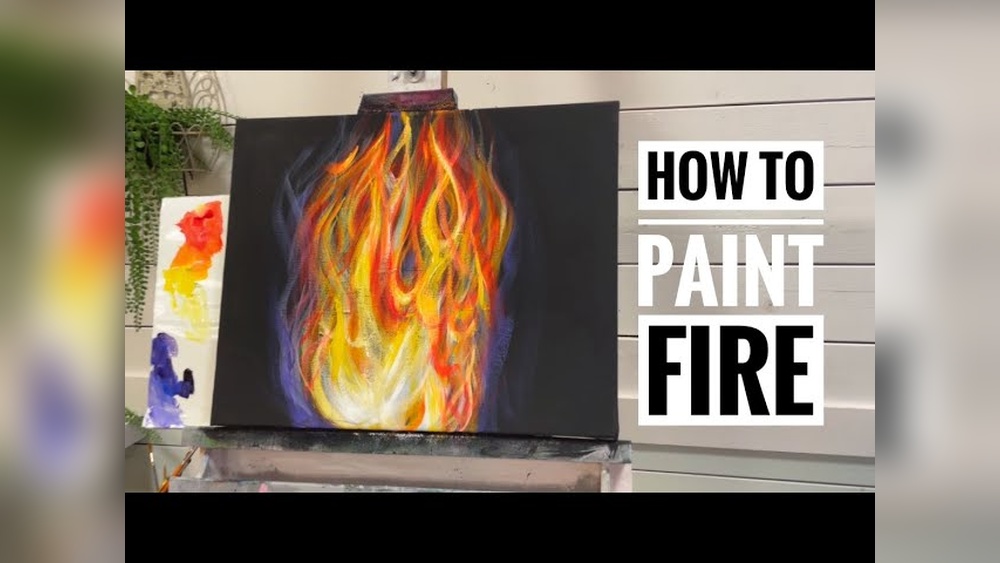
Quick answer: To paint fire with acrylic paint, start on a dark background, block in the flame shape with a warm mid-tone orange, then build upward and inward with lighter values: yellow, pale yellow, and finally a near-white core at the base of the flame. Keep the brightest color small and surrounded by darker tones, use S-shaped upward strokes for movement, and finish with a thin orange glaze around the flame to suggest glow.
Fire is one of the few subjects where the light source is the subject. That changes how you think about the whole painting. Instead of painting an object and adding light to it, you are painting light itself, and the only way to make it look bright is to control the darkness around it.
This guide covers how to paint fire with acrylic paint from the background up: the palette, the value structure that makes flames glow, a step-by-step campfire demonstration, candle flames, and the specific mistakes that make painted fire look flat or orange-blobby.
Why Painted Fire Looks Bright (and Why It Often Doesn’t)
Paint cannot emit light. A tube of cadmium yellow is never brighter than the white of the canvas it sits on. What makes painted flames convincing is contrast: the eye judges brightness relative to neighboring values. Put a pale yellow next to near-black and it reads as glowing. Put the same yellow on a white canvas and it reads as a stain.
That is why most successful fire paintings share three traits:
- A dark field. Deep blues, purples, browns or black surround the flame.
- A value ladder. Color moves from dark red at the edges, through orange and yellow, to almost white in the hottest zone.
- A small hot core. The lightest value occupies a small area, usually low in the flame and close to the fuel.
Real flames are hottest and whitest near their base, where combustion is most complete, and cooler and redder toward the tips. Painting that gradient, rather than a uniform orange shape, is the single biggest jump in realism.
Materials for Painting Fire With Acrylics
You do not need specialized supplies. A short, warm-leaning palette and a couple of brush shapes cover almost every fire subject.
| Item | What to use | Why it matters |
|---|---|---|
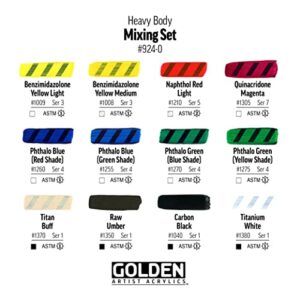
| Dark colors | Mars black or a mix of ultramarine and burnt umber; dioxazine purple | Creates the contrast field that makes flames glow |
| Deep warm | Alizarin crimson (or a quinacridone red) and cadmium red medium | Outer flame edges and embers |
| Mid warm | Cadmium orange or a red-yellow mix | The main body of the flame |
| Light warm | Cadmium yellow medium and lemon yellow | Inner flame and hot zones |
| White | Titanium white | Mixed into yellow for the core; used sparingly |
| Brushes | Size 6 to 10 filbert, size 2 round, small liner, old flat for dry brushing | Filbert for flame tongues, round and liner for wisps and sparks |
| Medium | Glazing medium or slow-dry (retarder) medium | Thin glazes for glow and softer blends |
| Surface | Primed canvas panel, 8×10 or 11×14 inches | Big enough to practice gradients without wasting paint |
Pigment quality matters more with fire than with many subjects. Low-pigment yellows tend to look translucent and weak over dark backgrounds, so you end up stacking four or five coats. If your yellows keep disappearing, our guide to acrylic paint brands with strong, opaque pigment explains which lines cover dark grounds more easily.
A Note on Opaque vs. Transparent Yellows
Some yellows are transparent by nature, especially lemon-type hues and many “hansa” or azo yellows. Over black, they can look greenish or dull. Two fixes work well: mix a small amount of titanium white into the yellow for the first layer, or underpaint the flame shape in a light warm gray before adding pure color on top.
Understanding Fire Colors: The Value Ladder
Before picking up a brush, mix five puddles on your palette. This “ladder” keeps your transitions logical and stops you from grabbing random oranges mid-painting.
- Ember red: alizarin crimson with a touch of burnt umber.
- Flame red-orange: cadmium red plus a little orange.
- Body orange: cadmium orange, or roughly 2 parts yellow to 1 part red.
- Bright yellow: cadmium yellow medium.
- Core: lemon yellow plus titanium white, roughly 1:1, adjusted until it is a very pale, warm yellow.
Lay them in a row from darkest to lightest. When you paint, each zone of the flame should only touch its neighbor on the ladder. Red should not touch the pale core directly; orange and yellow sit between them. That rule alone prevents the harsh, cut-out look common in beginner fire paintings.
How to Paint Fire With Acrylic Paint: Step-by-Step Campfire
This demonstration paints a small campfire at night on an 11×14-inch panel. Plan on 60 to 90 minutes, plus drying time between the background and the flames.
Step 1: Paint the Night Background
Cover the panel with a dark mix: ultramarine blue and burnt umber, with a little dioxazine purple for richness. Make the area directly above the fire slightly lighter and warmer by blending in a touch of burnt sienna. That subtle warm patch suggests light hitting smoke and air before you paint a single flame.
Let this layer dry completely. A hair dryer on low speed can speed it up, but keep it moving so the paint surface does not blister. Painting flames into wet background creates muddy, grayish oranges.
Step 2: Sketch the Flame Shape
Use a light chalk pencil or a thin wash of orange to draw the overall silhouette. Think of a campfire as a cluster of teardrop or candle shapes leaning together, wider at the base and splitting into three to six tongues at the top. Vary their heights. Perfect symmetry looks artificial.
Step 3: Block In With Ember Red and Red-Orange
Using the filbert, fill the entire flame silhouette with red-orange. Along the outer edges and tips, work in the darker ember red. Strokes should travel upward from the base, curving slightly as they rise. Do not worry about detail yet; you are establishing the warm footprint.
Step 4: Add the Body Orange
Inside the red zone, paint a slightly smaller flame shape in body orange, leaving a band of red visible around the edges. While the paint is still damp, blend the boundary with a few light upward strokes. Acrylic dries fast, so work one flame tongue at a time instead of the whole fire.
Step 5: Layer the Yellows
Inside the orange, paint the bright yellow, concentrating it in the lower half of the flame cluster and up the centers of the tallest tongues. Again, leave orange visible between yellow and red. The fire should now read as a set of nested shapes, each smaller and lighter than the last.
Step 6: Place the Hot Core
With the small round brush, add the pale yellow-white core just above the logs, where the flames originate. Keep it small, roughly one-fifth of the total flame area or less. Pull a few thin streaks of core color up into the tallest flames to suggest the hottest strands of gas.
Step 7: Paint the Logs and Embers
Paint logs in dark browns and near-blacks, crossing under and through the base of the fire. Where flames overlap the logs, let the flame color sit on top. Along the top edges of the logs, add thin lines of orange and red to show glowing wood. Dab tiny dots of red and orange at the base for embers, with a few pale yellow dots for the hottest coals.
Step 8: Glaze the Glow
Mix a little cadmium orange with glazing medium, about 1 part paint to 4 or 5 parts medium. Once the flames are dry, brush this thin glaze around the fire in a soft halo, fading it out into the background. Glaze the tops of nearby rocks or logs as well. This is what makes the fire appear to light its surroundings.
Step 9: Add Sparks and Wisps
With a liner brush and thinned yellow-orange, flick a few sparks upward: tiny dots and short curved dashes, becoming smaller and sparser as they rise. Add one or two thin flame wisps that detach from the main tongues. Restraint matters here; five well-placed sparks look better than fifty.
How to Paint a Candle Flame
A candle flame uses the same value logic in miniature, but its shape is calmer and more defined.
- Paint a dark background and let it dry.
- Paint the candle body and wick.
- Glaze a soft, round orange halo around where the flame will sit.
- Paint a teardrop shape in pale yellow, pointed at the top.
- Add a thin orange edge along the upper sides of the teardrop.
- At the bottom, just above the wick, add a small dab of transparent blue. Candle flames often show a faint blue zone at the base where the gas burns hottest and cleanest.
- Add a tiny touch of almost-white in the center of the teardrop.
The halo glaze does most of the work. Without it, a candle flame looks pasted on. With it, the flame seems to radiate.
Painting Fire on Different Backgrounds
Not every fire painting sits in a black night. Here is how to adjust when conditions change.
| Background | Adjustment |
|---|---|
| Night sky or black | Classic high contrast; full value ladder works as written |
| Twilight or dusk | Background is mid-value; push the core lighter and keep flames smaller so they still read as the brightest element |
| Daylight | Fire looks paler and more transparent; use thin yellow-orange glazes, heavy smoke and less glow |
| Abstract or stylized | Flat shapes in the ladder colors; outline flames with dark red for a graphic look |
| White canvas, no background | Hardest option; surround flames with a dark smoke shape or accept a softer, illustrative result |
Common Mistakes When Painting Fire
- Too much yellow. When everything is bright, nothing is. Keep the hottest color small.
- Painting on a light background. Without a dark field, even perfect flame colors look dull.
- Hard edges between every color. Blend at least some transitions while damp, or use a glaze afterward to unify them.
- Symmetrical flames. Real fire is irregular. Vary heights, leans and widths.
- Mixing complements by accident. Yellow touching wet purple background turns muddy brown. Let the background dry first.
- Forgetting the light falloff. Objects near the fire should be warmer and brighter than those farther away.
- Black for shadows near the fire. Use deep reddish browns close to the flames. Pure black right next to firelight reads as a hole.
Tips by Skill Level
Beginner
Practice a single candle flame and a single flame tongue on scrap paper before a full fire. Use only three colors plus white and black: red, yellow and orange. Focus on getting the order of values right rather than texture.
Intermediate
Add glazing. A transparent red glaze over the outer flame zone, or a thin orange glaze over everything near the fire, can unify a painting that looks patchy. Try painting fire reflected in water, where the flame shape is repeated below in broken horizontal strokes.
Advanced
Experiment with fluid acrylics and inks for flame wisps. Their high flow suits long, thin strokes that thicker body paint struggles with. Our review of Daler-Rowney acrylic ink looks at how inks behave in fine line work and glazes. You can also explore painting forest fires and torches, where smoke and atmospheric perspective add depth.
How to Paint Smoke Above the Fire
Smoke helps a fire painting feel atmospheric. Use a dry, almost empty flat or fan brush loaded with a very thin gray made from the background color plus white. Scumble it lightly above the flames in soft, rising curls that drift and widen as they climb. Near the flames, tint the smoke warm with a touch of orange; higher up, let it cool into blue-gray. Keep it subtle. Heavy smoke covers the glow you worked hard to build.
FAQs
What colors do you need to paint fire with acrylics?
A practical fire palette includes a deep red (alizarin crimson or a quinacridone red), cadmium red, cadmium orange, cadmium yellow, lemon yellow, titanium white and a dark mix or black for the background. Many artists add dioxazine purple or ultramarine for richer night tones.
Should fire be painted on a black background?
It does not have to be pure black, but it should be dark. Fire needs contrast to look bright. Deep blues, purples and browns work just as well as black and often look more natural.
How do you make painted fire look like it is glowing?
Keep the lightest value small and surrounded by darker tones, then apply a thin transparent orange glaze around the flames once they are dry. Lighting nearby objects with warm highlights also strengthens the illusion of glow.
Can beginners paint realistic fire?
Yes. Fire is forgiving because its shapes are irregular. The key concepts are a dark background, a clear value ladder from red to near-white, and upward curved strokes. Practicing a single candle flame first makes the full campfire much easier.
Why does my yellow look green over the dark background?
Many yellows are semi-transparent, so the dark blue or black underneath shows through and shifts the color. Add a little white to the first yellow layer or underpaint the flame shape in a light warm color first.
How long should the background dry before painting flames?
Wait until it is fully touch-dry, usually 15 to 30 minutes for a thin layer in normal room conditions, longer for thick paint. Painting flames into a wet dark background mixes the colors and dulls the fire.
Final Thoughts
Painting fire with acrylic paint comes down to value control more than color choice. Build a dark field, climb the ladder from red to pale yellow in nested shapes, keep the hot core small and finish with a glow glaze. Once that sequence feels natural, candles, torches and bonfires all follow the same logic.
Because fire relies on rich, opaque reds and yellows, the paint you use shapes how many layers you need. When you are ready to upgrade your palette, see our comparison of the best acrylic paints for vivid, high-coverage color to find tubes that hold their brightness over dark backgrounds.