
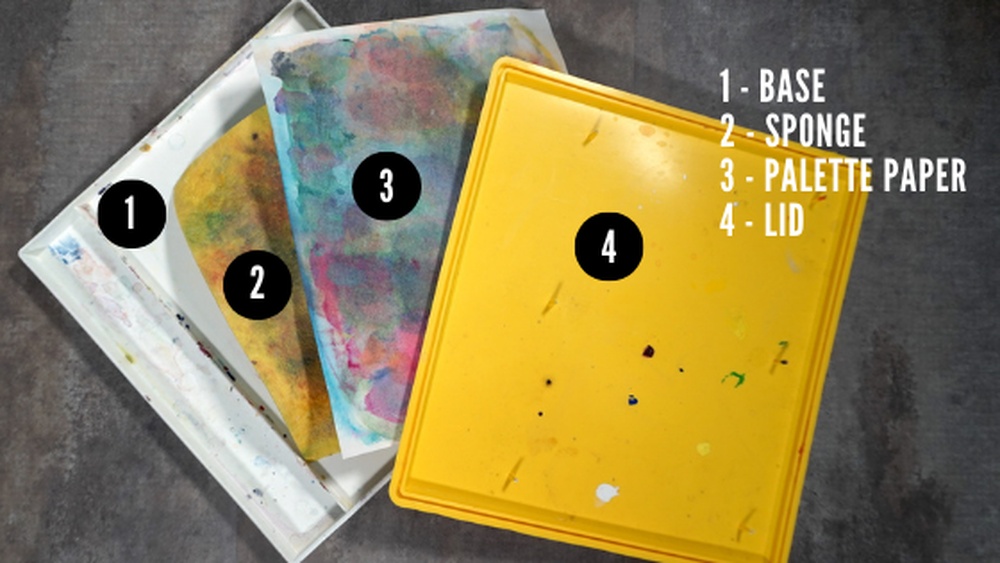
Quick answer: To use a stay-wet palette correctly, soak the sponge until saturated, press out excess water so it is damp but not puddling, lay a pre-soaked membrane paper on top, smooth out air bubbles, and squeeze small amounts of acrylic or gouache onto the paper. Close the lid whenever you step away. Done right, acrylics stay workable for days instead of minutes, and gouache stays soft for a week or more.
Acrylic paint dries by water evaporating, and on a dry plastic palette that can happen in 10 to 20 minutes. Knowing how to use a stay-wet palette solves that problem by feeding a slow, steady supply of moisture up through a thin sheet of paper, so your mixes stay open while you paint. The idea is simple, but small mistakes, like an oversoaked sponge or unsoaked paper, are the reason many painters give up on it.
This guide walks through setup, daily use, the water balance that matters most, storage between sessions, and how to fix the usual problems: runny paint, mold, curling paper and colors that still dry out. If you have not chosen a palette yet, our roundup of the best stay-wet palettes for acrylics and gouache compares sizes, lids and sponge types.
What Is a Stay Wet Palette?
A stay-wet palette is a shallow tray with three layers: a water reservoir (usually a sponge or a stack of thick blotting paper), a semi-permeable membrane paper on top of it, and a tight lid. The sponge holds water. The membrane lets a controlled amount of that water pass upward into the paint while keeping the paint from sinking into the sponge. The lid traps humidity so very little evaporates into the room.
The result is a microclimate. Paint sitting on the membrane loses water to the air at the top but gains water from below, so it reaches a balance and stays soft. That balance is why technique matters: too much water from below thins your paint, and too little lets it skin over.
How it differs from a homemade wet palette
Many painters build a wet palette from a food container, paper towels and baking parchment. Commercial stay-wet palettes do the same job with a thicker sponge that holds more water, a membrane paper designed for the purpose, and a lid that seals more reliably. The core method below works for both, though homemade versions usually need rewetting more often.
What You Need Before You Start
- The palette tray and lid. Check that the lid closes evenly all the way around.
- The sponge. Most palettes include one cut to size. Some painters substitute a few layers of thick shop towel.
- Membrane paper. The thin, slightly waxy sheets packed with the palette. Replacement packs are sold separately.
- Clean water. Room temperature tap water is fine; distilled water can slow mineral buildup and mold in hard-water areas.
- A shallow dish or sink for soaking the paper.
- A palette knife for mixing and for lifting paint if you need to replace the paper.
How to Use a Stay Wet Palette: Step-by-Step Setup
- Soak the sponge completely. Run it under the tap or submerge it in the tray until it is fully saturated. A new sponge can be stiff and may take a few minutes to absorb water evenly; squeeze it under water a few times to help.
- Press out the excess. Place the sponge in the tray and press down with flat hands, then tip the tray and pour off the extra water. You want a sponge that is damp all the way through but does not leave standing water when pressed lightly. This one step decides whether your paint stays creamy or turns runny.
- Soak the membrane paper. Submerge a sheet in warm water. Typical guidance is anywhere from 30 minutes to a few hours, and many painters soak overnight for the first use. The paper is ready when it feels soft and floppy rather than crisp. Unsoaked paper acts like a barrier and the system barely works.
- Lay the paper on the sponge. Place it shiny side up if your paper has a visible sheen (check the instructions; most membrane papers have a slightly smoother working side).
- Smooth out air bubbles. Use the side of your hand, a clean palette knife or a soft rubber brayer to push trapped air toward the edges. Air pockets break the water contact, and paint sitting over a bubble will dry out faster than paint beside it.
- Wipe off surface water. Blot the top of the paper with a paper towel so there is no visible film of water. A shine is fine; beads and puddles are not.
- Add paint in small amounts. Squeeze out pea-sized to nickel-sized portions around the edges, leaving the center for mixing. You can always add more later.
- Close the lid every time you leave. Even a short coffee break with the lid open lets the surface dry. Make closing it a habit.
Getting the Water Balance Right
Almost every complaint about stay-wet palettes traces back to water balance. The table below shows what each problem looks like and the likely cause.
| What you see | Likely cause | Fix |
|---|---|---|
| Paint spreads into a puddle, looks thin and glossy | Sponge too wet | Lift paper, press out more water, blot, reset |
| Paint forms a skin within an hour | Sponge too dry, or paper not soaked | Add a little water to the sponge edges; soak paper longer |
| Some blobs dry, others stay soft | Air bubbles under the paper | Smooth paper again from center outward |
| Paint beads up and slides | Water film on top of paper | Blot surface before adding paint |
| Colors weak or chalky after drying | Paint over-diluted by excess moisture | Reduce sponge water; avoid mixing glazes directly on soaked areas |
A good test: press a fingertip on the paper. It should feel cool and damp, like a well-wrung washcloth. If water wells up around your finger, it is too wet.
How long paint stays workable
Exact times depend on room humidity, temperature and the paint brand, so treat these as rough ranges. With the lid closed, heavy and soft-body acrylics commonly stay usable for several days. Fluid acrylics and very thin mixes tend to break down sooner because they are already high in water. Gouache can stay workable for a week or longer, and some painters keep it going for weeks with occasional rewetting. Paint left with the lid open in a dry, heated room may still skin over within a few hours.
Stay Wet Palette for Acrylics
Acrylic is the medium these palettes were designed for. A few habits make a big difference:
- Keep heavy-body paint slightly thicker on the palette. It will absorb some moisture from below, which softens it. Starting thick leaves room for that.
- Mix glazes on a separate dry palette. Very thin acrylic washes can lose their binder strength if they keep pulling water. Mix glazes elsewhere and use the stay-wet palette for body color.
- Use the edges for storage, center for mixing. Paint at the edges stays undisturbed and lasts longer.
- Mix enough of key colors. One advantage is that a custom mix, say a specific sky blue, can be saved for the next session instead of remixed.
Stay Wet Palette for Gouache
Gouache is re-wettable once dry, so a stay-wet palette is less about rescuing dried paint and more about keeping it at a consistent creamy texture. That matters for flat, even passages, where gouache that is half dry and half wet can streak.
- Use slightly less water in the sponge than you would for acrylic. Gouache softens quickly and can turn soupy.
- Watch for color shifts. Gouache dries lighter or darker than it looks wet. Keeping it moist on the palette means you are always judging the wet value, so test on scrap paper.
- Acrylic gouache behaves like acrylic. It dries permanently, so it benefits from the stay-wet palette the same way regular acrylics do.
If you mainly paint in gouache and want a palette suited to it, the stay-wet palette comparison notes which models suit lower-moisture setups.
Stay Wet Palette Paper: Soaking, Reusing and Replacing
The membrane paper is the part that wears out. It absorbs pigment, can tear at the edges, and eventually grows stains that make color judgment harder.
- Soak before every new sheet. Do not skip this. Dry paper can buckle once it meets the wet sponge and will not pass moisture evenly.
- Reuse a sheet for several sessions. As long as it lies flat and you can still read your colors, it is fine.
- Replace when it tears, curls badly, or turns heavily stained. A stained surface makes it hard to see the true color of fresh mixes.
- Substitutes: Baking parchment is the most common alternative. It is thinner and less porous, so it passes less moisture; some painters find it works well for acrylic, others find paint dries faster on it. Wax paper is generally less effective because the wax coating blocks water.
Stay Wet Palette Sponge Care
The sponge is where mold usually starts, because it stays damp and warm and may collect traces of paint and skin oils.
- Rinse the sponge every few sessions under running water, squeezing until the water runs clear.
- Let it dry completely if you will not paint for more than a few days. Storing a wet sponge in a sealed box for a week invites mold.
- For mild mold or a sour smell, some painters soak the sponge briefly in a dilute vinegar or very dilute bleach solution, then rinse thoroughly. Rinse well so residue does not affect paint.
- Add a drop of a mold-inhibiting option, such as a copper coin under the sponge or a commercial palette preservative. Results vary, so treat these as a backup to regular cleaning, not a substitute.
- Replace the sponge if it crumbles, stays stained or keeps smelling after cleaning.
Stay Wet Palette Large vs Small
Size changes how the palette behaves, not just how much paint fits.
| Factor | Small palette | Large palette |
|---|---|---|
| Best for | Miniatures, detail work, travel, limited palettes | Studio work, larger canvases, many colors |
| Water reserve | Dries out sooner, needs topping up more often | Holds more water and stays balanced longer |
| Space for mixing | Limited; mix in small batches | Room for several mixes side by side |
| Storage | Fits in a drawer or bag | Needs flat shelf space |
A stay-wet palette with lid is the standard design for both sizes, but check lid quality closely on smaller models since a poor seal matters more when the water reserve is small.
How to Use the Masterson Stay Wet Palette
Masterson is one of the most widely sold brands, and its instructions follow the same steps above. Points specific to its design that painters often ask about:
- The included sponge is thick and can hold a lot of water, so pressing out the excess is especially important.
- The membrane paper is packed dry and needs a long soak; a soak of several hours is commonly recommended.
- The lid is a tight snap-on design. Close it fully, as a partial seal lets humidity escape at the corners.
How to Make a Stay Wet Palette
If you want to test the concept before buying one, a homemade version takes five minutes.
- Choose a shallow plastic food container with an airtight lid.
- Fold three or four sheets of heavy paper towel, or cut a thin kitchen sponge, to fit the base.
- Wet the towel or sponge and pour off excess water.
- Lay a sheet of baking parchment on top and smooth it flat.
- Add paint and close the lid between uses.
Expect it to dry faster than a commercial palette and to need rewetting every day or two.
Common Mistakes
- Using dry membrane paper. The most common error. Always soak first.
- Flooding the sponge. More water is not better; it thins paint and spreads colors into each other.
- Squeezing out too much paint. Even on a good palette, acrylic eventually breaks down. Small amounts reduce waste.
- Leaving the lid off during long sessions. Close it between mixing rounds when you can.
- Storing in a warm spot. Heat speeds both drying and mold. A cool, shaded shelf works best.
- Never cleaning the sponge. Mold is easier to prevent than to remove.
Tips by Skill Level
Beginners
Start with five or six colors so the palette stays organized, and practice the press test before every session. Write the soak time that worked for you on the box.
Intermediate painters
Use the stay-wet palette to save mixed colors between sessions, and label them with a small note on the lid. Mix glazes separately.
Advanced painters
Adjust the moisture level by medium and season. Drier winter air may need a slightly wetter sponge, and humid summer months may need less. Some painters keep two palettes: one tuned for acrylic, one tuned drier for gouache.
FAQs
How long should I soak stay wet palette paper?
Soak it until it feels soft and limp. That typically takes at least 30 minutes in warm water, and many painters soak new sheets for several hours or overnight for the most even moisture.
Why is my paint runny on a stay wet palette?
The sponge is holding too much water. Lift the paper, press the sponge firmly, pour off the excess, blot the paper surface and reset. The paper should feel damp, not wet.
Can I use a stay wet palette for watercolor?
It is rarely useful for traditional watercolor because watercolor rewets easily when dry. It works well for gouache and acrylic, and for acrylic gouache.
How do I stop mold in my stay wet palette?
Rinse the sponge regularly, let it dry fully between long breaks, keep the palette in a cool place, and replace stained paper. Some painters also add a copper coin or a palette preservative as extra prevention.
Can I use parchment paper instead of membrane paper?
Yes. Baking parchment is a common substitute. It passes less moisture than purpose-made membrane paper, so results vary with the paint and room conditions.
Do I need to keep the lid closed while painting?
Not constantly, but close it whenever you pause for more than a few minutes. Every period with the lid off lets the surface layer of paint dry a little.
Next Step
Once you have the soak, press and blot routine down, a stay-wet palette becomes one of the most useful tools on an acrylic or gouache setup, saving paint and keeping mixes consistent across sessions. If you are still choosing a size or want a model with a better lid or thicker sponge, see our guide to choosing a stay-wet palette for side-by-side picks.



One Comment