
PaintingProGuide is reader-supported. When you buy through links on this page we may earn an affiliate commission at no extra cost to you.
Quick answer: Oil pastels sit between drawing and oil painting: pigment bound in oil and wax, applied as sticks, blended with fingers or solvent and layered for painterly effects. For a soft, blendable set that suits serious practice, the MUNGYO Gallery Soft 48-color set is the top pick. For students and budget sketching, the Pentel 50-color set is a long-standing classroom favorite, and the PABLUE 48-color set with 4 extra whites helps if you use a lot of highlights.
People searching for “oil paint pastel” usually want to know one of three things: what oil pastels are and how they relate to oil paint, how to make oil pastel work look like a painting, or which set to buy. Oil pastels were developed in the 20th century as a cleaner, portable way to get rich, oily color without brushes or long drying times. They have since become a serious fine-art medium in their own right, valued for intense color and expressive texture.
This guide explains how oil pastels compare with oil paint and soft pastels, the painterly techniques that bridge the gap, which surfaces and solvents to use and six current sets for different budgets.
Why Artists Choose Oil Pastels
Oil pastels give immediate, saturated color with no setup: no palette to squeeze, no brushes to wash, no drying time between layers. That makes them ideal for quick studies, travel sketchbooks and plein air color notes. They are also forgiving for beginners, since you can scrape back, layer over and blend without waiting. Professional artists value them for bold, expressive marks and for the way they combine with other oil-based media.
Oil Pastels vs Oil Paint vs Soft Pastels
| Feature | Oil Pastels | Oil Paint | Soft (Chalk) Pastels |
|---|---|---|---|
| Binder | Oil and wax | Drying oil (linseed) | Small amount of gum binder |
| Form | Sticks | Tubes | Sticks |
| Drying | Never fully hardens | Dries by oxidation | No drying, sits as powder |
| Dust | Minimal | None | Lots |
| Blending | Fingers, stumps, solvent | Brushes, knives | Fingers, stumps |
| Look | Creamy, waxy, vivid | Rich, glossy or satin | Velvety, matte |
| Compatible with oil paint | Yes, can be used on or with oils | Yes | No |
Because oil pastels contain oil, they can be dissolved with odorless mineral spirits or blended with a little linseed oil, which lets you create washes and brushy effects that resemble oil painting.
Painterly Oil Pastel Techniques
Layering and burnishing
Apply light layers first, then press harder with lighter colors on top to blend and polish the surface into a smooth, paint-like finish.
Solvent blending
Draw your colors, then brush over them with odorless mineral spirits on a soft brush. The pastel melts into a thin wash, much like a turpentine underpainting in oil. Work in a ventilated room and use only small amounts.
Oil blending
A touch of linseed or baby oil on a cotton swab softens transitions for skies and skin.
Sgraffito
Lay a dark layer over a light one and scratch through with a toothpick or palette knife to reveal the color below.
Impasto
Press soft pastels thickly and push them with a palette knife for raised texture.
Combining with oil paint
Oil pastels can be used over a dry oil underpainting or to add accents to an oil painting, since they share an oil base.
For a step-by-step introduction, read our guide on how to use oil pastels, and for younger artists see how to use oil pastel crayons.
Our Top Picks at a Glance
- MUNGYO Gallery Soft Oil Pastels, 48 Colors — Best overall oil pastel set
- Pentel Oil Pastels, 50 Colors — Best budget and classroom set
- Artecho Oil Pastels, 50 Colors — Best large set for blending
- ARTNOVA Oil Pastels, 48 Colors — Best compact soft set
- PABLUE Oil Pastels, 48 Colors + 4 Whites — Best for highlights
- Mr. Pen Oil Pastels, 45 Colors — Best lowest-cost starter
| Product | Best For | Key Spec | Key Strength | Price Tier |
|---|---|---|---|---|
| MUNGYO Gallery Soft 48 | Serious practice | 48 round sticks, about 2.76 x 0.39 in | Soft, smooth oil-based color | $$ |
| Pentel 50 | Students and classrooms | 50 colors, acid-free | Humidity resistant | $ |
| Artecho 50 | Wide palette | 50 sticks, 8 x 60 mm, paper sleeves | Soft, easy blending | $ |
| ARTNOVA 48 | Portable soft set | 48 sticks, 8 x 60 mm, paper sleeves | Illustration and sgraffito | $ |
| PABLUE 48 + 4 White | Highlights and layering | 52 sticks with extra whites | Strong covering power | $$ |
| Mr. Pen 45 | Lowest cost | 45 colors | Creamy texture | $ |
How We Chose
We selected these sets from the Amazon listing details checked in October 2026, judging color count, stated softness and blendability, stick size and protection, suitability for painterly techniques and how widely each product has been reviewed by Amazon buyers. We have not drawn with these specific sets ourselves.
Best Oil Pastel Sets Reviewed
1. MUNGYO Gallery Soft Oil Pastels (48 Colors) — Best for serious practice

MUNGYO Gallery is one of the best-known soft oil pastel lines among artists. This set has 48 colors, one stick per shade, each round stick measuring about 2.76 x 0.39 inches. The listing describes a soft, oil-based formula that glides on, giving fine lines with light pressure and dense coverage with firm pressure.
Its softness suits the painterly techniques above: layering, burnishing and blending by hand without water, brushes or extra mediums. The listing’s own tip is to grip close to the drawing end and keep the box at room temperature, since soft sticks can snap or soften in heat.
Best suited for: adult beginners through experienced artists who want a soft, painterly pastel.
Key features:
- 48 colors
- Round sticks about 2.76 x 0.39 in
- Soft oil-based formula
- Blends by hand, layers light over dark
Pros:
- Very blendable
- Rich coverage
- Good range of colors
Cons and limitations:
- Soft sticks can snap
- Heat softens them further
Buying consideration: Work on textured pastel paper or primed board so layers have tooth to grip.
2. Pentel Oil Pastels (50 Colors) — Best for budget and classroom use

Pentel’s 50-color set is a staple in schools. The listing says the colors apply smoothly and blend easily, are more vibrant than chalk pastels, are acid-free and resist humidity for longer-lasting drawings. They are recommended for paper, canvas and artboard.
They are firmer than artist-grade soft pastels, which makes them durable for children and good for line work and sgraffito.
Best suited for: students, classrooms and sketching.
Key features:
- 50 colors
- Acid-free
- Humidity resistant
- For paper, canvas, artboard
Pros:
- Lowest price tier
- Durable
- Large color range
Cons and limitations:
- Firmer and less creamy than artist sets
Buying consideration: Use them for underlayers and finish with softer sticks for top layers.
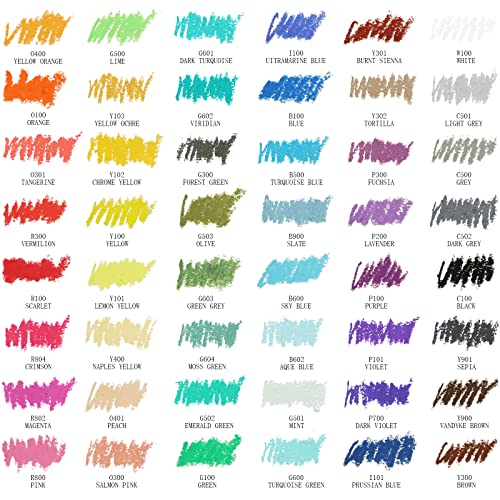
3. Artecho Oil Pastels (50 Colors, 8 x 60 mm) — Best for a wide palette for blending
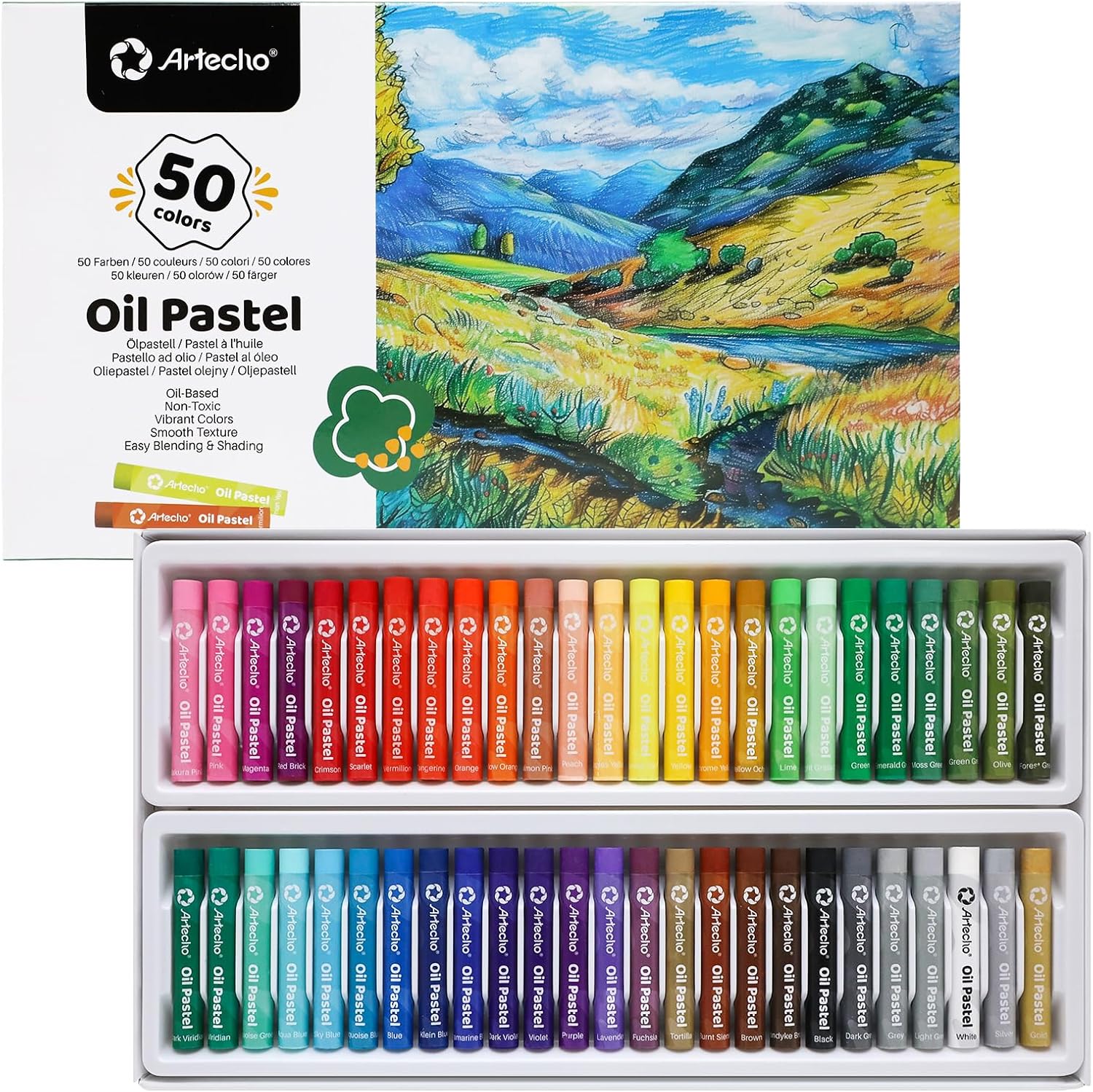
Artecho’s 50-color set uses 8 x 60 mm sticks, each in its own paper sleeve to prevent breakage. The listing describes a soft touch with easy blending and shading and names illustration, stenciling, scratching, impasto and dotting as techniques.
Fifty colors means less mixing, useful for landscapes with many greens and blues, and for portraits where subtle skin tones matter.
Best suited for: hobbyists who want many colors and soft handling.
Key features:
- 50 colors
- 8 x 60 mm sticks
- Individual paper sleeves
Pros:
- Big palette
- Soft and blendable
- Protective sleeves
Cons and limitations:
- Smaller sticks than some artist sets
Buying consideration: Peel sleeves only as needed to keep hands cleaner.
4. ARTNOVA Oil Pastels (48 Colors, 8 x 60 mm) — Best for a compact soft set

ARTNOVA offers 48 soft colors in 8 x 60 mm sleeved sticks, also listed for illustration, stenciling, scratching, impasto and dotting. The compact size slips into most bags.
It is a good travel set for sketchbooks and plein air studies.
Best suited for: travel, sketchbooks and outdoor studies.
Key features:
- 48 colors
- 8 x 60 mm sticks
- Paper sleeves
Pros:
- Portable
- Soft blending
- Low price tier
Cons and limitations:
- Slightly fewer colors than 50-color sets
Buying consideration: Keep it in a cool bag in summer so sticks stay firm.
5. PABLUE Oil Pastels (48 Colors + 4 Extra Whites) — Best for highlights and layering

PABLUE includes 48 colors plus four extra white sticks, a thoughtful addition because white runs out first when you blend and lighten. The listing describes consistent softness, strong covering power for stacking layers and suitability for sgraffito on paper, canvas, wood and glass.
Each pastel sits in its own groove with color-coordinated wrapping.
Best suited for: painters who blend and highlight heavily.
Key features:
- 48 colors + 4 whites
- Soft, consistent formula
- Strong covering power
- Individual grooves
Pros:
- Extra white
- Good layering
- Gift-ready packaging
Cons and limitations:
- Mid price tier
Buying consideration: Use the whites to burnish and blend lighter passages.
6. Mr. Pen Oil Pastels (45 Colors) — Best for the lowest-cost starter

Mr. Pen’s 45-color set offers creamy texture and good pigmentation according to the listing, aimed at artists, students and hobbyists.
It is the cheapest way to see whether you enjoy the medium before upgrading to a softer artist set like MUNGYO Gallery.
Best suited for: beginners and kids.
Key features:
- 45 colors
- Wax and oil-based pigment
Pros:
- Very low cost
- Plenty of colors
Cons and limitations:
- Listing gives few technical details
Buying consideration: Pair with a few sheets of pastel paper; cheap paper limits any pastel.
A First Painterly Oil Pastel Project: Sunset Landscape
- Prepare the surface. Tape a sheet of textured pastel paper or a primed board to a drawing board on all four sides.
- Block in the sky lightly. Use yellow near the horizon, orange and pink above it and a soft violet at the top, pressing gently so the paper tooth stays open.
- Blend with solvent. Brush a little odorless mineral spirits across the sky with a soft flat brush to melt the colors into a smooth gradient. Let it evaporate for a few minutes.
- Add the land. Lay in dark blue-green hills and a darker foreground, keeping edges soft where hills recede.
- Layer and burnish. Go back over the sky with light, firm strokes of pale yellow and white to brighten the glow near the sun, burnishing until the surface looks almost like paint.
- Finish with sgraffito. Scratch thin grass blades and a few tree branches out of the dark foreground with a toothpick.
This single exercise uses almost every technique that makes oil pastel look like oil painting, and it takes less than an hour.
Mixing Color With Oil Pastels
Unlike paint, you mix oil pastels on the surface. Layer one color lightly over another, then blend with a finger, paper stump or a lighter pastel. Lighter colors are often used as “blenders” on top of darker ones. Optical mixing also works: small strokes or dots of two colors side by side read as a third from a distance, the way Impressionist brushwork does. Keep a test strip on the edge of your paper to try combinations before committing.
Storing and Caring for Oil Pastels
Keep sticks in their tray at room temperature, away from sunlight and heaters. Wipe a dirty stick clean on a paper towel before using it again, so it does not drag the wrong color into a passage. Store finished work flat, separated by glassine or parchment paper, until it is framed.
Surfaces, Solvents and Finishing
Surfaces
Use textured pastel paper, heavy drawing paper, primed canvas board or wood panels. Avoid very smooth paper, which will not hold many layers.
Solvents
Odorless mineral spirits dissolve oil pastel for washes. Use a lidded jar, a stiff brush and good ventilation.
Fixing and framing
Oil pastels never fully harden, so finished work stays soft. Specialized oil pastel fixatives exist, but most artists frame oil pastel work behind glass with a mat so the surface does not touch the glazing.
How Much Do Oil Pastels Cost?
Student sets are inexpensive, mid-range soft sets cost a bit more and professional sticks are sold individually at higher prices. Our guide on how much oil pastels cost breaks down price levels and what you get at each.
Buying Guide: How to Choose Oil Pastels
Softness
Soft pastels blend and layer more easily; firmer pastels are cleaner for line work and kids.
Color count
Around 48 colors is plenty; you can mix more by layering.
Stick size and protection
Larger sticks cover faster; sleeves protect against snapping.
Lightfastness and acid-free labeling
For work you want to keep, look for acid-free and lightfast claims.
Extra whites
White is used most for blending and highlights.
From Pastel to Painting
Many techniques in oil painting translate to oil pastels. Try subjects from our oil tutorials, such as painting fog, painting grass or painting a seashell, using pastel layering and solvent blending instead of brushes.
Common Mistakes to Avoid
- Pressing hard on the first layer, which fills the paper tooth too early.
- Using smooth printer paper for layered work.
- Using too much solvent and dissolving every layer into mud.
- Framing without a mat, so the pastel touches the glass.
- Leaving sets in a hot car, which softens and deforms sticks.
- Mixing chalk pastels and oil pastels on the same piece; they do not combine well.
- Blending every edge; leaving some crisp edges and visible strokes keeps the work lively and painterly.
FAQs
Are oil pastels the same as oil paint?
No. Oil pastels are sticks of pigment in oil and wax that never fully harden. Oil paint uses drying oil and cures over time.
Can you blend oil pastels with mineral spirits?
Yes. Odorless mineral spirits dissolve oil pastel into a wash that can be brushed like paint. Use good ventilation.
Do oil pastels dry?
They do not fully harden, so finished work stays slightly soft and should be framed behind glass or protected.
Can I use oil pastels on canvas?
Yes, on primed canvas or canvas board. Pentel lists canvas among recommended surfaces.
What paper is best for oil pastels?
Textured pastel paper, heavy drawing paper or primed boards that give the pastel tooth to grip.
Are oil pastels good for beginners?
Yes. They need no setup or drying time and are forgiving, since you can layer over or scrape back mistakes. A mid-range soft set and textured paper are all you need to start.
Can I use oil pastels over oil paint?
Yes, over a dry oil layer, since both are oil-based.
Final Recommendation
For painterly oil pastel work with smooth blending and layering, choose the MUNGYO Gallery Soft 48-color set. On a budget or for a classroom, the Pentel 50-color set is durable and affordable. Pick Artecho for the widest palette, ARTNOVA for a compact travel set, PABLUE if you use lots of white, and Mr. Pen if you simply want to try the medium.





One Comment