Quick answer: The best painting ideas for toddlers at home are short, sensory, and safe to touch: taste-safe yogurt paint, mess-free paint bags, water painting on a fence, finger painting on a tray, car-track prints, ice cube painting, and big-roller painting on butcher paper. Choose washable, non-toxic paint or a homemade edible recipe, plan for 5–15 minutes of play, and focus on the process rather than a finished picture.
Toddlers do not paint to make pictures. They paint to find out what happens when blue meets yellow, what wet paint feels like between their fingers, and whether a brush makes the same noise as a spoon. That is why the best painting ideas for toddlers at home look more like sensory play than art class. This guide groups 20 ideas by stage, from first-time painters around 12 months to confident three-year-olds, and shows you how to set them up safely in a small space with minimal cleanup.
What Toddlers Actually Get From Painting
Painting at this age supports several developmental areas at once. Squeezing, smearing, and dabbing build hand and finger strength that later helps with holding crayons and spoons. Watching colors mix introduces cause and effect. Naming colors and describing textures (“squishy,” “cold,” “bumpy”) builds vocabulary. And choosing where to put the next mark gives toddlers a rare chance to be in charge.
None of that depends on the result looking like anything. A brown, smeared page that kept a two-year-old happily focused for 10 minutes is a successful session.
Safety Basics Before You Start
- Assume everything goes in the mouth. For children under about two, choose taste-safe homemade paint or products labeled non-toxic and age-appropriate. Check for the ACMI AP seal on store-bought paint.
- Watch for allergies. If you make edible paint from yogurt, flour, or pudding, use ingredients your child already eats safely.
- Avoid small parts. Pom-poms, bottle caps, and small stamps can be choking hazards. Use large tools and stay within arm’s reach.
- Skip acrylic and oil paint entirely at this age; they stain permanently and are not designed for little ones.
- Water safety: never leave a toddler alone with a bucket or tub of water, even a shallow one.
For ready-made sets designed for this age, including chunky brushes and washable paints, our roundup of the best paint kits for toddlers compares options by age and washability.
Three Taste-Safe Paint Recipes
| Recipe | Ingredients | Texture | Keeps |
|---|---|---|---|
| Yogurt paint | Plain yogurt plus a few drops of food coloring per bowl | Smooth, thick, cold | Use same day; refrigerate leftovers briefly |
| Flour paint | 1/2 cup flour, 1/2 cup water, pinch of salt, food coloring | Paste-like, dries matte | A day or two covered in the fridge |
| Cornstarch paint | 1/4 cup cornstarch, 1/2 cup cold water, heated until thick, cooled, then colored | Glossy and gel-like | A day or two covered in the fridge |
Food coloring can temporarily tint skin and may stain fabric, so dress your toddler in clothes you do not mind marking, or paint in just a diaper in a warm kitchen or outdoors. Natural colorants such as beet juice, turmeric, and spinach water are alternatives, though turmeric stains strongly.
Stage 1: First Painters (About 12–18 Months)
At this stage, the goal is exploration, not painting skill. Short sessions of 5–10 minutes are typical.
1. Yogurt Paint on the High Chair Tray
Spoon a few colored dollops directly onto a clean high chair tray and let your toddler smear with their hands. Lay a sheet of paper on top afterward and press to make a print you can keep.
2. Mess-Free Paint Bag
Squirt two or three colors of washable paint into a gallon zip bag, squeeze out the air, seal it, and tape all edges to a tray or the floor. Toddlers press and pat the bag to watch colors move and mix. Double-bag it for extra security.
3. Water Painting on a Chalkboard
A wet brush or sponge on a chalkboard or dark construction paper leaves marks that “disappear” as they dry. No paint, no mess, and endless repeats.
4. Cling Wrap Squish Painting
Dab paint onto paper, cover the whole sheet with cling wrap taped at the edges, and let your child pat and push the colors through the plastic. Peel the wrap off to reveal the painting.
Finger Paint Ideas for Toddlers
Finger painting is the core activity for this whole age range. These variations keep it fresh.
5. Tray Finger Painting
A rimmed baking sheet contains paint far better than a sheet of paper on the table. Let your toddler finger paint directly on the tray, then make a print.
6. Shaving Cream Marbling
Spread a layer of plain foam shaving cream on a tray, add drops of food coloring or liquid watercolor, and let your child swirl with fingers. Press paper onto the surface, lift, and scrape off the foam to reveal marbled color. Supervise closely, since shaving cream is not meant to be eaten; this suits older toddlers who no longer mouth everything.
7. Finger Dot Trees
Draw a simple tree trunk and branches with a marker. Your toddler adds leaves by dotting a fingertip in paint and pressing it on. Use red and orange for autumn, pink for spring blossoms.
8. Texture Finger Painting
Mix a spoonful of sand, oats, or uncooked rice into finger paint for a bumpy feel. Describe the textures aloud as they explore.
Stage 2: Exploring Tools (About 18–24 Months)
Toddlers now enjoy holding objects and seeing what marks they make. Chunky tools are easiest to grip.
9. Car Track Painting
Roll toy cars through paint on a plate, then drive them across a long sheet of paper. Truck tires with deep treads make the best patterns. Wash cars in warm soapy water afterward.
10. Sponge Stamping
Cut kitchen sponges into large shapes, at least the size of your child’s palm, and attach a clothespin as a handle. Dip, stamp, repeat.
11. Big Roller Painting
A small foam paint roller and a tray of washable paint let toddlers make broad sweeps across butcher paper taped to the floor. It feels very grown-up to them.
12. Pom-Pom Painting with a Clothespin
Clip a large pom-pom into a clothespin and use it like a dabber. It builds pincer-grip strength. Choose pom-poms bigger than a toddler’s mouth and stay close.
13. Blob Painting
Squeeze blobs of paint onto one half of a folded paper, fold it, and let your toddler press and smooth it with their hands. Open it to reveal a symmetrical “butterfly” or “monster.” Our blob painting guide for toddlers shows variations and setup tips.
Stage 3: Little Artists (About 2–3 Years)
Older toddlers can manage a chunky brush, follow a one-step instruction, and stay engaged for 10–20 minutes.
14. Ice Cube Painting
Freeze washable liquid watercolor or tinted water in an ice cube tray with a craft stick in each cube. Toddlers “paint” by sliding the melting cubes over paper. It is perfect for hot days on the porch.
15. Fence and Sidewalk Water Painting
Hand over a bucket of water and a big house-painting brush, and let your toddler “paint” the fence, steps, or wall. Darkened wood or stone fades as it dries, so they can repeat it all afternoon.
16. Salad Spinner Art
Place a paper circle in a salad spinner, add a few drops of paint, close the lid, and let your toddler pump or spin it. Each spin produces a new splatter pattern.
17. Bubble Wrap Stomping
Tape painted bubble wrap to the floor, paint-side up, put a large sheet of paper over it, and let your toddler stomp in clean socks or bare feet. Lift to see the pattern. Older toddlers can also paint the bubble wrap themselves.
18. Nature Brushes
Collect pine sprigs, large leaves, and feathers and bind them to sticks with rubber bands. Each “brush” makes a different mark.
19. Tape Resist Shapes
Stick painter’s tape across paper in simple lines or a big square, let your toddler paint over everything, and peel the tape together to reveal white shapes underneath.
20. Easel Painting
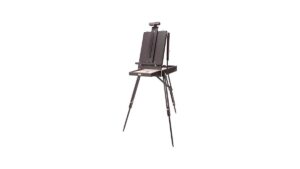
Standing at an easel changes how toddlers use their arms and shoulders. Clip paper to a child-height easel or tape it to a low window or wall covered with plastic.
Home Paint Palette Ideas for Toddlers
Regular palettes tip over easily in small hands. These options are steadier and cheaper.
- Muffin tin: heavy, stable, and easy to wash.
- Suction plate or bowl: stays put on high chair trays.
- Silicone ice cube tray: flexible, so dried paint pops out.
- Spill-proof paint cups: lidded cups with a brush hole limit spills.
- Paper plate taped to the table: disposable and slide-proof.
Offer only two or three colors at once. More choices usually lead to everything turning brown within a minute, and too many options can overwhelm young toddlers.
Setting Up a Toddler Painting Space at Home
- Choose the location: a high chair, a toddler table on a washable mat, the bathtub (empty), or outdoors.
- Protect the area: a shower curtain liner or cheap plastic tablecloth makes a reusable floor cover.
- Dress for mess: a long-sleeved smock or a diaper-only session in a warm room.
- Prepare cleanup first: a bowl of warm soapy water and a washcloth within reach, plus a bath planned for afterward.
- Keep paint portions tiny: a teaspoon per color is plenty to start.
- Have a drying spot ready out of reach, such as the top of the fridge or a clothesline.
For more ways to structure painting time and keep toddlers engaged, our guide to painting activities with toddlers goes deeper into routines and age-appropriate expectations.
How to Keep Toddlers Engaged (and When to Stop)
- Narrate, don’t direct. “You made a big red circle. Now it’s touching the yellow.” This builds language without telling them what to paint.
- Introduce one new thing per session, such as a new tool or color.
- Stop at the first sign of boredom. Rubbing paint into hair or flinging brushes usually means the session is done.
- Repeat favorites. Toddlers love repetition, and the same activity often goes better on the third try.
- Join in. Paint beside them on your own paper; they will watch and copy.
Common Problems and Simple Fixes
| Problem | Why it happens | What to try |
|---|---|---|
| Toddler eats the paint | Normal mouthing stage | Switch to taste-safe yogurt or flour paint |
| Refuses to touch paint | Sensory sensitivity | Offer a paint bag, a brush, or a car instead of hands |
| Paints the table, not the paper | Paper is too small | Tape down large sheets of butcher paper |
| Session lasts two minutes | Normal attention span | That is fine; try again another day |
| Everything turns brown | Too many colors | Offer two colors that mix nicely, like yellow and blue |
FAQs
At what age can toddlers start painting?
Many children can start simple sensory painting around 12 months with taste-safe paint and close supervision. Brush and tool painting usually becomes more interesting between 18 months and two years.
What is the safest paint for toddlers?
Homemade edible paint made from yogurt, flour, or cornstarch is the safest choice for children who still mouth things. Store-bought washable paints labeled non-toxic with the ACMI AP seal are suitable for older toddlers with supervision.
What are easy finger painting ideas for toddlers?
Tray finger painting, fingerprint trees, cling wrap squish painting, and textured finger paint with sand or oats are all simple, low-prep ideas that toddlers enjoy.
How do you paint with a toddler without a mess?
Try mess-free paint bags, water painting on a chalkboard or fence, or cling-wrap-covered paintings. When using real paint, use a rimmed tray, a floor cover, and very small paint portions.
How long should toddler painting sessions last?
Five to fifteen minutes is typical. Some toddlers stay longer when engaged, but ending while they are still interested makes the next session easier.
What do I need to start painting with my toddler at home?
Washable or homemade paint, large paper or a tray, one or two chunky brushes or sponges, a smock, and a cleanup cloth are enough. A toddler-specific paint kit can bundle these together.
Next Step
Pick two ideas from your child’s stage, set up a rimmed tray and a small portion of washable or homemade paint, and keep the first session short. Rotate between sensory play and simple tools over the coming weeks to see what your toddler enjoys most. If you would rather start with a ready-made set, explore our picks of toddler-friendly paint kits with washable colors and chunky tools.