
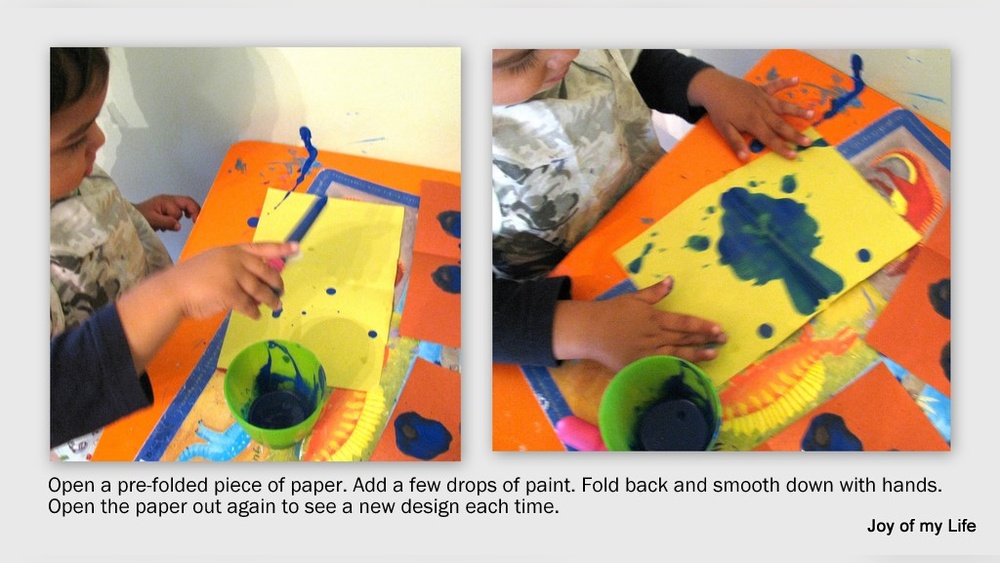
Quick answer: To do blob painting for toddlers, fold a sheet of heavy paper in half, open it, and let your toddler drop or squeeze a few blobs of washable paint onto one side. Fold the paper closed, have them press and rub the outside with their hands, then open it to reveal a mirrored “blob” picture. Use two or three colors, thick paint and paper of about 80 lb or heavier for the best results.
Blob painting is one of the few art activities where a two-year-old gets a striking result with almost no fine motor skill. Squeeze, fold, squish, open. The surprise of the reveal is the whole point, and toddlers often want to repeat it a dozen times in a row.
Below you will find exactly how to do blob painting for toddlers, including the best paint consistency, how much paint to use, ways to adapt it for different ages, and what to talk about while your child works. If you are still choosing supplies, our roundup of the best paint kits for toddlers compares washable sets suited to this age.
What Is Blob Painting?
Blob painting, sometimes called fold painting, squish painting or butterfly painting, is a printmaking technique. Paint is placed on one half of a folded sheet, the sheet is closed, and pressure spreads the paint between the two halves. When it opens, the image is symmetrical along the fold.
The technique is closely related to the inkblot images used in mid-20th-century psychology tests, which is why older children sometimes recognize the look. For toddlers, it is simply a sensory, cause-and-effect activity with a colorful payoff.
Why Blob Painting Works So Well for Toddlers
- Low skill, high reward. No brush control needed. The fold does the “design” work.
- Cause and effect. Toddlers see directly how their squishing changes the result.
- Hand strength. Squeezing bottles and pressing the paper builds the small hand muscles later used for holding crayons and pencils.
- Color mixing by accident. Two colors pressed together blend at the edges, showing that blue and yellow make green without any explanation.
- Short attention span friendly. One print takes under two minutes, so it fits a toddler’s natural rhythm.
Materials You Need
| Item | What works best | Why |
|---|---|---|
| Paint | Washable tempera or finger paint, thick consistency | Thick paint spreads into shapes; thin paint just runs out the sides |
| Paper | Cardstock, construction paper or 80 lb+ drawing paper | Thin paper tears or soaks through when pressed while wet |
| Applicator | Squeeze bottles, spoons, or a plastic pipette | Gives toddlers independence; spoons are easiest for 18 to 24 months |
| Surface cover | Washable mat or vinyl tablecloth | Paint squeezes out the edges of the fold |
| Smock | Old T-shirt or toddler apron | Hands and sleeves get painty during pressing |
| Wipes | Baby wipes or a damp cloth within reach | Toddlers often want clean hands between prints |
Pre-fill squeeze bottles with paint before calling your toddler over. Waiting while you set up is where most toddler activities lose momentum.
How to Do Blob Painting for Toddlers: Step by Step
- Prepare the paper. Fold each sheet in half, crease it well, then open it flat. A sharp crease gives a cleaner mirror line. Prepare four or five sheets so you are ready for repeats.
- Set out two or three colors. More than three usually turns into brown by the second fold. Good pairs: red and yellow, blue and yellow, pink and purple, or any color plus white.
- Add the blobs. Show your toddler how to squeeze or spoon a blob about the size of a grape onto one half of the paper, close to the fold. Three to five blobs per sheet is plenty.
- Fold. Help your toddler fold the clean half over the painted half. Line up the edges roughly; it does not need to be exact.
- Squish. Let them press, pat and rub the outside of the folded paper with flat hands. Rubbing outward from the fold spreads paint toward the edges; patting keeps shapes smaller and more blobby.
- Reveal. Open the paper slowly together. Talk about what appeared: colors, shapes, anything it looks like.
- Dry flat. Lay the print open on a flat surface. Thick tempera can take 1 to 3 hours to dry fully, longer in humid weather.
How much paint to use
Toddlers almost always want to use more paint than the paper can hold. Too much paint pools, squeezes out of the edges and soaks the paper. A practical guideline is no more than about a tablespoon of paint total on a standard 9 x 12 inch sheet. Pre-portioning paint in small cups helps you control the amount without saying “no” every few seconds.
Getting the paint consistency right
Paint should be about as thick as yogurt. If it runs off a spoon like milk, it is too thin and will leak from the fold and soak through. If your paint is runny, try:
- Using finger paint instead of liquid tempera.
- Mixing in a small amount of cornstarch or flour, a little at a time, until it holds a blob shape (for paint that will not be reused).
- Leaving a cup of paint uncovered for 20 to 30 minutes to thicken slightly.
Blob Painting Ideas and Variations
Once your toddler knows the basic fold, these variations keep it fresh. Most work with the same supplies.
Butterfly blob painting
Before painting, draw a simple butterfly outline on one half with the body along the fold. Your toddler adds blobs inside the wing area, folds and squishes. After drying, cut out the shape and add a pipe cleaner antenna.
Color mixing blobs
Offer only two primary colors, such as blue and yellow. After the reveal, point to where they mixed. Repeat with red and blue, then red and yellow. Over several sessions, toddlers start predicting the result.
Monster blobs
After the print dries, add stick-on googly eyes or draw eyes with a marker. Older toddlers love deciding what kind of monster each blob became.
Glitter or texture blobs
Sprinkle a little glitter, sand or salt on the wet paint before folding. Salt soaks up water and creates a speckled texture. Supervise closely, since toddlers put things in their mouths.
Big paper blobs
Use a large sheet of craft paper folded in half on the floor. Toddlers can walk or crawl across the folded paper to squish it. This works well outdoors.
String blob painting
For older toddlers near age three, dip a piece of yarn in paint, lay it on one half with one end hanging out, fold, press and pull the yarn out. The result is a feathery, swirly print. Our related guide on painting activities to do with toddlers has more ideas in the same spirit.
Adapting Blob Painting by Age
| Age | What they can do | Adult role |
|---|---|---|
| 12 to 18 months | Pat and press the folded paper | Adult places blobs and folds; consider taste-safe homemade paint |
| 18 to 24 months | Spoon paint, help fold, squish | Pre-portion paint; guide the fold |
| 2 to 3 years | Squeeze bottles, fold independently, choose colors | Offer limited colors; ask questions |
| 3 to 4 years | Plan placement, try shapes, add details after drying | Introduce variations like butterflies or string |
For babies and young toddlers who still mouth everything, a homemade paint made from plain yogurt or a cornstarch-and-water mixture tinted with food coloring is a common choice. Food coloring can still stain skin and clothing temporarily.
What to Say While Your Toddler Paints
Language turns a messy activity into a learning one. Try open-ended phrases rather than praise alone:
- “What color are you choosing?”
- “You pressed really hard. Let’s see what happened.”
- “Look, the two sides match.”
- “Where did the green come from?”
- “What does this one look like to you?”
Words like squish, press, open, same, match, mix and color names are all useful vocabulary at this age.
Common Problems and Fixes
| Problem | Likely cause | Fix |
|---|---|---|
| Paper tears when opened | Paper too thin or too much paint | Use cardstock; reduce paint; open slowly from a corner |
| Everything turns brown | Too many colors, or complementary colors mixed | Limit to 2 or 3 analogous colors (e.g., yellow, orange, red) |
| Paint leaks out the sides | Paint too thin or placed near the edges | Thicken paint; place blobs near the fold |
| Print looks faint | Not enough paint or pressure | Slightly larger blobs; press firmly with flat hands |
| Paper curls while drying | Wet paper drying unevenly | Dry flat; press under a heavy book once fully dry |
Safety and Cleanup
- Choose paints labeled washable and non-toxic, and check the age guidance on the packaging. Look for an ASTM D-4236 statement on art materials.
- Supervise constantly with toddlers under three, especially if using glitter, salt or small add-ons.
- Wash hands with warm, soapy water right after painting. Washable tempera usually comes off skin easily within a few minutes.
- Treat clothing stains while wet: rinse with cold water from the back of the fabric, then launder as usual.
- Squeeze bottles: rinse the nozzles before storing so paint does not dry inside.
Turning Blob Prints Into Keepsakes
Blob prints make simple, colorful keepsakes:
- Cut out butterfly prints and string them into a garland.
- Glue a print to a folded card for a grandparent.
- Trace a heart, star or circle on a dried print and cut it out for a mobile.
- Write the date and your child’s age on the back to track progress over months.
For more low-prep activities, our list of toddler painting ideas for home covers other projects that use the same supplies.
A 10-Minute Blob Painting Session Plan
Toddlers rarely last longer than 10 to 15 minutes on a single activity, so it helps to plan the session in short beats rather than set out supplies and hope for the best.
- Minute 0 to 2: Smock on, hands ready. Show the folded paper and say what will happen: “We put paint here, fold it, squish it, and open it.”
- Minute 2 to 5: First print together. Model one blob, then hand over the bottle or spoon. Fold and squish together.
- Minute 5 to 10: Independent repeats. Offer a new sheet each time. Swap one color after the second print to keep interest.
- Minute 10 onward: Wind down. When attention drifts, move the prints to the drying spot together and wipe hands. Stopping while it is still fun makes the next session easier to start.
If your toddler wants to keep going, let them, but keep handing out fresh paper. Reusing a soaked sheet usually ends in a tear and frustration.
What Toddlers Learn From Blob Painting
Beyond the fun, fold painting touches several early skills at once. Children notice that the two halves match, which is an early brush with symmetry. They see colors combine and start to predict outcomes. They practice two-step instructions (squeeze, then fold) and use both hands together when pressing. The reveal also builds patience: waiting a few seconds before opening is harder for a two-year-old than it sounds, and the payoff teaches that waiting can be worth it.
FAQs
What age can toddlers start blob painting?
Many toddlers can enjoy blob painting from around 18 months with an adult placing the paint and helping fold. By two to three years old, most can squeeze bottles and fold the paper themselves.
What is the best paint for blob painting with toddlers?
Thick washable tempera or finger paint works best. It holds its shape as a blob and spreads into clear patterns when pressed. Very thin, runny paint leaks out of the fold and soaks through the paper.
What paper should I use for blob painting?
Cardstock, construction paper or drawing paper around 80 lb or heavier. Thin copy paper tends to tear when wet and opened.
How do I stop the colors from turning brown?
Limit each print to two or three colors and choose ones that mix well, such as yellow and blue, or red and yellow. Avoid mixing all the primaries plus opposites like red and green on the same sheet.
Is blob painting the same as symmetry painting?
Yes, they describe the same technique. Folding the paper creates a mirror image along the crease, which is why older children use it to learn about symmetry.
How long do blob paintings take to dry?
Thick tempera on cardstock usually takes 1 to 3 hours to dry fully, and longer in humid conditions. Dry the prints open and flat.
Final Thoughts
Blob painting gives toddlers the thrill of making something bold with nothing more than a squeeze and a squish. Keep the paint thick, the colors limited and the paper sturdy, and let your child repeat it as many times as they like. If you want supplies that are easy for small hands to manage, see our guide to washable toddler paint sets and kits before your next session.


One Comment