PaintingProGuide is reader-supported. When you buy through links on this page we may earn an affiliate commission at no extra cost to you.
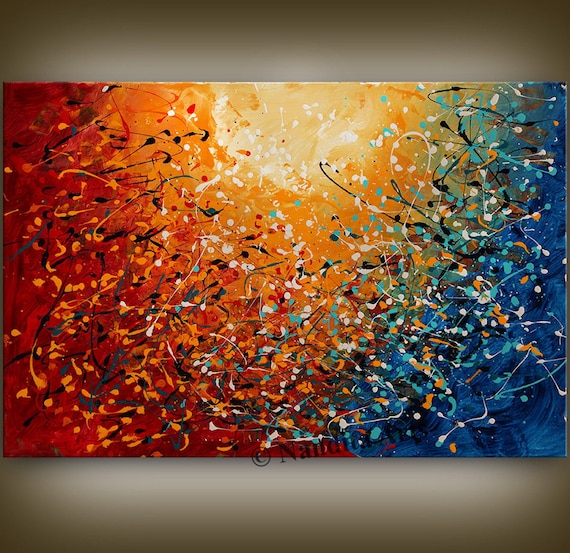
Acrylic art canvas paintings are the easiest way to make original wall art for your home. Acrylic dries in minutes, covers in bold, opaque color, and sticks to pre-primed canvas without any preparation, so a finished piece for a hallway or living room can take a single afternoon. The secret to paintings that look intentional rather than amateur is planning: a style that suits the room, a canvas size that fits the wall, a limited color palette, and a varnished, well-finished edge.
This guide walks through popular acrylic canvas painting styles, how to size canvases for your walls, a step-by-step process from blank canvas to hanging, and how to finish and care for the work. It also compares the canvases, brushes, paint and markers from our October 2026 Amazon check that make the job easier.
Quick answer: For wall art, start with stretched canvas like the GOTIDEAL 14-Piece Multi-Size Stretched Canvas Pack, which hangs without a frame. Practice ideas first on inexpensive panels such as the KEFF 24-Pack Canvas Boards or Simetufy 12-Pack MDF Canvas Boards. Paint with a versatile set like the Shuttle Art 36-Color Acrylic Set, and add ARTISTRO Paint Markers for quotes and fine linework.
Popular Acrylic Canvas Painting Styles for Home Decor
| Style | What it looks like | Good for | Difficulty |
|---|---|---|---|
| Color-field abstract | Large blocks and soft blends of a few colors | Living rooms, modern spaces | Easy |
| Textured abstract | Palette-knife ridges and layered texture | Statement walls | Easy to moderate |
| Geometric tape art | Crisp triangles and stripes made with tape | Offices, kids rooms, modern decor | Easy |
| Minimal botanical | Simple leaves or stems on a plain ground | Bedrooms, kitchens | Easy to moderate |
| Loose landscape | Simplified sky, hills and water | Hallways, cottages | Moderate |
| Quote or lettering art | Hand-lettered words over a painted background | Entryways, gifts | Moderate |
| Monochrome or all-black | One color family in varied tones and textures | Dramatic, minimalist spaces | Moderate |
| Multi-panel set | One design split across two or three canvases | Large walls, over sofas | Moderate |
How to Size Canvas Paintings for Your Wall
Art that is too small is the most common decorating mistake. A useful rule is that art over furniture such as a sofa or bed should span roughly two-thirds of the furniture’s width. On an empty wall, aim for the art to fill about 60 to 75 percent of the visible wall space you want to feature. Hang the center of the artwork around 57 to 60 inches from the floor, a common gallery standard.
If one large canvas is beyond your budget or comfort level, a multi-panel set of two or three medium canvases can fill the same space and is easier to paint.
| Wall situation | Canvas size idea |
|---|---|
| Over a standard sofa | One 24 x 36 in or larger, or three 16 x 20 in panels |
| Above a dresser or console | 18 x 24 in or two 12 x 16 in panels |
| Narrow hallway wall | Vertical 12 x 24 in or a column of small canvases |
| Shelf or desk styling | 5 x 7 in to 8 x 10 in canvases on easels |
| Gallery wall | Mix of 8 x 10, 11 x 14 and 16 x 20 in |
Supplies for Acrylic Canvas Paintings
| Product | Best For | Key Spec | Key Strength | Price Tier |
|---|---|---|---|---|
| GOTIDEAL 14 Stretched Canvases | Wall-ready paintings | 4×4, 5×7, 8×10, 11×14 in, gesso primed | Stretched on wood frames, hang unframed | $$ |
| KEFF 24 Canvas Boards | Practice and studies | 6 each of 5×7, 8×10, 9×12, 11×14 in | Triple-primed cotton | $$ |
| Simetufy 12 x 8×10 Boards | Framed small art | 8 x 10 in, MDF core | Resists warping | $ |
| ESRICH 5 x 8×10 Boards | Trying an idea | 8 x 10 in cotton panels | Low cost | $ |
| Shuttle Art 36 Acrylic | Paint for all styles | 36 x 60 ml incl. metallics | Gold and silver accents | $$ |
| KEVIN&SASA 24 Brushes | Full brush range | Fan, bright, round, mop, angle, detail | Canvas roll-up case | $ |
| ARTISTRO 36 Paint Markers | Quotes and line art | 1 mm fine + 1 to 5 mm dot tip | No pumping | $ |
How We Chose
These supplies were selected from Amazon listing details and specifications checked in October 2026, based on how well each fits the job of making acrylic wall art: canvas type and priming, size range, warp resistance, paint volume and color range, brush variety and how widely each product is reviewed by Amazon buyers. We did not paint with these specific products ourselves.
- Canvas type: stretched for hanging, panels for practice and framing.
- Priming: acid-free gesso-primed cotton ready for acrylic.
- Size range: sizes that match common decor needs.
- Paint volume: enough to cover backgrounds without rationing.
- Detail tools: brushes and markers for edges and lettering.
Canvases, Paint and Tools Reviewed
1. GOTIDEAL 14-Piece Stretched Canvas Pack — Best for Wall-Ready Paintings

GOTIDEAL’s pack includes 14 pre-stretched canvases: two each of 4 x 4, 5 x 7, 8 x 10 and 11 x 14 inches, plus four extra 5 x 7 inches. The 100 percent cotton canvas has a medium grain, is pre-coated with acid-free acrylic gesso and is stapled firmly onto wood frames. The listing describes it as acid-free and archival quality.
Stretched canvas can be hung directly without a frame, and the mix of sizes is ideal for a small gallery wall or a group of shelf pieces. For a single statement piece over a sofa, you will need a larger canvas, but this pack is perfect for building skills and creating coordinated sets.
Best suited for: Small to medium wall art, gallery walls and coordinated sets.
Key features:
- 14 stretched canvases in 4 sizes up to 11 x 14 in
- 100 percent cotton, medium grain
- Acid-free acrylic gesso primed
- Stapled on wood frames
Pros:
- Hang without framing
- Useful size mix
- Ready to paint
Cons:
- No large statement sizes
- Small sizes suit shelves more than walls
- Edges need painting for a finished look
Buying consideration: Paint the canvas sides to match the background so the piece looks finished without a frame.
2. KEFF 24-Pack Canvas Boards — Best for Practice and Studies

KEFF’s pack includes six each of 5 x 7, 8 x 10, 9 x 12 and 11 x 14-inch canvas boards with triple-primed 100 percent cotton surfaces, described as resisting warping and working with acrylic, oil, watercolor, tempera, gouache and oil pastel.
Panels are where good wall art starts. Try a color scheme or composition on a panel first, and only then paint the large stretched canvas. Panels also fit standard frames for a polished look.
Best suited for: Planning color schemes, practicing styles and framed small art.
Key features:
- 24 boards: 6 each of 5×7, 8×10, 9×12, 11×14 in
- Triple-primed cotton
- Fits standard frames
- Multi-media
Pros:
- Plenty of practice surfaces
- Four useful sizes
- Frame-friendly
Cons:
- Boards need a frame to hang well
- Not deep-edge canvases
- Bulk storage
Buying consideration: Paint three small studies of the same idea in different palettes, then choose the best for your large canvas.
3. Simetufy 12 x 8×10 MDF Canvas Boards — Best for Framed Small Art

Simetufy’s 8 x 10-inch boards have 100 percent cotton, acid-free primed surfaces mounted on a sturdy MDF core instead of recycled paper. The listing says this prevents bending and warping, and that the canvases are ready to paint with acrylic, oil, tempera or watercolor.
A rigid core matters for framed art; paper-core boards can bow in humid rooms. Twelve identical 8 x 10 boards also suit a series, such as a set of botanical studies framed in a grid.
Best suited for: Framed small paintings and series of matching pieces.
Key features:
- 12 boards, 8 x 10 in
- MDF core resists warping
- 100 percent cotton, acid-free primer
Pros:
- Rigid and flat for framing
- Uniform size for series
- Good value
Cons:
- Single size
- Heavier than paper boards
- Needs a frame to display
Buying consideration: Standard 8 x 10 frames are easy to find; choose matching frames for a cohesive gallery grid.
4. ESRICH 5 x 8×10 Canvas Boards — Best for Trying an Idea

ESRICH’s five-pack of 8 x 10-inch cotton canvas boards has an acid-free primer and a sturdy board core designed not to warp. At the lowest price tier here, it is a low-risk way to test a style before buying larger canvases.
Best suited for: First attempts and quick experiments.
Key features:
- 5 boards, 8 x 10 in
- Pure cotton, smooth surface
- Acid-free primer, sturdy core
Pros:
- Very inexpensive
- Smooth surface for detail
- Compact pack
Cons:
- Only five
- Single size
- Smooth surface shows less texture
Buying consideration: Use these to practice lettering or tape designs before committing to a big canvas.
5. Shuttle Art 36-Color Acrylic Set — Best Paint for Canvas Wall Art

Shuttle Art’s set gives 36 colors in 2 oz bottles, including metallic gold and silver, with 12 brushes and a palette. The paint is described as creamy, blendable and fade-resistant, conforming to ASTM D4236.
Metallic gold is a favorite in modern abstract wall art, and having it in the set saves a separate purchase. For larger canvases, buy extra white and your main background color.
Best suited for: Painting all styles of acrylic wall art at home.
Key features:
- 36 colors in 60 ml bottles, incl. gold and silver
- 12 brushes and palette
- Fade-resistant, ASTM D4236
Pros:
- Large palette
- Metallics for accents
- Good volume
Cons:
- Basic brushes
- Small palette
- White runs out first
Buying consideration: Choose three to five colors from the set that match your room, plus white and a dark, for a cohesive piece.
6. KEVIN&SASA 24-Piece Brush Set — Best Full Brush Range

This set includes 24 nylon brushes with natural wood handles in fan, bright, detail, round, mop and angle shapes, stored in a canvas roll-up case. The variety covers backgrounds, blending, foliage texture and fine detail.
A mop brush for soft blending and a fan brush for texture are particularly useful for abstract and landscape wall art.
Best suited for: Painters who want every common brush shape for canvas work.
Key features:
- 24 nylon brushes
- Fan, bright, detail, round, mop, angle
- Wood handles
- Canvas storage case
Pros:
- Wide shape variety
- Protective case
- Good value
Cons:
- No very wide brushes for large backgrounds
- Quality varies across sizes
- Wood handles need drying
Buying consideration: Add one 2 to 3-inch flat brush for backgrounds on canvases larger than 16 x 20.
7. ARTISTRO 36 Dual-Tip Acrylic Paint Markers — Best for Quotes and Line Art

ARTISTRO’s 36 water-based acrylic markers have a 1 mm fine tip and a 1 to 5 mm dot tip, ready to use without pumping, and list canvas among many surfaces. They conform to ASTM D-4236.
Markers make hand lettering and fine line art far easier than a liner brush, which is why they are popular for quote canvases and continuous-line drawings over painted backgrounds.
Best suited for: Quote art, outlines, line drawings and dot patterns on canvas.
Key features:
- 36 colors
- 1 mm fine tip + 1 to 5 mm dot tip
- Water-based acrylic, no pumping
- ASTM D-4236
Pros:
- Clean lettering
- Fast detail work
- Many colors
Cons:
- May need two passes on dark backgrounds
- Small coverage
- Tips wear on rough texture
Buying consideration: Let the painted background dry completely before lettering, and sketch letters lightly in chalk first.
Step by Step: Painting Acrylic Canvas Wall Art
- Pick a spot and a size: measure the wall and choose a canvas that fills it properly.
- Choose a palette: three to five colors pulled from the room’s textiles or decor, plus white and a dark.
- Plan on a panel: paint a small version to test composition and colors.
- Tone or base coat the canvas: a light wash of color avoids the stark white canvas and unifies the piece.
- Block in big shapes with the widest brush that fits, working back to front.
- Build layers and texture with smaller brushes or a palette knife once the base is dry.
- Add details last: metallic accents, lettering or fine lines.
- Paint the edges or plan a frame.
- Varnish after the paint is fully dry to unify sheen and protect the surface.
- Hang with the center around 57 to 60 inches from the floor.
Choosing Colors That Suit Your Room
The quickest way to make a painting look like it belongs is to borrow colors from the room. Pick one dominant color from a large element such as a sofa or rug, one secondary color from cushions or curtains, and a small accent, often metallic gold or a bright, used sparingly. Keep the painting’s lightest and darkest values in balance with the room: a light, airy room suits soft, high-key paintings, while a darker room can carry deep, saturated color. Testing the palette on a small panel and propping it against the wall for a day shows whether it works before you paint the big canvas.
Finishing and Caring for Acrylic Canvas Paintings
Acrylic paint dries in minutes but continues to cure for days. Wait at least a day for thin paintings and longer for thick, textured pieces before varnishing. A gloss varnish deepens color, satin is the most versatile and matte reduces glare in bright rooms. Varnish also protects from dust and makes cleaning easier: dust gently with a soft dry brush or cloth, and avoid hanging paintings in direct sunlight or above heaters.
Projects to Try Next
Ready for something bigger? Try a multi-canvas wall art set for a large wall, paint a meaningful phrase with our guide to painting a quote on canvas, or go bold with all-black canvas art.
Common Mistakes to Avoid
- Choosing a canvas too small for the wall.
- Using every color in the set instead of a limited palette.
- Leaving the canvas edges unpainted on frameless pieces.
- Running out of background color mid-painting.
- Skipping varnish, leaving uneven shine and a dust-catching surface.
- Hanging art too high.
FAQs
What canvas is best for acrylic wall art?
Pre-primed stretched cotton canvas hangs without a frame; canvas panels are best for practice and framed pieces.
Do I need to prime a canvas for acrylic?
Most store-bought canvases are pre-primed with gesso. An extra coat gives a smoother, less absorbent surface.
How do I make acrylic canvas art look professional?
Use a limited palette, size the canvas for the wall, paint the edges and finish with varnish.
Should I varnish acrylic canvas paintings?
Yes, once fully cured. Varnish unifies sheen and protects the surface.
What size canvas should go over a sofa?
Roughly two-thirds the width of the sofa, often 24 x 36 inches or a set of three panels.
Can beginners paint good wall art?
Yes. Abstract, geometric and minimal botanical styles are approachable and look striking on a wall.
Final Recommendation
For wall-ready acrylic paintings, start with stretched canvas such as GOTIDEAL’s multi-size pack, and plan ideas on KEFF or Simetufy panels first; ESRICH’s five-pack is the cheapest way to try an idea. Paint with a versatile set like Shuttle Art’s 36 colors, round out your brushes with the KEVIN&SASA 24-piece set, and use ARTISTRO markers for lettering.
Size the canvas to the wall, choose a palette from the room, paint the edges and varnish the finished piece, and your acrylic canvas paintings will look like they belong.