PaintingProGuide is reader-supported. When you buy through links on this page we may earn an affiliate commission at no extra cost to you.
Cotton canvas is the everyday surface of acrylic and oil painting: affordable, forgiving and available in every size. Blick cotton canvas has a following because Blick’s house-brand stretched canvases are a common classroom and studio staple in the US. If you are trying to order it on Amazon, though, you will not find it. Blick sells its own surfaces mainly through its stores and website, and we found no Blick cotton canvas on Amazon.com in October 2026.
What you can do is buy the same type of surface. This review explains what separates good cotton canvas from poor, then compares five cotton options listed on Amazon: a classic stretched canvas, a canvas pad, deep museum-profile canvases, a primed roll and raw cotton duck.
Quick answer: The most direct Amazon alternative to Blick cotton canvas is the Winsor & Newton Classic Cotton Canvas (16 x 20), a back-stapled, keyable stretched canvas on kiln-dried bars with titanium gesso priming. For practice and plein air, the Strathmore 300 Series canvas pad gives ten sheets of real triple-primed cotton canvas. If you want to cut custom sizes, the Kinlop 36-inch x 20-foot double-primed cotton roll is the budget-friendly bulk option.
Our Top Picks at a Glance
- Winsor & Newton Classic Cotton Canvas, 16 x 20 — Best stretched cotton canvas alternative
- Strathmore 300 Series Canvas Pad, 9 x 12 — Best for practice, classes and plein air
- PHOENIX 4 x 4 Inch Museum Block Canvas, 4 Pack — Best deep-profile small canvases for display
- Kinlop 36 Inch x 20 Feet Double Primed Cotton Roll — Best for custom sizes and bulk
- Barcelonetta 10 oz Natural Cotton Duck, 62 inch — Best raw cotton duck for priming yourself
| Product | Best For | Key Spec | Key Strength | Price Tier |
|---|---|---|---|---|
| Winsor & Newton Classic Cotton 16×20 | Studio painting | Kiln-dried bars, titanium gesso, keys | Back-stapled, keyable | $$ |
| Strathmore 300 Canvas Pad 9×12 | Practice, classes, travel | 10 sheets, 8 oz cotton, triple primed | Real canvas in a portable pad | $ |
| PHOENIX Museum Block 4×4 | Small display pieces | 2 3/8 in deep, 11 oz triple primed | Gallery-ready depth | $$ |
| Kinlop 36 in x 20 ft Roll | Custom sizes | Double primed cotton, 20 ft | Lots of canvas per purchase | $$ |
| Barcelonetta Cotton Duck 62 in | Raw canvas to prime | 10 oz natural cotton duck, 1 yard | Low cost, heavy weight | $ |
How We Chose
The products here were selected from Amazon listing details and specifications checked in October 2026, judged on how well each surface’s fiber, weight, priming and format fit typical uses of Blick cotton canvas, and weighed by how widely each listing has been reviewed by Amazon buyers. We did not paint on these surfaces. We left out a three-piece blank canvas set whose listing gave no usable specifications, and a precut drop-cloth fabric aimed mainly at sewing and home decor.
- Cotton content and weight: heavier cotton generally makes a firmer surface.
- Priming: titanium or acrylic gesso, number of coats, or raw.
- Stretcher quality: kiln-dried bars, back stapling and keys where relevant.
- Format: stretched, pad, deep profile, roll or raw fabric.
- Value for the job: practice surfaces versus finished-work surfaces.
What Good Cotton Canvas Looks Like
Whether it carries a Blick label or not, a good stretched cotton canvas has a few telltale signs. The bars are straight and kiln-dried so they do not twist. Corners are neatly folded, not bunched. The canvas is stapled on the back so the sides stay clean for frameless display. The priming is even, without bald spots or drips. And keys are included so you can tighten the canvas if it slackens.
Cotton is less stable than linen in humidity, which is why those keys matter. A properly made cotton canvas, primed well and stored sensibly, is a perfectly good surface for finished paintings.
Best Blick Cotton Canvas Alternatives Reviewed
1. Winsor & Newton Classic Cotton Canvas, 16 x 20 — Best Stretched Alternative
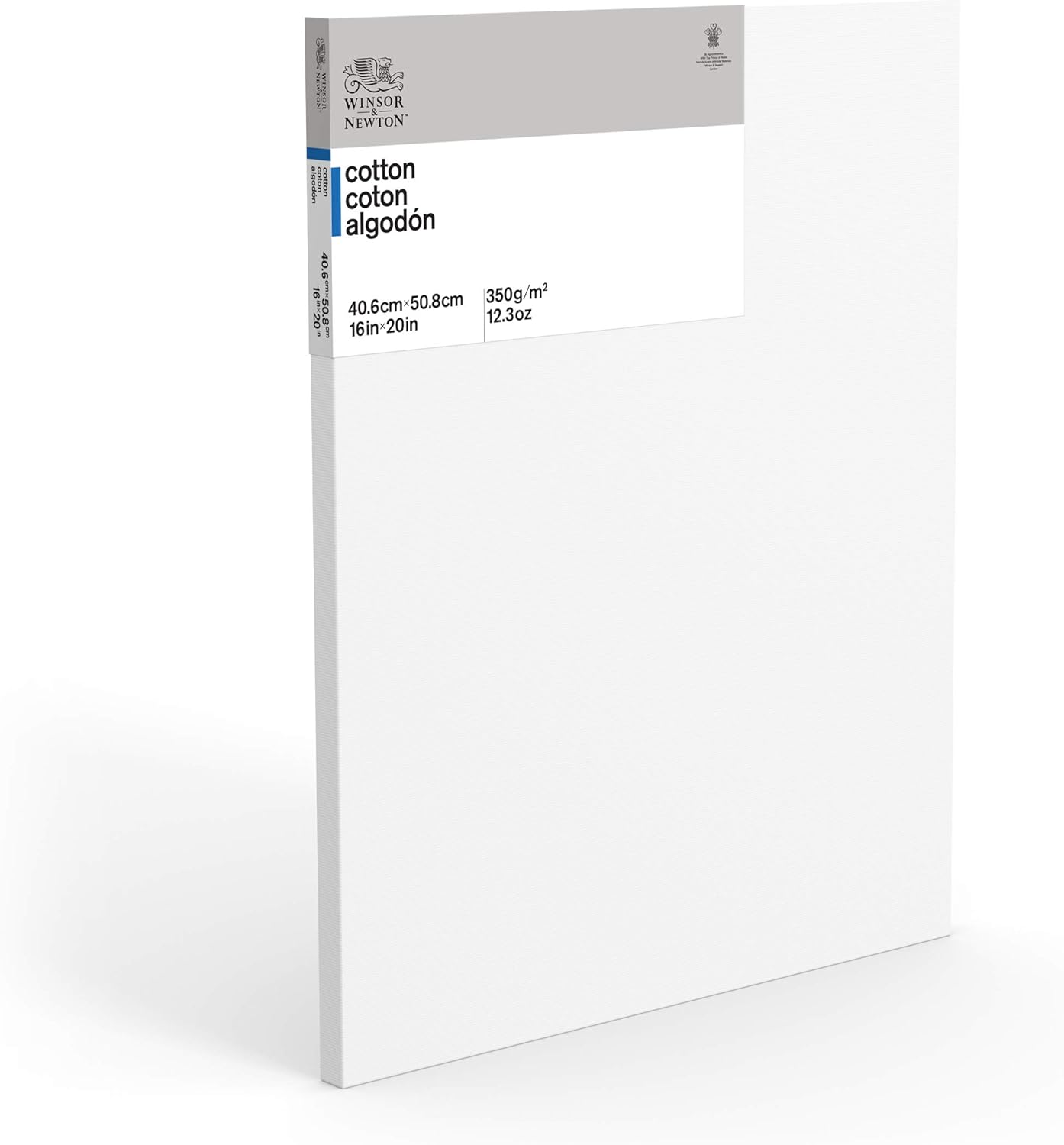
This is the closest like-for-like replacement for a retailer’s house stretched canvas. Winsor & Newton’s listing ticks the important boxes: warp-resistant kiln-dried solid wood stretcher bars, a highly pigmented titanium dioxide gesso primer, hand stretching for good tension with tailored corners, back stapling with folded uncut corners, and wooden keys for re-tensioning.
A 16 x 20 is one of the most useful canvas sizes for both practice and finished work. The canvas weighs about 1.3 pounds per the listing, so it is easy to handle and hang.
Best suited for: acrylic and oil painters who want a reliable ready-to-paint stretched canvas for studio work.
Key features
- 16 x 20 inch stretched cotton canvas
- Kiln-dried, warp-resistant wood bars
- Titanium dioxide gesso priming
- Back stapled, folded corners
- Wooden keys included
Pros
- All the construction details of a quality stretched canvas
- Clean sides for frameless display
- Re-tensionable with keys
Cons and limitations
- Sold as a single canvas
- Fabric weight not stated in the listing
Buying consideration: a dependable default; buy a couple at a time if you paint weekly.
2. Strathmore 300 Series Canvas Pad, 9 x 12 — Best for Practice and Plein Air

Canvas pads are underrated. Strathmore’s is actual canvas, not textured paper: 100% cotton, acid-free, triple primed, 8 oz weight with a medium grain, bound into a tape-bound pad of ten sheets. The listing recommends it for acrylic, oil and water-mixable oils.
Strathmore designed it with plein air painters in mind, and it is equally handy for classes and daily studies, since ten flat sheets take up a fraction of the space of ten stretched canvases. Finished sheets can be mounted on board or framed. The pad is offered in 9 x 12, 12 x 16, 16 x 20 and 18 x 24.
Best suited for: students, plein air painters and anyone doing frequent studies.
Key features
- 10 sheets of 9 x 12 cotton canvas
- 8 oz, triple primed, medium grain
- Acid-free; tape bound
- For acrylic, oil and water-mixable oil
Pros
- Real canvas surface at a low cost per sheet
- Very portable and easy to store
- Can be mounted later
Cons and limitations
- Sheets are unstretched and flexible
- Needs taping down or a board for support while painting
Buying consideration: ideal for building volume of practice without filling your closet with canvases.
3. PHOENIX 4 x 4 Inch Museum Block Canvas, 4 Pack — Best Deep-Profile Small Canvases

Museum-depth canvases are thick enough to hang without a frame and stand on a shelf like a small sculpture. PHOENIX lists these at 2 3/8 inches deep on pine frames, with natural cotton canvas that is hand-stretched, back stapled and triple gesso primed (heavy-duty 11 oz, medium grain).
At 4 x 4 inches they are tiny, which makes them perfect for small-works series, gifts, holiday markets and paint parties. The depth gives even miniature paintings a finished, gallery look.
Best suited for: small-format artists, gift pieces and anyone selling small works.
Key features
- Four 4 x 4 inch canvases
- 2 3/8 inch museum-depth pine frames
- 11 oz cotton, triple gesso primed
- Back stapled
Pros
- Frameless display-ready depth
- Heavy primed cotton
- Great for small series
Cons and limitations
- Very small painting area
- Higher cost per square inch than standard canvas
Buying consideration: paint the sides too, or tape them cleanly, since deep edges are part of the presentation.
4. Kinlop 36 Inch x 20 Feet Double Primed Cotton Canvas Roll — Best for Custom Sizes
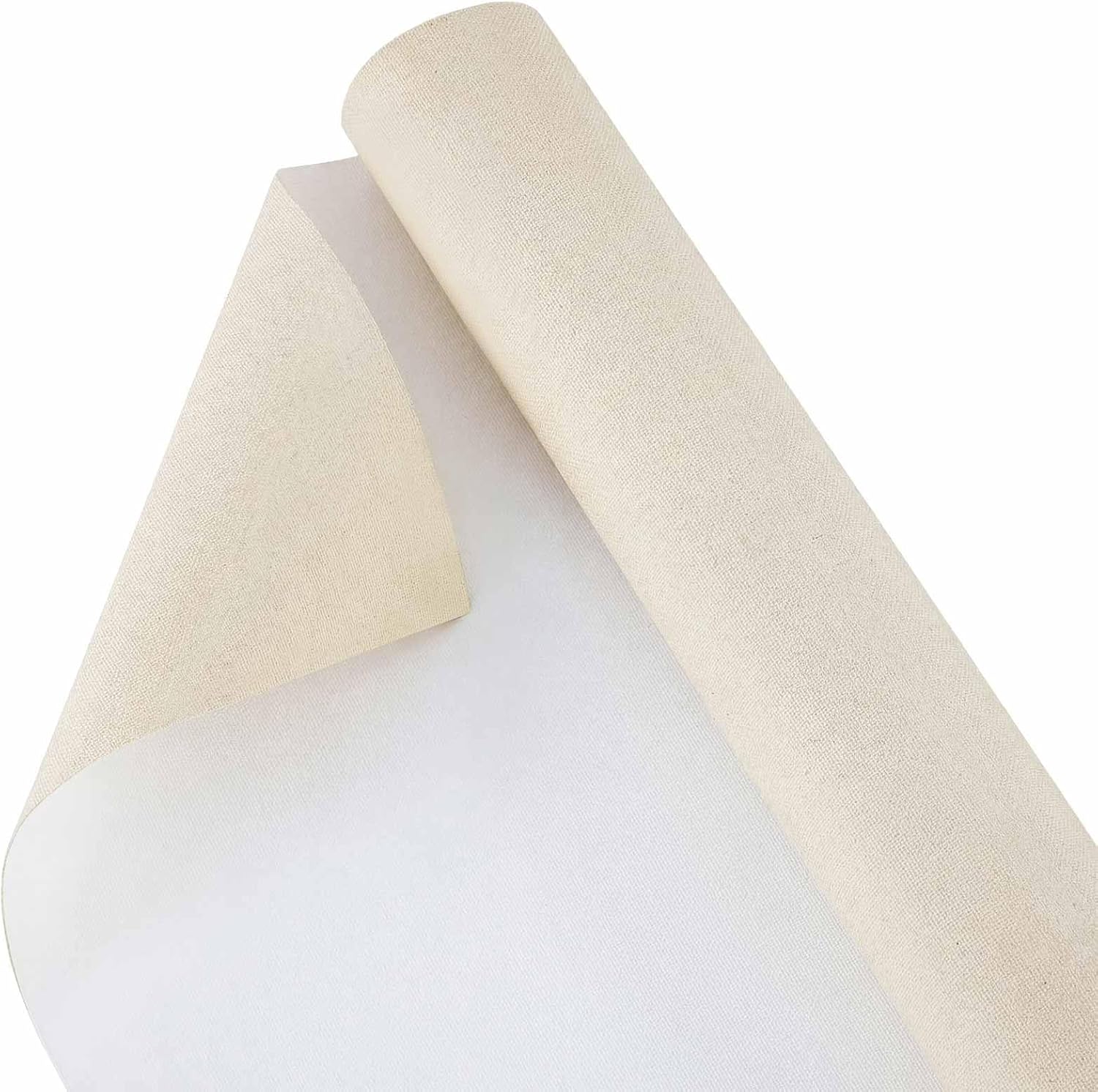
A roll lets you cut exactly the size you want, including odd proportions you will never find pre-stretched. Kinlop’s roll is 36 inches wide and 20 feet long, double primed, mainly cotton, in a “linen beige” color. Note that name: it describes the tone, not the fiber. This is cotton.
The listing says you can stretch it on frames and suggests a light iron to relax the roll after shipping. Twenty feet is enough for a run of medium paintings or several mounted panels.
Best suited for: painters who want custom sizes, mount canvas on boards or teach classes.
Key features
- 36 inch width, 20 foot length
- Double primed, mainly cotton
- Beige-toned priming
- Item weight about 3.4 pounds
Pros
- Large amount of canvas at a middle tier
- Toned ground can reduce the glare of white
- Custom sizes and proportions
Cons and limitations
- “Mainly cotton” rather than 100% cotton
- Requires stretching or mounting
- Toned color may not suit painters who want bright white
Buying consideration: plan for stretcher bars or boards, plus canvas pliers and a staple gun.
5. Barcelonetta 10 oz Natural Cotton Duck, 62 inch — Best Raw Canvas

Raw cotton duck is canvas at its most basic: unprimed, natural-colored fabric you size and prime yourself. Barcelonetta sells it by the yard in 62-inch width, here in a heavy 10 oz weight of 100% cotton. The listing positions it for many uses beyond art, but heavy cotton duck is exactly what many painters prime and stretch for large work.
Priming your own canvas gives full control: acrylic gesso for a universal ground, extra coats sanded smooth for portrait detail, or a clear primer to keep the natural color.
Best suited for: painters who want to prepare their own surfaces or need wide raw canvas at a low price.
Key features
- 100% cotton duck, 10 oz
- 62 inch wide, sold by the yard
- Natural, unprimed
- Also offered in 4, 7 and 12 oz weights
Pros
- Lowest cost per square foot here
- Heavy weight suits larger stretched paintings
- Complete control over priming
Cons and limitations
- Must be sized and primed before oil painting
- General fabric listing, not artist-specific
Buying consideration: raw cotton shrinks as it takes water-based gesso; stretch first, then prime, for a drum-tight result.
Choosing a Cotton Canvas Format
The five products above are really five formats, and each suits a different stage of painting. Stretched canvas is for finished, hangable work. Canvas pads are for volume, study and travel. Deep museum canvases are for presentation-focused small pieces. Rolls are for custom sizes and painters comfortable stretching. Raw duck is for painters who want to control the ground entirely.
Many painters use more than one: pads for practice, stretched canvases for finished pieces, and a roll for the odd size that does not exist off the shelf. Buying the right format for each job usually saves more money than hunting for the cheapest brand.
Preparing and Caring for Cotton Canvas
Before you paint
Even pre-primed canvas benefits from a quick check. Run your hand over the surface to feel for lumps or loose fibers, and sand lightly with fine sandpaper if you want a smoother tooth. If the primed surface feels very absorbent, an extra coat of acrylic gesso evens it out and makes paint glide more consistently. Many painters also tone the canvas with a thin wash of neutral color so they are not judging values against stark white.
Dealing with slack canvas
Cotton responds to humidity. A canvas that looked tight in the store can slacken in a damp room. Tap the keys gently into the corner slots, a little at a time and evenly at each corner, until the surface is taut again. For small dents, a light mist of water on the back of the canvas often tightens the fibers as they dry; test cautiously on primed canvas.
Storage
Store stretched canvases upright, back to back or separated by cardboard, away from radiators, damp basements and direct sun. Keep pads flat. Keep rolls off the floor with the primed side facing outward so the priming is not compressed. Good storage prevents most of the warping, dents and mold that ruin otherwise good canvas.
How much canvas to buy
If you paint once a week, a handful of stretched canvases and a pad for studies will last a month or two. Teachers and prolific painters save money with rolls and raw duck, but only if they have the tools and space to stretch. Buy the format you will actually use within a season rather than stockpiling.
Buying Guide: How to Choose Blick Cotton Canvas or an Alternative
Check the stretcher bars
Kiln-dried, straight bars resist warping. Twisted bars make a canvas rock on the wall and are hard to fix. Look for bars described as kiln-dried or warp-resistant.
Look for back stapling and keys
Back-stapled canvas has clean sides for frameless display. Keys let you tighten the canvas if it slackens with humidity, which cotton is prone to.
Understand the priming
Titanium or acrylic gesso priming works for acrylic and oil. Triple priming gives a smoother, more sealed surface. Raw canvas needs priming before oil.
Match weight to size
Lighter cotton (7 to 8 oz) is fine for small and medium work. Heavier cotton (10 to 12 oz) holds tension better on large canvases.
Choose depth for presentation
Standard profiles (around 3/4 inch) are usually framed. Gallery and museum depths (1.5 inches or more) look finished without a frame.
Consider format by use
Use pads and panels for practice, stretched canvas for finished work, and rolls or raw duck for custom sizes.
Plan, Paint and Repair
Cotton canvas is ideal for sets and series; our guide to painting a multi-canvas wall art set walks through layout and color continuity. If you need accurate proportions, start with gridding your canvas before painting, and if a stretched canvas gets punctured, our ripped canvas repair tips can save it.
Common Mistakes to Avoid
- Assuming “linen beige” or “linen look” means linen fiber.
- Painting oil directly on raw cotton duck without sizing and priming.
- Over-tightening keys, which can split corners or distort bars.
- Using stretched canvas for every practice study, which gets expensive and bulky.
- Leaning canvases against each other face to face, which dents the surface.
- Ignoring depth when you plan to hang work without frames.
FAQs
Is Blick cotton canvas sold on Amazon?
We did not find Blick-branded cotton canvas on Amazon.com in October 2026. Blick sells its house-brand surfaces mainly through its own stores and website.
What is a good alternative to Blick stretched cotton canvas?
The Winsor & Newton Classic Cotton Canvas has the key features of a quality stretched canvas: kiln-dried bars, titanium gesso priming, back stapling and keys.
Is a canvas pad the same as stretched canvas?
Both are cotton canvas, but a pad’s sheets are loose and unstretched. They are great for practice and can be mounted later; stretched canvas is ready to hang.
Do I need to prime cotton canvas?
Pre-primed canvas is ready to use. Raw cotton duck must be sized and primed before oil painting, and is usually primed for acrylic too.
What does canvas weight in ounces mean?
It is the weight of the fabric per square yard. Higher numbers mean heavier, generally sturdier canvas.
Can I use cotton canvas for oil painting?
Yes. Properly primed cotton canvas is widely used for oil. Make sure the priming covers the fabric fully.
Final Recommendation
If you want Blick cotton canvas itself, buy it through Blick. If you want an equivalent from Amazon today, the Winsor & Newton Classic Cotton Canvas is the most direct replacement for finished studio work, with all the construction details that matter.
For practice and travel, the Strathmore 300 canvas pad is the efficient choice, while the PHOENIX museum blocks make small works look finished. Choose the Kinlop roll for custom sizes and the Barcelonetta raw duck if you prefer to prime your own. Match the format to the job and you will spend less and paint more.