PaintingProGuide is reader-supported. When you buy through links on this page we may earn an affiliate commission at no extra cost to you.
Golden vs Liquitex pouring medium is a choice between two professional acrylic makers who approach pours slightly differently. Golden’s Color Pouring Medium is built around glossy pours with minimal crazing. Liquitex Professional Pouring Medium is a high-resin-solids fluid polymer designed for even puddles, poured sheets and flowing color. Both are serious artist materials; the better one depends on how thick you pour, how much you care about clarity, and how much you buy at once.
This page compares the two using what each manufacturer lists on Amazon, adds a budget craft option for practice pours, and finishes with a verdict for different kinds of pourers.
Quick answer: For glossy, low-crazing pours in small to medium batches, start with GOLDEN Color Pouring Medium Gloss in the 8 oz bottle and move to the 32 oz jar if you like it. For large volumes and flowing sheets of color, the Liquitex Professional Pouring Medium gallon is the more economical professional route. Apple Barrel Pouring Medium is fine for learning cell and dirty-pour technique on a budget, with a satin rather than glossy finish.
Our Top Picks at a Glance
- GOLDEN Color Pouring Medium Gloss — Best for glossy pours with minimal crazing
- Liquitex Professional Pouring Medium (1 gallon) — Best for large-volume pours and poured sheets
- Apple Barrel Pouring Medium — Best budget medium for practice and crafts
| Product | Best For | Key Spec | Key Strength | Price Tier |
|---|---|---|---|---|
| GOLDEN Color Pouring Medium Gloss | Glossy art pours | 8 oz bottle or 32 oz jar | Minimal crazing (listed) | $$ / $$$ |
| Liquitex Professional Pouring Medium | Bulk pours and poured sheets | 1 gallon, high resin solids | Even puddles and flowing color | $$$ |
| Apple Barrel Pouring Medium | Practice pours, crafts | 16 oz, satin finish | Soap-and-water cleanup | $ |
Golden vs Liquitex Pouring Medium: Side-by-Side
| Feature | GOLDEN Color Pouring Medium Gloss | Liquitex Professional Pouring Medium |
|---|---|---|
| What the maker emphasizes | Glossy pours with minimal crazing | High resin solids for even puddles and poured sheets |
| Finish | Gloss | Gloss (listing details also mention satin; the product name says gloss) |
| Clarity when dry | Moderate clarity (listed) | Smooth, even colored film when mixed with soft body color |
| Topcoat use | Not recommended as a topcoat (listed) | Not stated in the listing |
| Sizes in this comparison | 8 oz bottle, 32 oz jar | 1 gallon |
| Suggested paint pairing | Acrylic colors generally | Soft Body acrylic color |
| Made in | USA (listed) | Not stated in the listing |
How We Chose
This comparison relies on the Amazon listing details and specifications for each product as checked in October 2026, how well each medium’s stated properties fit fluid acrylic pouring, and how widely each is reviewed by Amazon buyers. We do not claim to have poured these side by side; where a listing is ambiguous or contradictory, we point it out.
- Stated finish and clarity: how glossy and how transparent the dried pour is described to be.
- Crazing resistance: whether the maker addresses surface cracking.
- Volume and value: how the sizes match beginner, hobby and studio use.
- Paint compatibility: which acrylic bodies the medium is designed to work with.
- Ease of use: cleanup, mixing guidance and suitability for common pour techniques.
What a Pouring Medium Actually Does
A pouring medium is an acrylic polymer that thins paint to a flowing consistency while keeping enough binder in the mix for a strong, flexible film. Thinning acrylic with water alone can work in small amounts, but heavy dilution weakens adhesion and can leave a chalky, under-bound surface. A medium gives you flow without starving the paint of binder.
Professional pouring media also aim to level smoothly, dry without large craters and reduce crazing, the network of fine cracks that can appear when a thick layer dries unevenly. Craft media focus more on easy cell formation and low cost. Knowing that difference is half the Golden vs Liquitex decision.
Golden vs Liquitex Pouring Medium Reviewed
1. GOLDEN Color Pouring Medium Gloss — Best for Glossy, Low-Crazing Pours

Golden describes Color Pouring Medium Gloss as an excellent medium for creating glossy pours of acrylic colors with minimal crazing. That focus on crazing is the main reason artists choose it: thicker pours are where cracks tend to appear, and this medium is formulated with that problem in mind.
The listing is also honest about limits. It dries with moderate clarity, so it is not as glass-clear as a dedicated resin, and Golden does not recommend it as a topcoat. The 8 oz bottle is a sensible way to learn its mixing ratios; the 32 oz jar is the better value once you pour regularly. Golden notes it is made in the USA by an employee-owned company.
Best suited for: Fluid artists who pour thicker layers, want a glossy finish and care about avoiding surface crazing.
Key features (from the listing):
- Gloss finish
- Formulated for minimal crazing
- Dries with moderate clarity
- Available in 8 oz and 32 oz sizes
- Interior and exterior use listed, canvas recommended
Pros:
- Direct focus on the crazing problem
- Two sizes for testing and regular use
- From a professional acrylic maker
Cons and limitations:
- Moderate clarity, not glass-clear
- Not recommended as a topcoat
- Higher cost per ounce than craft media
Buying consideration: Mix a small test batch and let it cure fully before committing to a big piece. Pour thickness and room humidity influence crazing as much as the medium does.
2. Liquitex Professional Pouring Medium, 1 Gallon (Gloss) — Best for Large-Volume Pours

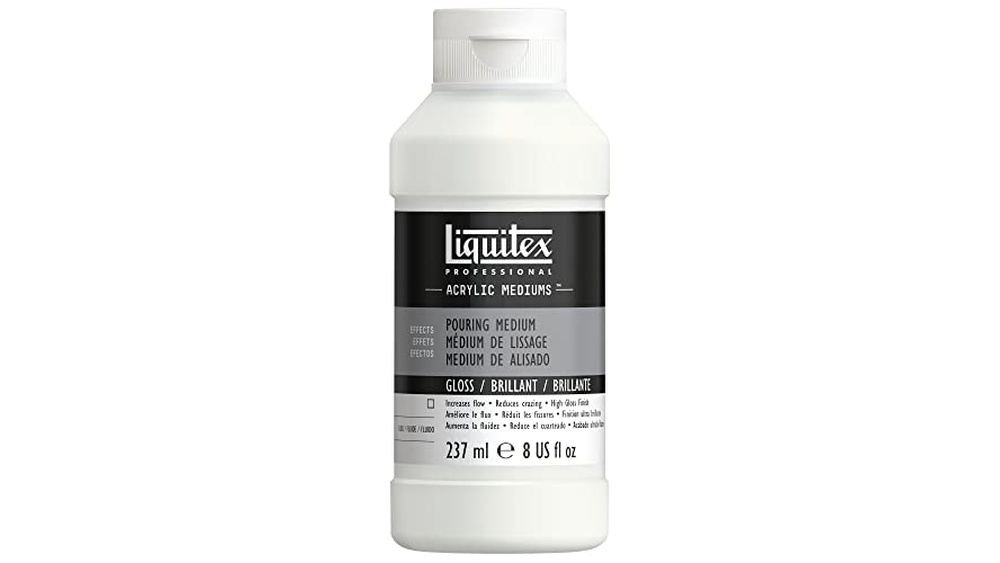
Liquitex lists its Professional Pouring Medium as a fluid medium incorporating an acrylic polymer with high resin solids. It is designed to create even puddles, poured sheets and flowing applications of color, and Liquitex suggests mixing it with Soft Body acrylic color for a smooth, even colored film as it dries.
A gallon is a big commitment, which is the point: if you pour often or teach classes, buying professional medium in bulk makes the cost workable. Note that the listing details say “Finish Type Satin” while the product name says gloss. Expect the gloss version you are ordering, but treat the finish as something to confirm on a test pour.
Best suited for: Regular pourers, teachers and artists making poured sheets or large panels who want professional medium at a lower cost per ounce.
Key features (from the listing):
- 1 gallon (128 fl oz)
- Acrylic polymer with high resin solids
- Designed for puddles, poured sheets and flowing color
- Pairs with Soft Body acrylics
Pros:
- Best value per ounce of the professional options here
- High resin solids help keep pours well bound
- Suitable for poured acrylic skins and sheets
Cons and limitations:
- Large upfront purchase
- Listing details conflict on finish
- Clarity and crazing behavior are not described
Buying consideration: Store the gallon tightly sealed and away from freezing temperatures. Pour a working amount into a smaller container so the main jug is not opened every session.
3. Apple Barrel Pouring Medium, 16 oz — Best Budget Medium for Practice

Apple Barrel Pouring Medium is a craft-level option for turning acrylic paint into a pourable mix for marbled and swirled effects. The listing says it dries to a subtle satin finish, works with dirty pours and direct pours, and cleans up with soap and water while wet.
It is not a substitute for Golden or Liquitex if you want archival gloss pours, but it is a low-risk way to learn ratios, cells and tilting before you buy professional medium. It is designed around Apple Barrel acrylics and works on wood, canvas and paper according to the listing.
Best suited for: Beginners learning pour techniques, craft projects, kids’ and group activities, and practice pieces.
Key features (from the listing):
- 16 oz bottle
- Satin finish
- Works with dirty and direct pours
- Soap-and-water cleanup
- Non-toxic listed
Pros:
- Inexpensive for practice
- Simple to use
- Good for wood and craft surfaces
Cons and limitations:
- Satin, not gloss
- Craft-grade rather than professional
- Less information on crazing or permanence
Buying consideration: If you want gloss on a practice piece, add a compatible varnish once it is fully cured instead of expecting the medium to provide it.
Finish, Clarity and Crazing
Golden puts minimal crazing front and center, which is helpful because crazing ruins otherwise good pours. It also tells you clarity is moderate, so very transparent glazes may look slightly softer than they would in a clear resin. Liquitex emphasizes high resin solids and even, smooth films, which speaks to leveling and binder strength rather than crazing specifically.
In practice, crazing depends on layer thickness, drying conditions and paint ratio as well as the medium. Pour on a level surface, avoid heat guns close to the paint for long periods, and let thick pours dry slowly in a room without drafts.
Value and Volume
If you pour a few small canvases a month, the 8 oz Golden bottle may last a long time and keeps your outlay low. A busy pourer can go through medium quickly, and the Liquitex gallon makes more sense there. The 32 oz Golden jar sits between the two.
Mixing and Consistency: Getting Either Medium to Behave
Whichever brand you choose, the most common failure point is the mix, not the medium. Combine paint and medium slowly with a palette knife or craft stick, scraping the sides of the cup so no thick paint is left unmixed. Stir gently; whipping the mix traps air that rises as bubbles during the pour.
A simple consistency test helps. Lift the stick and let the mix drip back into the cup. If it disappears into the surface almost immediately, it is too thin and may run off the canvas or lose color strength. If it mounds up and sits there, it is too thick and will not level. You want a ribbon that rests on the surface for a moment and then settles. Mix all your colors to roughly the same consistency so they flow together evenly.
Let mixed cups rest for a few minutes before pouring so trapped air can escape. Some pourers strain mixes through a fine mesh to remove lumps of undissolved pigment, which is especially useful with heavy-body paint.
Surface Preparation and Drying
Pouring medium is only as good as the surface under it. Use a primed canvas or panel, and brace stretched canvases from behind if you pour thickly, because the weight of wet paint can sag the center and make paint pool. Prop the piece on cups so excess paint drips freely off the edges.
Drying time depends on pour thickness, humidity and temperature. Thin pours may feel dry to the touch within a day, while thick pours can stay soft underneath for much longer. Leave pieces flat, covered loosely against dust, and away from heaters or fans that would dry the top too quickly.
Verdict by Pour Style
- Thick, glossy cell pours on small canvases: GOLDEN Color Pouring Medium Gloss, because crazing is the risk it addresses.
- Large panels, poured sheets and acrylic skins: Liquitex Professional Pouring Medium, for its high resin solids and gallon value.
- Classes and group sessions: Liquitex in bulk for the instructor, Apple Barrel for practice cups.
- Learning cells and dirty pours: Apple Barrel first, then a professional medium once your ratios are consistent.
- Mixed-media pieces with transparent glazes: test both; Golden notes moderate clarity, so judge transparency on a sample.
Buying Guide: How to Choose a Pouring Medium
Gloss or satin
Professional pouring media in this comparison are gloss. Apple Barrel dries satin. Decide on the finish you want before buying, or plan to varnish afterward to change it.
Pour thickness
Thicker pours stress the film as it dries. If you like deep, glossy layers, choose a medium that addresses crazing directly, such as Golden’s.
Paint body
Fluid and soft-body acrylics need less medium to reach pouring consistency than heavy-body paint. Liquitex specifically suggests pairing with Soft Body color. Heavy-body paint will need more medium and more mixing.
Batch size and storage
Mediums last well when sealed, but a gallon can dry out at the rim if opened often. Decant into a smaller squeeze bottle for daily use.
Additives
Many pourers add a small amount of silicone or other cell-forming additives. These are separate from the medium and can affect varnish adhesion, so clean the surface before varnishing.
Practice versus finished work
Use a craft medium to learn, then move to a professional one for pieces you intend to sell or hang long term.
Related Reading
If pouring is one of several techniques you want to try, our guide to which medium to use with acrylic paint explains how pouring medium compares with gel, glazing and retarder media. When the pour is dry, follow our steps on how to varnish an acrylic painting to protect it.
Common Mistakes to Avoid
- Thinning paint with lots of water instead of medium, which weakens the film.
- Expecting a pouring medium to act as a final topcoat; Golden explicitly says not to.
- Pouring on an unlevel surface, causing paint to pool and dry unevenly.
- Testing a new medium on a large, expensive canvas first.
- Varnishing too early, before a thick pour has fully cured.
- Mixing professional and craft media in one pour without testing compatibility.
FAQs
Is Golden or Liquitex pouring medium better?
Golden is the stronger choice if your priority is glossy pours with minimal crazing. Liquitex is attractive for high-volume pouring and poured sheets thanks to its high resin solids and gallon size. Both are professional products.
Can I use Golden Color Pouring Medium as a varnish?
Golden’s listing says it is not recommended as a topcoat. Use a varnish designed for acrylics instead.
Is Liquitex pouring medium gloss or satin?
The product name says gloss, while the Amazon listing details also show satin. Expect gloss and confirm with a test pour.
Can I mix Apple Barrel pouring medium with professional acrylic paint?
It is generally designed around acrylic paint and should mix with most acrylics, but it is formulated for craft use. Test first, and use professional medium for finished artwork.
How much pouring medium do I add to acrylic paint?
Ratios vary by paint body and medium. Fluid acrylics need less medium than heavy-body paint. Start with the manufacturer’s guidance and adjust until the mix flows like warm honey.
Why is my acrylic pour cracking?
Crazing usually comes from thick layers drying too fast or unevenly, too much water in the mix, or drafts and heat. A medium formulated for low crazing helps, as do slower drying conditions.
Final Recommendation
Pick GOLDEN Color Pouring Medium Gloss if you pour thicker layers and want glossy results with crazing addressed by the formula, starting with the 8 oz bottle. Pick Liquitex Professional Pouring Medium if you pour often enough that a gallon makes sense and you want flowing, well-bound sheets of color. Use Apple Barrel to learn the technique cheaply, then graduate to whichever professional medium suits your pouring style.