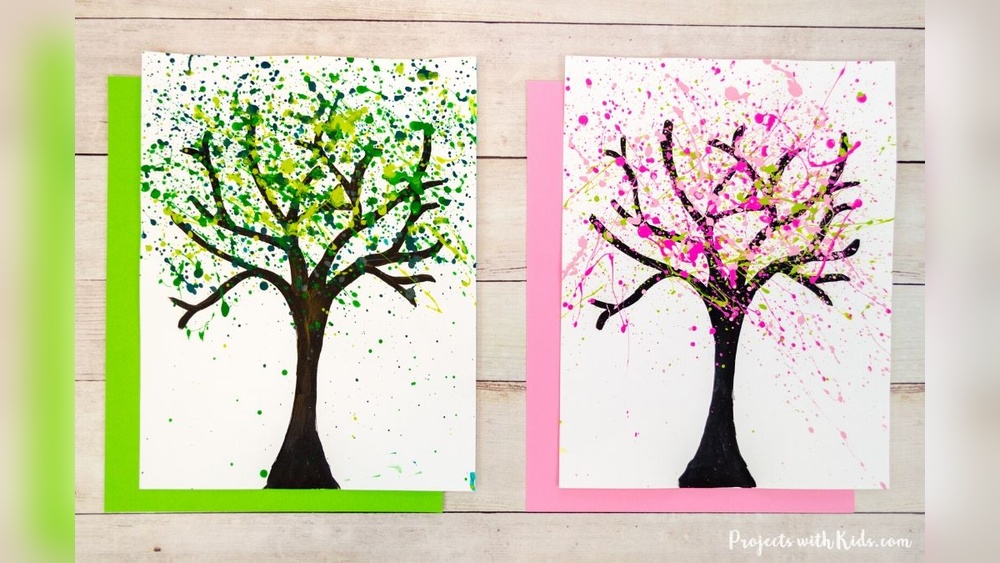
Splatter painting looks spontaneous, but the best pieces are planned. The size of each speck, the direction of each streak and the way colors stack all depend on a few controllable things: how thin the paint is, what tool flings it, and how far that tool is from the surface. Learn those, and a DIY splatter paint art project goes from random mess to something that looks intentional on a wall.
Quick answer: For a DIY splatter paint art project, protect a large area with drop cloths, prime or base coat a canvas, and thin acrylic paint with water to a cream-like consistency. Load a brush, then flick it, tap it against a stick, or snap the bristles with your finger to send paint onto the canvas. Work from largest drops to finest specks, one color at a time, letting each layer set briefly, and seal the dry piece with varnish.
This guide covers setup, paint ratios, five splatter techniques, color planning, layering, and several project variations. For choosing the paint itself, our comparison of the best paint for DIY projects explains which formulas suit canvas, wood and other craft surfaces.
Why Splatter Painting Works So Well for Beginners
Splatter art rewards decisions more than drawing skills. There is no need to render a face or match perspective. You make choices about color, density and movement, which are the same choices abstract painters make. It is also one of the most budget-friendly ways to fill a wall with original art.
The history is serious too. Mid-century abstract expressionists used dripping and flinging as a core method, treating the canvas as an arena for gesture. You do not need to paint on the floor of a barn to borrow the idea, but it helps to know that the technique has real artistic weight.
Supplies for a Splatter Paint Project
- Surface: Stretched canvas, canvas panel, thick watercolor paper, wood board, or even an old T-shirt for fabric splatter.
- Paint: Acrylic craft paint or student acrylics. Fabric paint for clothing.
- Thinning: Water, or an acrylic flow or pouring medium for stronger color.
- Tools: Round brushes in several sizes, a stiff toothbrush, a stir stick or paint stirrer, squeeze bottles, a palette knife.
- Containers: Plastic cups for each color, plus a water cup.
- Protection: Drop cloths or plastic sheeting covering the floor and nearby walls, gloves, old clothes, safety glasses if working at close range.
- Masking: Painter’s tape, paper stencils, or stickers for resist designs.
- Finish: Water-based varnish in gloss, satin or matte.
Setting Up Your Splatter Space
Paint travels farther than expected. A flick can send droplets six feet or more. Outdoors on a calm day is ideal; a garage or a room with plastic covering floor and lower walls also works. Wind will blow fine specks off course, so pick a still moment if you are outside.
Prop the canvas at the angle you want. Flat on the floor gives round dots and no drips. Leaning against a wall lets heavier drops run downward, creating vertical drips. Many artists start flat and tilt the canvas for the final layer.
Paint Consistency: The Secret to Controlled Splatter
| Consistency | Approx. ratio (paint : water) | Result | Best tool |
|---|---|---|---|
| Thick, yogurt-like | Undiluted | Large, raised blobs; few specks | Palette knife, stick |
| Heavy cream | 3 : 1 | Medium drops with tails | Large round brush |
| Whole milk | 1 : 1 | Many small drops, some streaks | Medium brush, tap method |
| Ink-thin | 1 : 2 | Fine mist and tiny specks; may run | Toothbrush |
Adding too much water weakens the paint’s binder and can make the color look washed out or less durable. If you want very fluid paint with strong color, use an acrylic flow or pouring medium instead of extra water.
Five Splatter Painting Techniques
1. The wrist flick
Load a round brush, hold it about 12 to 18 inches above the canvas, and flick your wrist sharply forward. This produces a spray of drops with directional tails. Flicking toward the canvas from the side creates long streaks.
2. The tap
Hold a loaded brush over the canvas and tap the handle against a stick, ruler or your other hand. Drops fall straight down in a controlled cluster. It is the most precise method and good for placing color in a specific area.
3. The toothbrush spray
Dip a toothbrush in thin paint, point the bristles at the canvas from a few inches away, and drag your thumb across them. You get a fine, even mist, perfect for star fields, stone textures and soft backgrounds.
4. The drip
Let paint fall from a stir stick or squeeze bottle while you move your hand over the canvas. This creates continuous lines and loops, the classic look of drip painting.
5. The fling
Load a large brush heavily and swing your whole arm toward the canvas. It is the most dramatic technique and the least controlled. Save it for large canvases and outdoor sessions.
Step-by-Step DIY Splatter Paint Art Project
- Choose a palette. Pick three to five colors, including one light, one dark, and one bright accent. Add metallic or white for highlights.
- Base coat. Paint the canvas a solid color, such as white, black, navy or blush. Let it dry. A colored ground ties the splatters together.
- Mask (optional). Apply tape stripes, a geometric pattern or a paper silhouette to create clean shapes that will appear after you peel them off.
- Start large. Using the darkest or most dominant color at heavy-cream consistency, flick or fling large drops across the canvas. Leave plenty of open space.
- Let it set. Wait about 10 minutes so the next color sits on top rather than mixing into wet paint. Skip waiting if you want blended edges.
- Add medium layers. Use your second and third colors at a thinner consistency with the tap method.
- Add fine specks. Use the toothbrush with white, metallic or your accent color for a final layer of tiny dots.
- Step back. Look at the piece from across the room. Fill areas that feel empty, but stop before the canvas becomes uniformly busy.
- Remove masks. Peel tape at a low angle while paint is slightly damp for the cleanest edges.
- Dry and seal. Let thick blobs dry for 24 to 48 hours, then apply two thin coats of varnish.
Paint Splatter Abstract Art: Planning Color and Composition
Random placement can still look planned if you use a few composition principles.
- Create a focal area. Concentrate the densest splatter in one zone, often off-center, and let it thin out toward the edges.
- Follow the 60-30-10 idea. One color covers most of the splatter, a second supports it, and a third appears only in small accents.
- Repeat colors in several places. An accent color that appears only once looks like a mistake. Repeat it at least three times across the canvas.
- Vary drop size. A mix of large, medium and tiny marks creates depth. All-the-same drops look flat.
- Leave negative space. Open areas give the eye a rest and make splatters stand out.
Palette ideas
- Black base with gold, white and teal: dramatic and modern.
- White base with navy, sky blue and gray: calm, coastal.
- Blush base with burgundy, rose gold and cream: soft and warm.
- Gray base with mustard, rust and black: earthy mid-century feel.
- Rainbow on white: playful, great for kids’ rooms.
Cheap Art Projects for Adults Using Splatter
Splatter painting is one of the most affordable ways to create large wall art. A few variations that use little material:
- Triptych: Splatter three small canvases at once in the same palette, then hang them side by side for a gallery look.
- Tape-resist geometric art: Tape a triangle pattern on canvas, splatter over it, and peel to reveal crisp white lines.
- Silhouette reveal: Cut a city skyline, initials or a leaf from contact paper, apply it, splatter, and peel.
- Splatter frames: Refresh thrift-store picture frames with a base coat and a light metallic splatter.
- Clothing and tote bags: Use fabric paint or acrylic mixed with fabric medium. Heat-set per product instructions.
DIY Large Canvas Art Ideas for Beginners
Big canvases look impressive and suit the energy of splatter. A 24 x 36 inch canvas or larger gives room for arm-swinging techniques.
- Work outdoors or in a very well-protected space.
- Mix more paint than you think you need; large canvases use paint fast.
- Use bigger tools: a 1-inch brush, a paint stirrer, or a squeeze bottle.
- Lay the canvas flat on sawhorses or bricks so you can walk around it.
- Build up gradually. It is easy to add more splatter but hard to remove it.
If you need a broader overview of planning, budgeting and choosing materials for home art projects, our explainer on what DIY projects involve is a helpful starting point.
Splatter Painting With Kids
Kids love the freedom of splatter art. Washable tempera or kids’ paint works well and cleans up easily. Set up outside on a lawn or driveway, and hand each child a brush and a cup of thinned paint. Large sheets of butcher paper laid on the ground make a collaborative mural. Remind kids to aim down at the paper, not sideways toward friends, and have a bucket of water and towels nearby.
Troubleshooting Splatter Art
| Issue | Cause | Solution |
|---|---|---|
| Colors turned muddy | Too many wet layers mixed | Let layers set between colors; limit palette |
| Splatter looks too uniform | Same tool and distance each time | Vary tools, heights and paint thickness |
| Paint cracked when dry | Very thick blobs over a flexible surface | Use thinner paint or add an acrylic medium |
| Faded, chalky color | Over-thinned with water | Thin with a flow medium instead |
| Unwanted drips | Canvas tilted, paint too thin | Lay flat; thicken slightly |
| Tape pulled paint off | Removed after paint fully cured | Remove tape while paint is just set |
Splatter Painting on Other Surfaces
Canvas is the obvious choice, but splatter works on almost anything that accepts paint. Each surface needs a slightly different approach.
- Wood: Sand lightly and seal or prime first so thin splatters do not soak in and blur. A clear coat over the finished piece protects it from handling.
- Paper: Use heavy watercolor paper, at least 140 lb, so wet paint does not buckle it. Tape the edges down to a board.
- Fabric: Wash and dry new fabric to remove sizing, slip cardboard inside shirts to stop bleed-through, and heat-set according to the paint label.
- Furniture accents: Splatter adds personality to a stool, side table or drawer fronts. Seal with a durable clear finish meant for furniture.
- Shoes and canvas bags: Mask any rubber or leather areas and use fabric-compatible paint.
Sealing and Hanging Your Splatter Art
Once fully dry, a varnish protects the paint from dust and UV light and evens out the sheen, since splatter often leaves a mix of glossy blobs and matte specks. Brush on two thin coats with a soft, wide brush. Gloss deepens dark colors; matte gives a gallery look. Paint the canvas edges a solid color or let the splatter wrap around for a frameless finish.
FAQs
What paint is best for splatter painting?
Acrylic paint is the most versatile choice for canvas and wood because it dries quickly and stays flexible. For kids, washable tempera is easier to clean up. For fabric, use fabric paint or acrylic mixed with a fabric medium.
How do you thin acrylic paint for splatter art?
Mix paint with water to roughly the consistency of heavy cream, about 3 parts paint to 1 part water for medium splatter. For fine specks, thin further. To keep strong color when very fluid, use an acrylic flow or pouring medium rather than lots of water.
How do I keep splatter painting from making a mess?
Work outdoors or cover the floor and lower walls with plastic. Build a three-sided cardboard shield around the canvas, wear old clothes and gloves, and keep wipes or a damp rag nearby for quick cleanup.
Is splatter painting good for cheap art projects?
Yes. It uses inexpensive paint, works on low-cost canvases or reclaimed boards, and produces large, bold pieces. A few bottles of craft acrylic can cover several canvases.
How long does splatter art take to dry?
Thin specks dry in minutes, but thick blobs can take a day or two. Wait until the thickest areas are firm before varnishing or hanging.
Can you splatter paint on walls?
Yes, as an accent wall technique with wall paint or acrylic, but prep carefully: mask trim, ceilings and floors, and test your color plan on a board first. It is much harder to correct on a wall than on canvas.
Final Thoughts
A strong DIY splatter paint art project comes from controlled chaos: a limited palette, thoughtful paint consistency, and layers that build from big drops to tiny specks. Start with a single small canvas to test your colors, then scale up to large statement pieces once you know how each tool behaves.
Before your next session, check our guide to paints that perform well across DIY surfaces so your splatter colors stay bright and durable.