
Simple acrylic painting ideas for beginners are easiest to use when they come with a clock and a short shopping list attached. Instead of one long list of subjects, this page sorts ideas by how much time you have, from a quick fifteen-minute study to a relaxed evening piece, and by the one skill each idea trains. Every idea works with three colours plus white, one flat brush and one round brush, so you can start today without a full art store haul.
Before You Start: A Minimal Kit
Choose red, yellow and blue (or any warm and cool version of each), plus white. Add a flat brush, a medium round brush, a cup of water, paper towels and a plate for a palette. A canvas board or thick paper is enough. If you want help choosing a palette, the guide to a palette for mixing colors covers the options, and the overview of acrylic painting for beginners goes further into basic technique.
For a wider choice of subjects, the list of simple acrylic painting ideas offers more inspiration. This page focuses on the time and skill sorting.
Simple Acrylic Painting Ideas for Beginners in 15 Minutes
Short sessions are ideal for building confidence. Keep paper small and the subject basic.
Two-Colour Gradient Sky
Skill trained: blending while the paint is wet. Brush a band of blue across the top of the page and a band of yellow or orange at the bottom, then pull the colours together with a damp flat brush using light horizontal strokes. Work quickly because acrylic dries fast. Add a thin dark line for the horizon.
Rain-Wash Circles
Skill trained: controlling paint thickness. Paint five or six circles in different colours, thinning some with water for transparency and leaving others thick. Overlap a few to see how layers behave. It looks abstract, and it teaches how much water changes opacity.
Single Leaf
Skill trained: brush pressure. Press a round brush down to make the wide part of the leaf, then lift as you pull to a point. Add a centre vein with a thin line of a darker green. Repeat in a row to practise.
Cloud Dabbing
Skill trained: soft shapes with minimal blending. Paint a blue rectangle, then dab white clouds with a clean, slightly damp brush or a piece of sponge. Press, lift, and repeat in clusters, adding a little grey at the base of each cloud for volume. The whole thing takes about ten minutes and teaches that fewer strokes often look better.
Colour Swatch Grid
Skill trained: mixing and recording. Divide a sheet into a grid and fill each square with a mix: red plus yellow, then adding white, then a touch of blue. Label the squares if you wish. It is not a picture, but it becomes a reference you will use for years, and it makes later paintings quicker.
Credit: feelingnifty.com
What a Fifteen-Minute Session Looks Like in Practice
The first five minutes go to setup and squeezing out colour. The middle five are for painting, and the last five are for rinsing brushes and writing a short note about what worked. Keeping that routine makes starting easier, because the whole thing feels small. Beginners often drop out because they treat each session as a performance; treating it as a drill removes that pressure.
Simple Acrylic Painting Ideas for Beginners in 45 Minutes
With under an hour you can layer once and let the paint dry in between. A hairdryer on low speeds up drying if you are impatient, but keep it at a distance.
Layered Mountain Range
Skill trained: value and depth. Paint a pale sky, then a first row of hills in a light blue-grey. Once dry, paint a darker row in front, and finally a darker, larger row at the bottom. Each darker layer makes the scene feel closer. Add a little white at the base of the far hills for mist.
Sunset Silhouette
Skill trained: simple contrast. Blend orange, yellow and a touch of pink across the sky. When dry, paint dark shapes of trees or a distant skyline. The strong contrast makes a basic painting look finished.
Geometric Colour Blocks
Skill trained: clean edges. Press painter’s tape on the surface to make triangles or stripes, paint inside each section in a different colour, then peel the tape off before the paint is fully hard. Press the tape down well so paint does not seep under.
Easy Flower Cluster
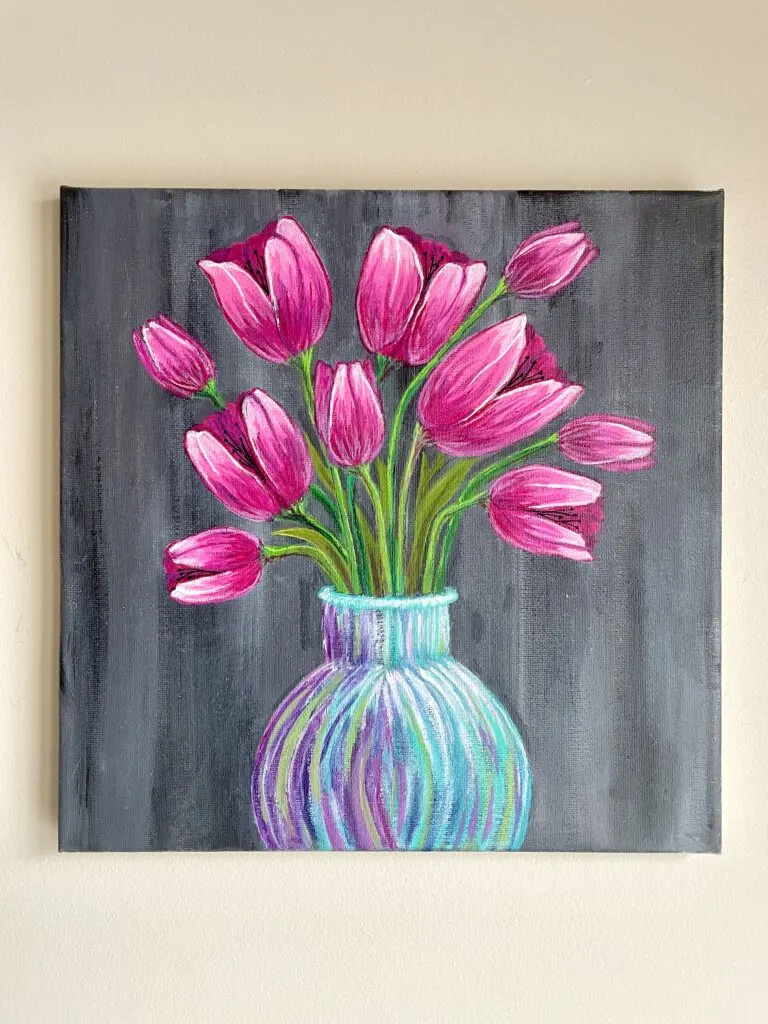
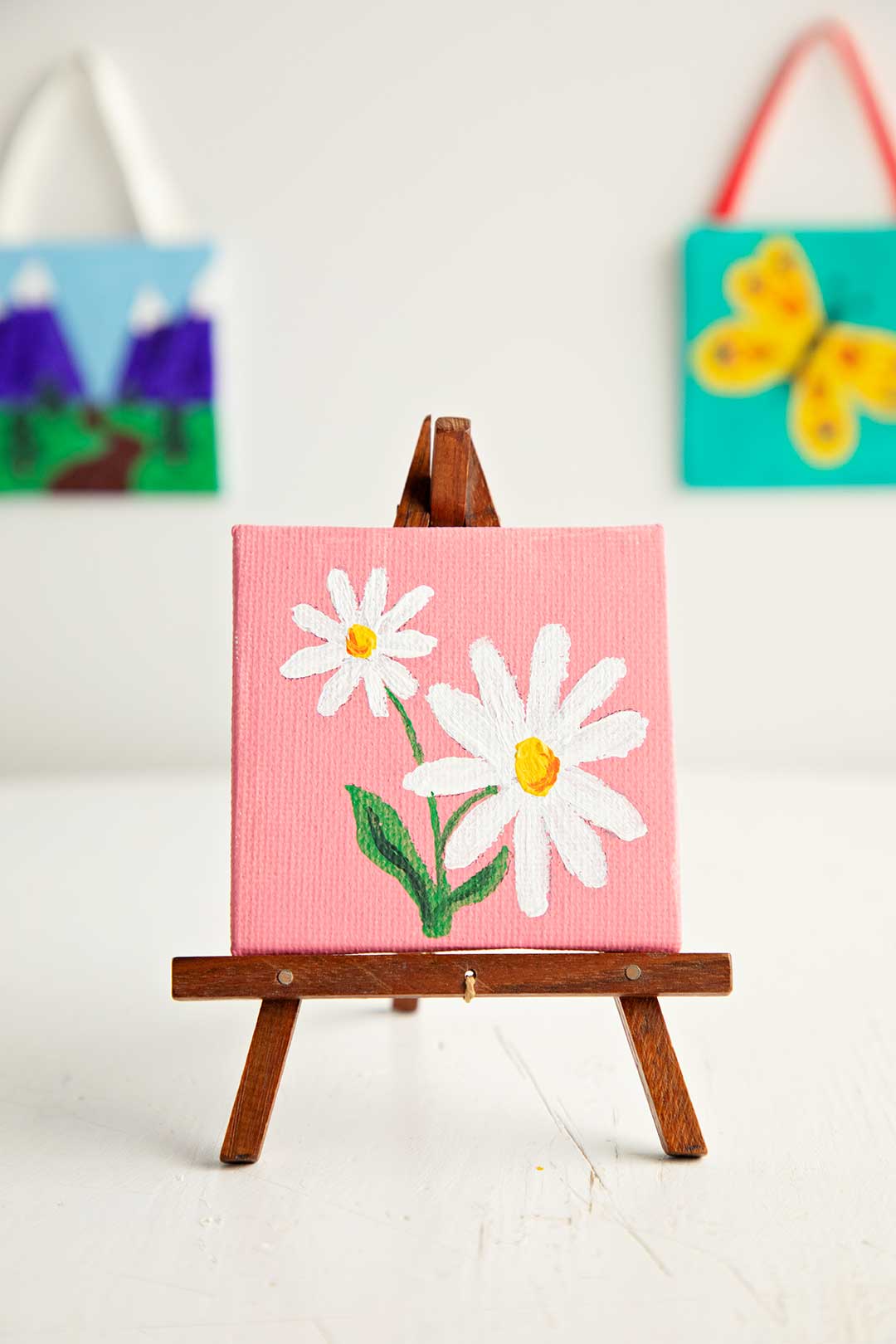
Skill trained: shape building. Paint a pale background, add green stems with a round brush, then dab five-petal flowers using the flat brush. Put a small yellow dot in the centre of each. Keep the shapes loose and let some overlap.
Simple Acrylic Painting Ideas for Beginners for a Relaxed Evening
When you have a couple of hours, you can combine several skills in one painting and allow a longer drying pause.
Moonlit Lake
Skill trained: reflections. Paint a dark blue sky, a pale moon and a darker land strip. Under it, repeat the moon and sky colours in the lake with horizontal strokes, slightly broken up to suggest ripples. The mirror idea teaches a lot about shape and value.
Still Life With Fruit
Skill trained: observation. Put a piece of fruit on a plain cloth near a window. Block in the colour of the fruit, then a darker shadow side and a small highlight. Add a cast shadow on the table. Keep the background simple and smooth.
Textured Abstract
Skill trained: building surface. Apply thick paint with a flat brush or a card, drag through it, and add a second colour on top. You can try a small amount of baking soda mixed into the paint for grit, though test on scrap first, as the effect varies.
Beach and Waves
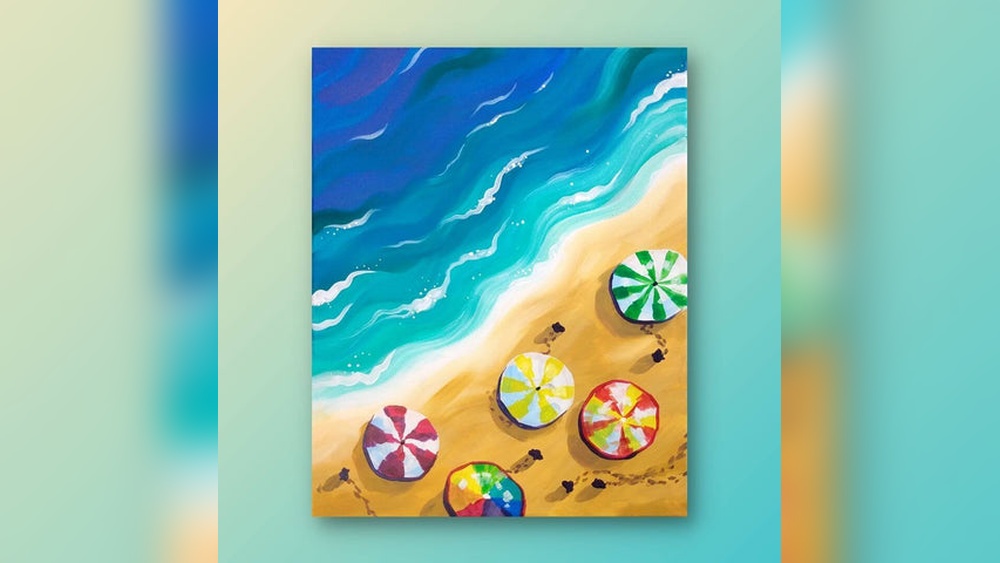
Skill trained: horizontal layering. Paint a sky, a band of blue sea, a lighter strip of surf and a pale sand band. Add white wave lines with a thin brush while the blue is slightly tacky so they soften. Finish with a few darker sand patches. Four horizontal bands give a surprisingly complete scene.
Cactus and Pot
Skill trained: simple forms with shading. Paint a pale background and a terracotta pot, then green cactus shapes with rounded ends. Add a darker green on one side of each shape for shading and a lighter stripe on the other side for light. Tiny white dots create spines.
Abstract Colour Overlap
Skill trained: transparency. Paint three large overlapping shapes using thinned paint so the overlaps create new colours. Add a few thin outlines once dry. This is a pleasant way to practise mixing without worrying about a realistic subject.
Credit: welcometonanas.com
Planning a Painting Before You Begin
A thirty-second plan prevents most beginner problems. Decide where the lightest and darkest areas will be, which colours you will use and which shape you will paint first. Sketch the plan in pencil or with a thin wash of paint. Work from the background to the foreground and from large shapes to small ones. Leaving details for last is a rule that suits almost every simple idea on this page.
Cleaning Up in Five Minutes
Rinse brushes in a cup of water, then wash them with mild soap and reshape the tips. Wipe the palette while the paint is wet, or peel dried paint off a plastic plate. Dispose of leftover paint on paper towels rather than rinsing large amounts down the drain.
Troubleshooting Common Acrylic Problems
The Paint Dries Before I Can Blend
Work in smaller sections, mist the palette and surface lightly, or add a small amount of slow-drying medium if you have one. Blending two colours in less than a minute works better than trying to perfect it.
The Colours Look Muddy
Rinse your brush between colours, use fewer colours in each mix and let layers dry before painting over them. Mixing more than three colours at once is the most common cause.
The Paint Looks Streaky
Streaks usually come from thin paint on a dry brush or from going over a drying layer. Load the brush properly, use consistent strokes and wait for the layer to dry before a second coat.
My Edges Are Wobbly
Use tape, turn the canvas as you paint and rest your hand on a clean paper towel. A smaller flat brush with a chisel edge also helps.
Choosing a Surface for Quick Projects
Canvas boards are firm and affordable, and thick paper makes experiments cheaper. Look at the guide to the surface for acrylic painting if you want a detailed comparison, and consider paper for acrylic paint when you want to do many small studies. Whatever you choose, make sure it is primed or designed for acrylic so that the paint does not soak in.
An Idea Picker by Skill
- Want to learn blending? Gradient sky, sunset silhouette.
- Want to learn edges? Geometric blocks, layered mountains.
- Want to learn brush control? Single leaf, flower cluster.
- Want to learn colour mixing? Rain-wash circles, fruit still life.
- Want to relax and experiment? Textured abstract, moonlit lake.
Mixing Colours From Three Primaries
With one red, one yellow, one blue and white you can make oranges, greens and purples. Start by mixing equal parts of two colours, then adjust by adding small amounts. Add white to lighten, and a tiny touch of a complement to dull a colour. Mix more than you think you need, because matching a colour later is difficult. Record your favourite mixtures in a notebook with a dab of paint and the ratio.
Ideas to Try With Friends or Family
Simple projects are good shared activities. Give everyone the same three colours and one canvas board, choose a single idea such as the gradient sky, and compare the results at the end. The differences are usually the most interesting part. For younger family members, shorten the session and use washable paint, and for a relaxed evening, add music and set a timer so nobody feels pressured to finish a masterpiece. A shared table also makes cleanup easier because the water cups and towels sit in one place.
Choosing What to Paint Next
After a few sessions, notice which parts you enjoy: the colour mixing, the clean edges or the loose texture. Pick the next idea to strengthen a weak point or to deepen a favourite one. If edges frustrate you, repeat the geometric blocks with a smaller brush. If blending is the challenge, make three gradients in a row. If you enjoy texture, try a thicker version of the abstract piece. Following your interest keeps the practice sustainable.
Using Warm and Cool Colours to Set the Mood
The same simple idea feels different depending on the palette. A mountain scene in blues and greys feels quiet; the same scene in oranges and purples feels dramatic. Try repeating one idea twice, once with a warm palette and once with a cool one, and compare. This exercise costs a small sheet of paper and teaches you more about colour than any explanation. Keep the two versions side by side and notice which one you prefer.
Working From a Reference Photo
You do not need to invent every scene. Choose a photograph with a clear subject and simple shapes, then reduce it to three or four big shapes. Squint at the image to see the main light and dark areas, and paint those first. Ignore small details until the large shapes are in place. Use your own photos if possible, and avoid copying someone else’s artwork directly if you plan to share or sell your painting.
Finishing and Displaying a Simple Painting
Let the painting dry for a day. If you like, add a thin coat of acrylic varnish or medium to even out the sheen and protect the surface, following the product label. Small canvas boards fit simple frames or can sit on a shelf. Painted edges look neat without a frame, so run a little paint along the sides if the canvas has visible staples or bare edges. Sign the work with a small brush in a corner and note the date on the back.
Making Each Session Easier
Mistakes That Slow Beginners Down
- Too much water. Paint becomes streaky and weak. Use water to thin slightly, not to flood.
- Overblending. Going back over drying paint pulls it up. Blend once and leave it.
- Tiny brushes for big areas. Use the biggest brush that fits the shape.
- Waiting for perfection. Simple ideas are for learning. Finish and move on.
- Not washing brushes. Dried acrylic ruins brushes, so rinse as you go.
Turning Simple Ideas Into a Habit
A weekly rhythm works for many beginners: one fifteen-minute exercise on a weekday, one forty-five minute painting on the weekend. Over a month you will have a small collection of paintings and a clear sense of which skills you like. Display a few on a shelf, and keep failed attempts in a folder to see your progress later.

Credit: www.paintingtogogh.com
Frequently Asked Questions
What are the easiest acrylic painting ideas for beginners?
Gradient skies, layered mountains, silhouettes, single leaves and simple flowers use basic shapes and few colours.
How long should a beginner painting session last?
Fifteen minutes is enough for a first exercise. Forty-five minutes to two hours suits a layered piece.
How many colours do I need?
Three primaries plus white are enough to mix most colours for these ideas.
What brushes do I need to start?
One flat brush and one medium round brush cover almost every idea on this page.
Can I paint on paper?
Yes, if it is thick enough or designed for acrylic. Canvas boards are another cheap, firm option.
Where to Go After These Simple Ideas
Pick one idea matching the time you have today, set out three colours and white, and paint it. Repeat the ones you enjoy, then move to more detailed subjects. Keep your finished pieces together so you can see how quickly your control improves, and revisit an early idea after a month to compare the results with your first attempt.



20 Comments