PaintingProGuide is reader-supported. When you buy through links on this page we may earn an affiliate commission at no extra cost to you.
Unprimed canvas is raw cotton duck or linen with nothing on it: no gesso, no sizing, just fabric. Acrylic painters choose it for two reasons. Some want full control, priming the surface themselves with exactly the gesso, number of coats and texture they like. Others want to paint straight into the raw weave, letting thinned acrylic soak and stain the fibers the way color-field painters did. The best canvas for acrylic paint that is unprimed is a medium-to-heavy cotton duck, around 10 oz, bought by the yard or roll, with enough width to stretch the sizes you actually paint.
Unlike oil, acrylic does not rot raw cotton fibers, so painting directly on unprimed canvas is chemically safe. The tradeoff is absorbency: the canvas drinks paint, colors dry duller and the fabric can shrink or ripple when soaked. This guide covers four raw canvas options in the data we checked, and how to work with each approach.
Quick answer: For most painters, the U.S. Art Supply 10 oz Unprimed Canvas Roll (63 in x 6 ft) is the most practical choice: wide enough for large stretchers and sold as artist canvas. For a smaller cut or a first try, PHOENIX 10 oz Unprimed Canvas by the Yard gives you a 72 x 36 inch piece. If you want a raw-look canvas that is already stretched, the Leuziihana unbleached cotton 2-pack is the only ready-made option here.
Only four listings in our product data were genuinely unprimed or raw-look canvas, so this list is shorter than our usual roundups. Primed panels that appeared in the same search were left out because they do not answer this query.
Our Top Picks at a Glance
- U.S. Art Supply 10 oz Unprimed Canvas Roll, 63 in x 6 ft — Best overall unprimed canvas for acrylic
- PHOENIX 10 oz Unprimed Canvas by the Yard, 72 in — Best widest cut for large stretchers
- Barcelonetta 10 oz Natural Cotton Duck, 62 in — Best for choosing fabric weight
- Leuziihana Unbleached Cotton Canvas, 2 pack — Best pre-stretched raw-look option
| Product | Best For | Key Spec | Key Strength | Price Tier |
|---|---|---|---|---|
| U.S. Art Supply Roll | Stretching your own | 10 oz cotton duck, 63 in x 72 in | Artist-focused raw canvas | $$ |
| PHOENIX by the Yard | Wide single pieces | 10 oz cotton duck, 72 x 36 in | Widest cut | $ |
| Barcelonetta Duck | Weight options | 10 oz natural, 62 in wide, 1 yd | Choose 4, 7, 10 or 12 oz | $ |
| Leuziihana 2 pack | Ready-made raw look | 7.8×7.8 and 9.4×11.8 in, unbleached cotton | Already stretched | $$ |
How We Chose
We have not stretched or painted on these specific products. The picks are based on the Amazon listing details and specifications checked in October 2026, how well each canvas’s weight, width and format suit acrylic painting on raw or self-primed canvas, and how widely each product is reviewed by Amazon buyers.
- Fabric weight: around 10 oz cotton duck is a good balance of body and ease of stretching for acrylic.
- Width: wider rolls let you stretch larger canvases without seams and cut several smaller pieces efficiently.
- Truly unprimed: no factory gesso, so you control the ground.
- Intended use: sold for art painting rather than only for upholstery or drop cloths.
- Format: rolls and yardage for stretching, plus one pre-stretched option.
Best Canvas for Acrylic Paint Unprimed Reviewed
1. U.S. Art Supply 10 oz Unprimed Canvas Roll, 63 in x 6 ft — Best for self-priming and stretching

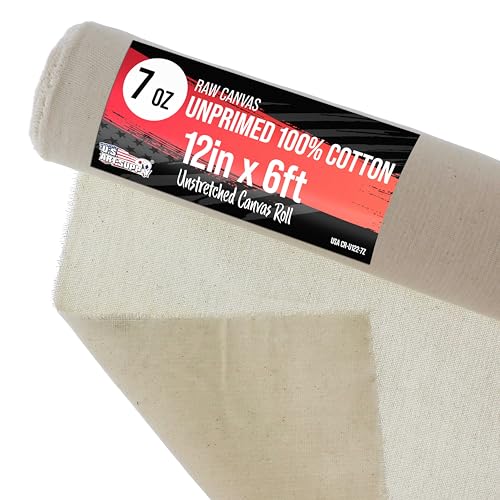
U.S. Art Supply sells this as an unstretched roll of 100% cotton duck canvas, 63 inches wide by 6 feet long (2 yards), with a durable woven texture and 10 oz weight. The listing makes the point directly: you can prime it as you wish or leave it completely raw, and once primed it works with acrylic, oil, watercolor, gouache, pouring paint and airbrush.
A 63 x 72 inch piece is enough to stretch one large canvas or several medium ones. For example, it could yield four 24×30 canvases with wrap allowance. Ten ounce duck has enough body to stretch tight without being as stiff and hard to fold at the corners as 12 oz or heavier.
Best suited for: Painters who stretch their own canvases and want to control priming, or who want to stain raw canvas with thinned acrylic.
Key features:
- 100% cotton duck
- 10 oz weight
- 63 in wide x 6 ft long (2 yards)
- Unprimed; prime or leave raw
Pros:
- Sold specifically as artist canvas
- Good width for medium and large stretchers
- Balanced weight for stretching
- Natural color suits staining
Cons and limitations:
- You need stretcher bars, staples and pliers
- Raw cotton shrinks when wetted
- Roll creases may need steaming out
Buying consideration: Wet the back lightly or prime after stretching; cotton tightens as it dries, which helps remove slack and ripples.
2. PHOENIX 10 oz Unprimed Canvas by the Yard, 72 in — Best for wide single pieces

PHOENIX sells unprimed 10 oz cotton duck by the yard, 72 inches wide by 1 yard (3 feet). The listing describes it as heavy-duty with a robust texture, designed for artists to apply gesso or specialty primers, and notes the neutral surface accepts coatings evenly.
The 72-inch width is the widest here, which helps if you want a long horizontal canvas without a seam. A 1-yard cut is also a sensible, inexpensive way to try stretching and priming your own canvas before committing to a full roll. The listing also mentions non-art uses such as drop cloths and sewing projects.
Best suited for: First-time canvas stretchers and painters who need a wide piece for one large horizontal work.
Key features:
- 10 oz unprimed cotton duck
- 72 in wide x 1 yard
- Designed to accept gesso or primers
- Multi-purpose fabric
Pros:
- Widest cut available here
- Low price tier
- Good trial quantity
- Accepts gesso evenly per listing
Cons and limitations:
- Only 36 in long per yard
- Marketed for crafts and drop cloths too
- Needs pressing if folded in shipping
Buying consideration: Order multiple yards in one piece if you need a long canvas; separate yards are harder to use for large stretchers.
3. Barcelonetta 10 oz Natural Cotton Duck, 62 in — Best for choosing fabric weight

Barcelonetta offers cotton duck by the yard in a natural 10 oz weight, 62 inches wide, and the listing notes 4 oz, 7 oz, 10 oz and 12 oz weight options. It is 100% cotton, tightly woven for durability, and marketed for arts, crafts, backings, covers and placemats.
The weight choice is useful for painters. Seven ounce duck is lighter and easier to stretch around small stretchers, while 12 oz gives a heavier, more robust canvas for large paintings. Ten ounce sits in the middle and suits most acrylic work.
Best suited for: Painters who want to experiment with different canvas weights or need a general-purpose raw duck.
Key features:
- 100% cotton duck
- 10 oz natural (other weights offered)
- 62 in wide, 1 yard
- Cut by the yard
Pros:
- Weight options
- Natural unbleached color
- Tight weave
- Low price tier
Cons and limitations:
- Sold as general fabric, not artist canvas
- Quality consistency for painting not stated
- Width slightly narrower than others
Buying consideration: Avoid 4 oz for painting; it is too light to stretch tight and will sag. Choose 7 oz for small stretchers and 10 to 12 oz for larger work.
4. Leuziihana Unbleached Cotton Canvas, 2 pack — Best for a pre-stretched raw look

Leuziihana’s pack includes two stretched canvases, 7.8×7.8 inches and 9.4×11.8 inches, made from unbleached cotton on a sturdy frame. The listing says they are ready to use out of the box for acrylic and oil, and the material details mention acrylic gesso alongside cotton and wood.
That detail matters: these appear to be raw-look canvases rather than fully raw fabric. They give you the warm, natural color of unbleached cotton in a ready-made format, so they suit painters who like the look but do not want to stretch canvas themselves. Check the surface on arrival to see how absorbent it is before planning a staining technique.
Best suited for: Painters who want the natural cotton look on small, ready-stretched canvases.
Key features:
- 2 stretched canvases: 7.8×7.8 in and 9.4×11.8 in
- Unbleached cotton
- Listed for acrylic and oil
- Reinforced stretched frame
Pros:
- No stretching needed
- Natural cotton color
- Two different formats
- Ready to paint
Cons and limitations:
- Only two small canvases
- Priming status ambiguous in the listing
- Higher cost per square inch
Buying consideration: Test a drop of water on the back edge. If it soaks in, treat it as raw; if it beads, it has a clear ground.
Buying Guide: How to Choose Unprimed Canvas for Acrylic Paint
Choose the right weight
Canvas weight is measured in ounces per square yard. Seven to eight ounce duck is light and easy to stretch on small frames. Ten ounce is a versatile middle ground. Twelve ounce and heavier is sturdy for large paintings but harder to fold at corners.
Decide: prime it or paint it raw
Priming gives acrylic a sealed, bright surface that uses less paint. Raw canvas creates soft, stained edges and a matte, fabric-like finish, but paint sinks in and colors dry darker and duller.
Consider sizing before painting raw
If you want the raw look but less absorbency, apply an acrylic sizing medium or a clear acrylic medium. It seals the fibers without hiding the color of the canvas.
Buy enough width
Add about 2 to 3 inches on every side of your stretcher for wrapping and stapling. A 24×36 canvas on 1.5 inch bars needs roughly 30×42 inches of fabric.
Cotton versus linen
All four options here are cotton, which is affordable and easy to stretch. Linen is stronger and has a finer weave but costs much more and is usually chosen for oil.
Plan for shrinkage
Raw cotton shrinks when it gets wet. That is helpful once stretched, because it tightens the canvas, but cut pieces should be generous.
Two Ways to Use Unprimed Canvas With Acrylic
Which route suits you depends on the look you want. If you like bright, saturated color, crisp brushwork and layering, prime the canvas. If you are drawn to soft-edged fields of color, visible fabric and a matte finish that feels part of the cloth, paint into the raw weave. Many painters combine the two by priming only part of the canvas, leaving bare areas as a deliberate design element.
Method 1: Stretch and prime yourself
- Cut the fabric with 2 to 3 inches extra on each side.
- Stretch it over stretcher bars, stapling from the center of each side outward.
- Brush on a thin coat of acrylic gesso, working it into the weave.
- Let it dry, then add one or two more coats at right angles.
- Sand lightly between coats for a smoother surface.
Method 2: Paint or stain the raw canvas
- Stretch the canvas, or lay it flat on a protected floor for staining.
- Thin acrylic with water and acrylic medium to a fluid consistency.
- Pour or brush the color and let it soak into the fibers.
- Work quickly; raw cotton absorbs paint unevenly as it wets.
- Leave areas of bare canvas to make the most of the raw color.
What Else You Need to Work With Raw Canvas
Buying canvas by the yard or roll is only part of the setup. To turn fabric into a paintable surface, plan for these extras:
- Stretcher bars: sold in pairs by length; standard 3/4 inch bars suit small to medium canvases, while deeper 1.5 inch bars suit large or gallery-wrapped work.
- Cross braces: any side longer than about 36 inches benefits from a brace to stop the frame twisting.
- Canvas pliers: they grip the fabric and give leverage to pull it evenly tight.
- Staple gun: a hand or electric stapler with 1/4 to 3/8 inch staples.
- Gesso or sizing: acrylic gesso if you will prime, or a clear acrylic medium if you want to keep the raw color while reducing absorbency.
- A wide flat brush or roller: for applying gesso evenly across a large surface.
- Spray bottle: a light mist on the back of stretched raw cotton tightens it as it dries.
If that list feels like a lot for one painting, start with a pre-stretched canvas and move to rolls once you are painting larger or more often. The savings and control of raw canvas grow with the size and number of paintings you make.
Related Acrylic Guides
If you prime your canvas, the next step is often an underpainting; see how to do an underpainting on canvas with acrylic. When your painting is finished, learn how to seal acrylic paint on canvas to protect the surface.
Common Mistakes to Avoid
- Buying canvas that is too light. Fabric under 7 oz sags and will not stretch tight.
- Cutting too small. Leave enough margin to wrap and staple behind the bars.
- Expecting bright colors on raw canvas. Unprimed cotton dulls and darkens color.
- Using oil on raw canvas. Oil damages raw fibers; it needs sizing and priming.
- Over-wetting raw canvas. Too much water causes shrinkage and puckering.
- Skipping a test strip. Try your staining or priming on an offcut first.
FAQs
Can you use acrylic paint on unprimed canvas?
Yes. Acrylic does not damage raw cotton the way oil does, so it is safe to paint directly on unprimed canvas. Expect the paint to soak in and dry more matte and less vibrant than on gesso.
What weight canvas is best for acrylic painting?
Ten ounce cotton duck is a good all-round choice. Use 7 oz for small canvases and 12 oz for large ones that need more strength.
Do I need to prime unprimed canvas?
Not for acrylic, but most painters do, because gesso seals the fibers, brightens the surface and reduces how much paint you use.
How do I stop acrylic soaking into raw canvas?
Apply an acrylic sizing or a coat of clear acrylic medium before painting. It reduces absorbency while keeping the raw canvas color.
What is the difference between unprimed and primed canvas?
Primed canvas has a coat of gesso that seals the fabric and provides a uniform surface. Unprimed canvas is bare fabric that absorbs paint and shows its natural color.
Is unprimed canvas cheaper than primed canvas?
Usually, especially by the yard. You do need to buy stretcher bars, gesso and tools, but for large or frequent work it is often more economical.
Final Recommendation
If you plan to stretch and prime your own canvas, or stain raw cotton with acrylic, the U.S. Art Supply 10 oz roll is the best starting point because it is sold specifically as artist canvas in a useful width. PHOENIX’s 72-inch yard is the best trial piece and the pick for single wide paintings.
Barcelonetta is worth considering if you want to experiment with different fabric weights, and the Leuziihana pack is the only choice here if you want the natural cotton look without stretching anything yourself.